
GIM study flags digital safety gaps, calls for family-focused response to deepfake harms
Sakshi Gupta | August 20, 2026 | 03:00 PM IST | 3 mins read
Research finds urban and educated parents more aware of AI-enabled risks, while rural and older families face larger gaps
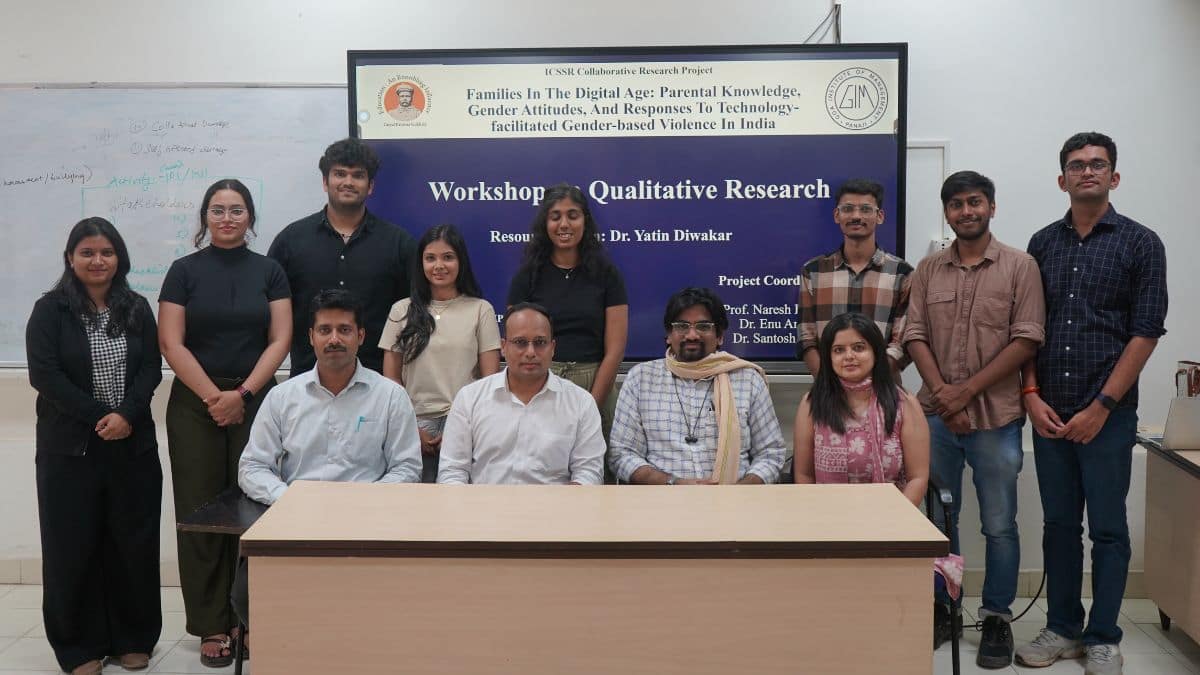
The Goa Institute of Management (GIM), in collaboration with the Gokhale Institute of Politics and Economics (GIPE), Pune, has conducted a study examining parental awareness and responses to technology-facilitated gender-based violence in the generative artificial intelligence era. The study was funded by the Indian Council of Social Science Research (ICSSR).
The research was conducted by Enu Anand, assistant professor, centre for social sensitivity and action, GIM, along with Naresh Bhodke and Santosh Phad, assistant professors at GIPE, Pune. The researchers analysed 40 in-depth interviews using 100 thematic codes, covering parents, young adults, educators, content creators, elderly citizens and other stakeholders across urban, semi-urban and rural areas of Pune, Maharashtra.
The study found that while most participants had heard about deepfakes and AI-enabled harms, very few knew how to identify manipulated content or respond to such incidents.
Digital safety awareness varies across families
Speaking about the relevance of this study, Enu Anand said, “Gender-based violence has moved online, and generative AI has sharply worsened it. Anyone can now morph a photograph or create a synthetic video, and it is often impossible to tell what is real."
She added, "Families, especially in rural areas, are simply not prepared for this. That is why safeguarding girls and women can no longer stop at platforms and law; it has to reach the home itself."
The study found that awareness was higher among urban and educated parents, while it was lower among rural, older and first-generation internet users. The researchers said digital safety education should be designed for households and should include people from different backgrounds.
Study identifies intergenerational digital gaps
The researchers found that participants were more familiar with financial fraud, including voice cloning and OTP scams, than with technology-facilitated gender-based violence such as deepfake and image morphing. The study suggested that awareness of financial fraud could serve as an entry point for building wider understanding of AI-enabled abuse.
The study also found that children and younger adults often have greater digital knowledge than their parents, creating an intergenerational digital knowledge gap. It noted that parents may sometimes use bans and restrictions as a way to control online activity, which can discourage children from reporting harmful incidents.
Girls and women were found to face issues such as victim blaming, excessive surveillance, and additional restrictions on digital activities. The study also noted that turning 18 can reduce parental supervision even as exposure to harmful online activities increases.
Research call for family-focused interventions
Santosh Phad said, “Parents are expected to be the first line of digital defence, but children are increasingly becoming the source of digital knowledge within families. This creates a clear intergenerational digital knowledge gap, with many parents lacking the digital skills needed to identify and respond to online harms."
Phad also pointed to differences between rural and urban families in terms of digital-safety conditions. According to him, rural families often rely on physical restrictions, community surveillance and traditional family authority, which provide limited protection against less visible technology-facilitated harms.
The study emphasised the need to move beyond basic digital safety education towards approaches that combine preparedness with the willingness to act. It also highlighted the importance of building AI and digital safety skills among parents so that they can identify risks before their children do.
The researchers called for policymakers and other stakeholders to prioritise the digital safety of children and young adults to such incidents. The study said its findings could contribute to developing more inclusive and family-centred digital safety initiatives.
 Add as a preferred source on google
Follow us for the latest education news on colleges and universities, admission, courses, exams, research, education policies, study abroad and more..
To get in touch, write to us at news@careers360.com.
Next Story
]Latest Education News
]Related News
]SRFTI Kolkata students allege denial of basic facilities amid ongoing protest
AI engineer builds app for blind students in higher education; over 1,000 use it to read in 30 languages
Pralhad Joshi launches registration portal for Kashi Tamil Sangamam 5.0; event from Nov 28 to Dec 12


