
IIT Madras researchers study ways to boost sustainable green hydrogen production in India
Suviral Shukla | December 16, 2025 | 02:58 PM IST | 2 mins read
Green hydrogen is a clean fuel produced from renewable energy. It can play a central role reducing emissions from sectors that are traditionally difficult to decarbonise such as industry, transport, and buildings.

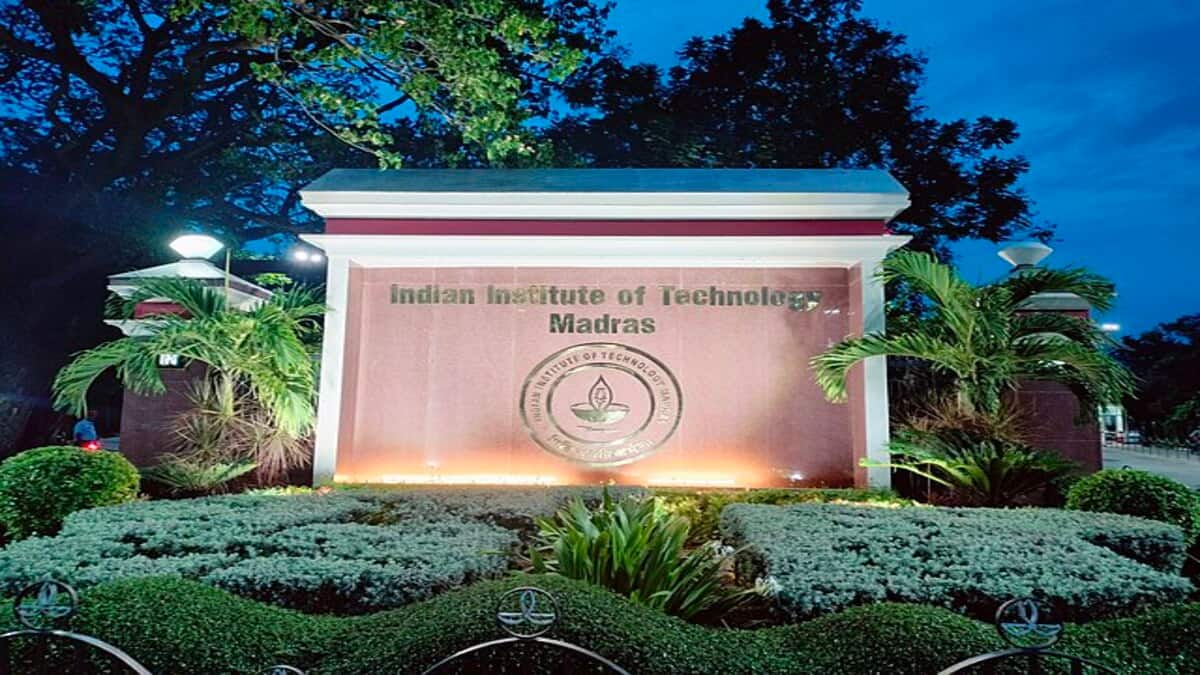
The Indian Institute of Technology Madras (IIT Madras) has conducted a study to boost sustainable green hydrogen production in India. The research has been done in collaboration with the Centre for Study of Science, Technology and Policy (CSTEP).
The study provides guidance on securing critical raw materials, standardising hydrogen classification and planning a sustainable expansion of India’s green hydrogen sector, IIT Madras said in an official statement.
“The research proposes a tiered classification system— “platinum,” “gold,” “silver,” and “bronze”—to clearly communicate the environmental quality of hydrogen, thereby providing transparency for policymakers, investors, and industry stakeholders,” it added.
By ensuring that India’s green hydrogen infrastructure can grow reliably, the study provides guidance for securing critical raw materials required for PEN electrolysers, and helps mitigate supply risks.
“This research lays the foundation for future studies, including improved life cycle data, more detailed assessments of production pathways, and robust analyses of material availability,” the institute stated.
India aims to achieve net-zero carbon emissions by 2070
Green hydrogen is a clean fuel produced from renewable energy. It can play a central role reducing emissions from sectors that are traditionally difficult to decarbonise such as industry, transport, and buildings.
India aims to achieve net-zero carbon emissions by 2070 and to generate 50 per cent of its electricity from non-fossil fuel sources by 2030.
Green hydrogen can strengthen energy security, reduce dependence on fossil fuels, and support the country’s sustainable development goals with the help of a low-emission and versatile energy carrier.
Satyanarayanan Seshadri, head of The Energy Consortium, IIT Madras, said: “Our research provides a comprehensive roadmap for expanding green hydrogen production in India. By understanding the environmental and material implications of different technologies, we can make informed choices that ensure both efficiency and sustainability.”
“This study highlights the critical link between technology selection and environmental outcomes, which will be essential for policymakers and industry as India scales up its hydrogen sector,” he added.
In addition, India’s Green Hydrogen Mission was launched with an objective to produce 5 million centric tons of green hydrogen annually by 2030. The mission also seeks to increase the domestic production of electrolysers, special machines that utilise electricity to split water into hydrogen and oxygen.
 Add as a preferred source on google
Follow us for the latest education news on colleges and universities, admission, courses, exams, research, education policies, study abroad and more..
To get in touch, write to us at news@careers360.com.
Next Story
]Latest Education News
]Related News
]IIT Madras faculty joins global study on electrically controlled molecular rotation
IIT Madras launches finishing school ‘UDYOG’ to equip BTech biotechnology students with industry-ready skills
IIT Madras’ WSAI to host AI Governance Conclave on October 22; focus on AI safety, measurement


