
From Taboo to Textbook: Why India took two decades to say ‘Yes’ to sex education in school
K. Nitika Shivani | August 6, 2026 | 01:49 PM IST | 6 mins read
For years, sex education in schools meant biology, reproductive organs, menstruation – now centre wants to push it to revive conversations around consent, safety, contraception
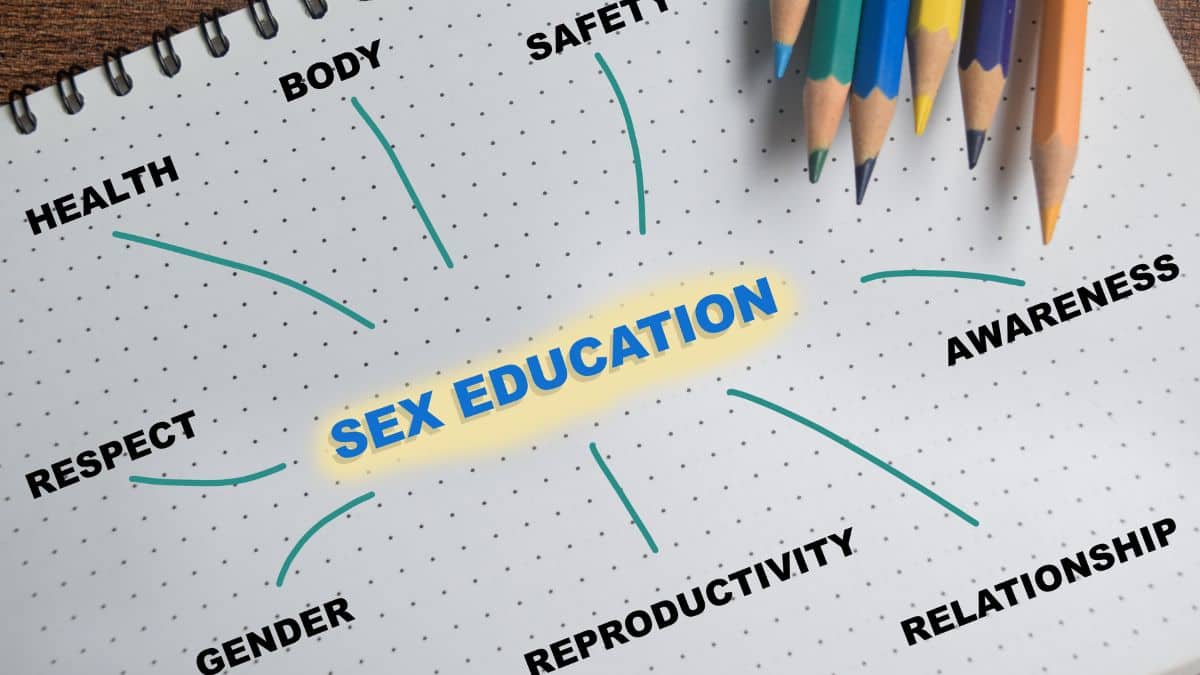
When Nidhi Manohar was in Class 6 at a private, co-educational school in Bengaluru, she was taken with other girls to a separate classroom for a session on puberty and menstruation.
“The teacher explained that the egg travels through the fallopian tube, the uterine lining breaks down during menstruation, and that was more or less the session,” she recalls. “We were shown a video and taught about reproductive organs, but we were also told not to discuss it with others and to ask questions only at home.”
For Nidhi, now in Class 11, the lesson felt less like sex education and more like a biology chapter delivered in isolation.“I could have learned most of that from my biology textbook,” she says. “Nobody spoke about consent, relationships, safe sex, contraception or even why these conversations matter.”
When the session ended, the girls walked out quietly. “Everyone was whispering in small groups,” she says. “We were curious, but it was treated like a topic that should not be talked about openly.”
Her experience reflects a pattern reported by students across India, where sex education is often limited to basic reproductive biology and menstruation, while broader discussions about sexual health, consent and safety remain absent.
This issue has gained renewed attention after the centre informed the Supreme Court that it has agreed in principle to introduce comprehensive sex education in schools.
The Central Government has informed the Supreme Court that it agrees in principle to introduce Comprehensive Sex Education (CSE) across Indian schools, completing a two-decade policy reversal. The initiative marks a significant departure from 2007, when the centre's initial Adolescent Education Programme faced fierce cultural backlash and was banned by over a dozen states, as well as 2014, when then-health minister Harsh Vardhan publicly called for banning "so-called sex education" in favour of yoga.
Following a quiet 2018 reintroduction under Ayushman Bharat’s wellness-focused school health programme, the centre – spurred by recent Supreme Court directives emphasizing POCSO safety, consent, and bodily boundaries — accepted recommendations from a ministry of women and child development expert panel to formally integrate standardised, age-appropriate reproductive and consent education into the national NCERT curriculum.
The government’s submission has revived a long-running debate over what children are actually taught in Indian classrooms and whether existing lessons go beyond reproductive biology to include consent, safety, relationships and sexual health.
Sex Education: Different schools, similar silences
Aarav Jain, now a class 11 student in a private school in Delhi, said the sessions focus on menstrual hygiene, child safety and adolescence. “When we had the session in Class 7, they spoke vaguely about good touch and bad touch, boundaries and peer pressure, but avoided questions about sex and contraception”.
In Chennai, many students say the topic is treated as part of biology. “We memorised the reproductive system for exams, but nobody explained consent, bodily autonomy or sexual health,” says Priya Selvaraj, a Class 8 student.
Priya believes sex education is needed not only in cities but also in rural areas. “People should understand that the human body is not something shameful,” she says. “Many girls are celebrated when they attain puberty, but after that they are expected to follow a lot of restrictions and customs. Sex education can help normalise bodily changes, reduce stigma and make it easier for both boys and girls to talk about these issues without embarrassment.”
Students, too, have mixed views. Some say the sessions are too limited to be useful. “We already know some things from social media,” says a student who requested anonymity from Chandigarh. “Teachers skip the questions and over react to everything” .
Sex Education in India: Internet becomes the teacher
Rohan, a Class 12 student from Jaipur, says practical questions were often discouraged. “If someone asked about condoms, pregnancy or STIs, teachers became uncomfortable,” he says. “Most boys learned about sex from friends or the internet.”
Psychologists say that when schools and families avoid conversations about sexuality, adolescents often turn to pornography and social media.
“Pornography becomes a major source of information, and it creates unrealistic ideas about bodies, relationships and consent,” says Dr Meera Khoram, a Bengaluru-based psychologist who works with teenagers.
She says comprehensive sex education should include puberty, consent, contraception, reproductive health, online safety and recognising abuse. “These are not just sex-related topics; they are life skills,” she says.
Also read Centre sat on a fifth of Samagra Shiksha funds every year; PM SHRI dues at 49% in 2025-26: Govt data
Sex Education For Students: A debate beyond classrooms
Hasini Muthukumaran, a mother of two and a teacher in Chennai, says the conversation around sex education is often reduced to a moral debate when it should be viewed as a safety and awareness issue.
“Almost every day I read about an 11-year-old being sexually assaulted, a Class 2 student being abused, a toddler being molested, or a child from a remote village becoming a victim of sexual violence,” she says. “Sometimes it is a principal, a teacher or someone in a position of trust. Even schools, which should be safe spaces, are not always safe.”
She believes comprehensive sex education can help children understand their bodies, boundaries and consent at an early age. “It will not solve every problem, but it can clear the air about many things, not just for children but for adults as well,” she says.
Muthukumaran also argues that popular culture often shapes young people’s understanding of sex and relationships. “Movies and shows frequently give distorted ideas about women, masculinity, romance and consent. Many people learn from what they watch because no one talks about these issues openly,” she says.
For her, the responsibility extends beyond schools. “It starts at home. Parents should be able to talk about bodies, consent and relationships without treating the subject as taboo. This is not just about sex; it is about respect, safety and how young people understand the world around them. The issue is much deeper than we think.”
Also read India loses 17,141 govt schools in 5 years, over 8,000 in 2025-26: Education ministry data
Sex Education: US, UK versus India
Anita Sharma, a parent from Lucknow who recently moved to Delhi, believes schools should be cautious. “Talking about sex too early may encourage experimentation,” she says. “Children should learn these things gradually within the family.”
Others argue that silence creates greater risks. Lavanya Varun (first name changed), a parent from Coimbatore who is also a trained psychologist and juvenile crime analyst, says India’s approach to sex education is far more hesitant than that of many Western countries.
“In countries like the US or UK, schools are more willing to talk about consent, contraception, relationships and sexual health,” she says. “In India, we often stop with puberty and reproduction, and then expect children to figure out the rest on their own. They don’t. They learn from social media, pornography and misinformation.”
She believes comprehensive sex education can help normalise conversations around the body and consent. “When children understand how their bodies work, what boundaries mean and how to respect others, they are less likely to grow up with shame, confusion or harmful stereotypes. We cannot expect young people to make responsible decisions if we refuse to educate them.”
 Add as a preferred source on google
Follow us for the latest education news on colleges and universities, admission, courses, exams, research, education policies, study abroad and more..
To get in touch, write to us at news@careers360.com.
Next Story
]Latest Education News
]Related News
]Tamil Nadu: Police arrest former education minister Anbil Mahesh in Rs 100 crore private schools 'scam' case
Yuva Sangam: Utar Pradesh Governor stresses cooking skills, maternal health awareness among students
CBSE Board Exam Dates 2027 LIVE: Class 10, 12 subject-wise timetable soon at cbse.gov.in; passing marks


