
BITS Pilani VC V Ramgopal Rao on four key lessons needed to build a successful academic career
Vishnukumar V | November 23, 2026 | 04:04 PM IST | 5 mins read
The former IIT Delhi director and BITS Pilani VC V Ramgopal Rao advises young faculty to prioritise teaching, research quality, innovation and institution-building in their academic careers.
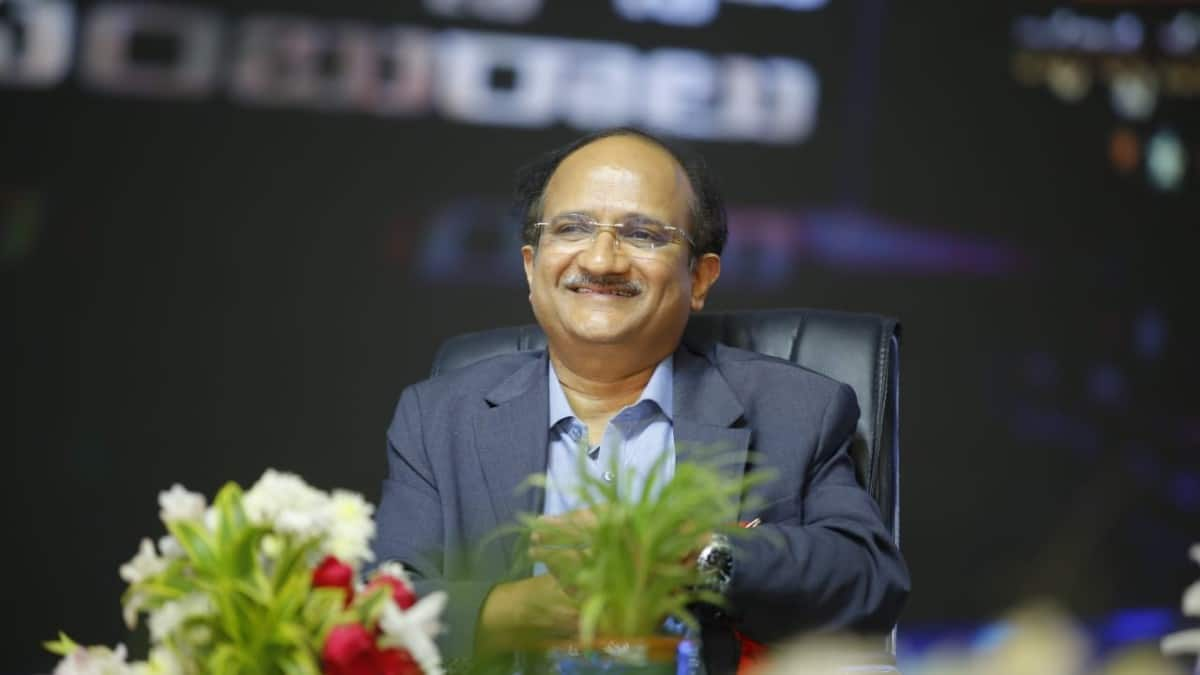
BITS Pilani Vice Chancellor V Ramgopal Rao has shared four key lessons for young faculty members, advising them to prioritise quality teaching, meaningful research, innovation and institution-building while developing their academic careers.
In a seven-page document titled A Primer for Young Faculty: Some Personal Observations for a Fulfilling Career, Rao draws on nearly 25 years of experience in academia to offer suggestions to early-career faculty members. He shared the observations after addressing a group of young faculty members, according to his post on X.
Rao, who is also the former Director of the Indian Institute of Technology (IIT) Delhi, said the early years of an academic career are particularly important as the habits, priorities and professional relationships developed during this period can shape a person's professional journey.
The document identifies four major areas that young academics should focus on: education, research, innovation and institution-building.
Focus on quality teaching
Rao said universities are ultimately as good as their faculty members and that the quality of teachers plays a major role in distinguishing a good institution.
With students having access to information and AI-based tools, he said teachers should focus on developing curiosity, critical thinking, judgement and problem-solving abilities rather than limiting their role to completing the syllabus.
He encouraged faculty members to make classrooms engaging, remain approachable and understand the changing needs of students.
"Why should a student attend my class when much of what I teach is already available online?" Rao asked, highlighting the need for teachers to offer something beyond information.
He also advised teachers not to judge students solely by their initial academic performance, communication skills or background. Instead, they should encourage students to ask questions, challenge established ideas and think independently.
Build a strong research profile
On research, Rao advised young faculty members to identify an area in which they can develop deep expertise instead of following every popular research topic.
He said publishing papers is important, but building a research reputation requires consistency and a focus on respected journals.
Rao suggested identifying five good journals that are recognised in their research area and publishing around 70% of their papers in these journals. He cautioned against what he described as "journal hopping", where researchers publish papers across several unrelated journals without building a consistent research identity.
He also urged researchers to work on problems that are worth solving, collaborate across disciplines and involve undergraduate students in research activities.
Maintaining research integrity should remain a priority, he said, adding that no publication, patent or grant is worth compromising on research standards.
"Give credit to others where it is due," he advised.
Rao further highlighted the importance of patience and perseverance, noting that rejected papers, failed experiments and unsuccessful research proposals are part of an academic career.
Also read Beyond Warana, no takers: How Maharashtra’s cluster university policy floundered
Promote research and innovation
Rao said universities should increasingly contribute to solving real-world problems and that research papers and patents should not be the only measures of academic achievement.
He encouraged faculty members to build relationships with industry, identify practical problems and motivate students to develop prototypes and products rather than limiting their learning to theoretical concepts.
Researchers should also explore opportunities to commercialise their work, protect intellectual property and file patents wherever appropriate, he said.
He advised young academics to develop an entrepreneurial mindset and learn to work across disciplines, particularly as combining different technologies can create new opportunities.
However, he cautioned against rushing into startups without first building a strong research profile and reputation.
Rao also highlighted the importance of clear co-founder agreements when starting a company with others, noting that professional and financial arrangements should be established at the beginning.
Contribute to institution-building
In the section on institution-building, Rao said an academic career is not built in isolation and requires sustained relationships with colleagues, students and administrative staff.
He advised faculty members to handle disagreements professionally, share ideas and opportunities, acknowledge others' contributions and avoid allowing minor differences to develop into long-term personal conflicts.
He also stressed the importance of respecting everyone working in an institution, including administrative and technical staff.
Rao highlighted the need for academic leaders to balance institutional rules with judgement and discretion. While registrars must ensure that rules are followed, heads of institutions should understand the purpose behind the rules and recognise situations that may require discretion.
He said such decisions must be fair, transparent and taken in the larger interests of the institution.
Young faculty members should also look beyond their individual research groups or departments and contribute to academic initiatives and institutional development, he added.
12 questions for young academics
Towards the end of the document, Rao outlined 12 questions that young academics should regularly ask themselves to assess their professional progress.
The questions cover four areas:
- Education: Would students attend their classes even if attendance were not compulsory? Are they learning to think independently? Are they becoming better teachers every year?
- Research: Are they working on important problems? Is their research creating new knowledge? Are they helping students become independent researchers?
- Innovation: Can their research solve real-world problems? Are they taking their work beyond publications and patents? Are they encouraging students to experiment and create?
- Institution-building: Are they colleagues others would like to work with? Are they contributing to the larger institution? Are they helping create an environment where future faculty members and students can perform better?
In his concluding remarks, Rao said academic success should not be measured only by publications, research grants or professional positions.
"Measure it also by the students you nurture, the knowledge you create, the problems you solve, the technologies you develop and the institution you help build," he wrote.
He added that a fulfilling academic career should allow faculty members to look back and see that their students have progressed, colleagues have grown, research has made a difference and the institution has improved because of their contribution.
"Success is relative, but satisfaction is deeply personal," Rao said.
 Add as a preferred source on google
Follow us for the latest education news on colleges and universities, admission, courses, exams, research, education policies, study abroad and more..
To get in touch, write to us at news@careers360.com.
Next Story
]Medical College Kolkata in turmoil as doctors’ protest, campus violence put spotlight on faculty, infra gaps
191-year-old MCK Kolkata faces a 25% faculty shortage. Its neurosurgery dept is without a neurosurgeon but it has essential medicines, equipment, say officials. The Durga Puja stampede has drawn attention to it
Pritha Roy ChoudhuryLatest Education News
]Related News
]Law students must disclose AI assistance in research, remain accountable for work: CJI Surya Kant
Odisha govt sanctions 48 principal posts in degree colleges to improve academic, governance
NCTE inducts India's first woman IPS officer Kiran Bedi as national mentor


