
BCI issues advisory on law college approvals; highlights impact of unrecognised degrees
Vishnukumar V | November 19, 2026 | 06:31 PM IST | 3 mins read
BCI advisory follows a Supreme Court order directing regulators to caution students against institutions operating without legal authorisation.
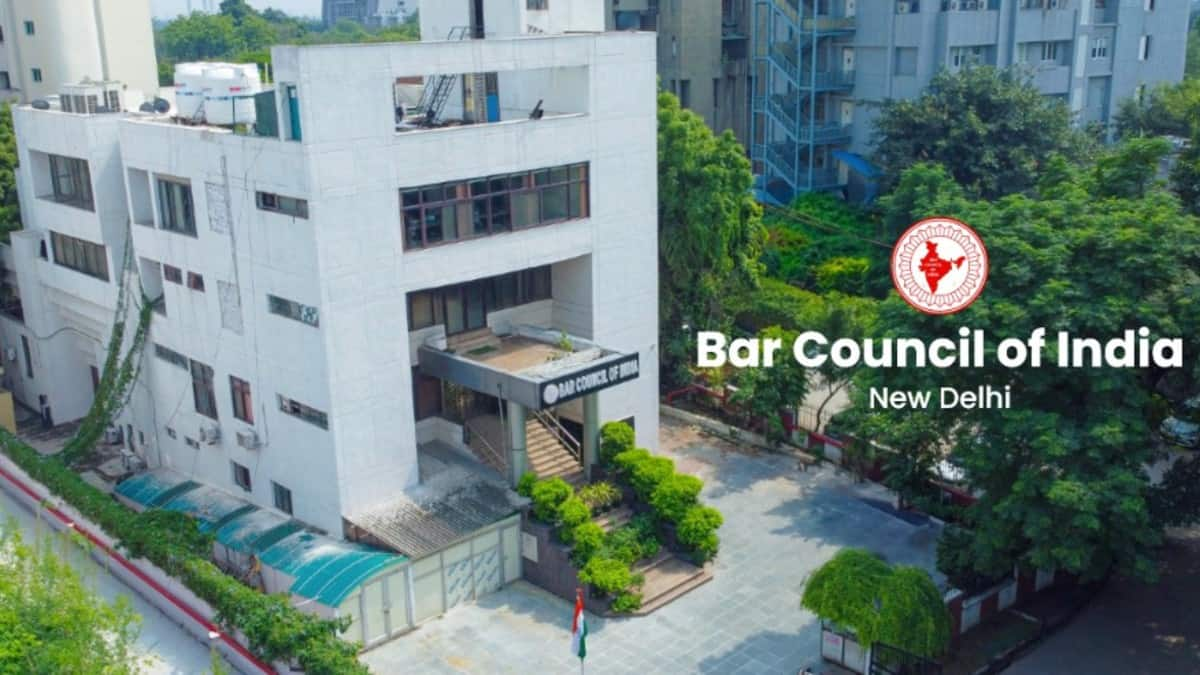
The Bar Council of India (BCI) has advised law aspirants to verify the recognition, university affiliation and approval status of law colleges before taking admission or paying fees. The council has cautioned that enrolling in a law programme without the required approval could affect the recognition of the degree for enrolment as an advocate.
In a public advisory dated November 19, 2026, the BCI asked students seeking admission to three-year LLB and five-year integrated law programmes to check whether the university and the concerned Centre of Legal Education have the necessary legal authorisation and approval for the course and academic session.
The advisory was issued in compliance with the Supreme Court's October 9, 2026, order in the case of Ayesha Jain v. Amity University, Noida and Others (W.P.(C) No. 531/2025). The court had directed the University Grants Commission (UGC) and other regulatory authorities to issue public advisories cautioning students against taking admission in institutions without verifying their authenticity and legal status.
The BCI said that the advisory aims to protect students and parents from possible deception, financial losses and uncertainty over the validity of academic qualifications.
Also read UGC helpline for reporting sexual harassment defunct from the start but listed on Saksham portal
BCI approval for law colleges
The council clarified that permission from a state government or affiliation granted by a university does not automatically mean that a law college has received approval from the BCI.
Under Rule 14 of the Rules of Legal Education, 2008, Centres of Legal Education offering law degree programmes intended to qualify students for enrolment as advocates must have the requisite BCI approval, subject to applicable rules and laws.
Students have been advised to verify the following details before securing admission:
- Institutional recognition: Check whether the university and law college are legally established and authorised to offer the proposed law degree.
- BCI approval: Verify whether the institution has valid BCI approval for the particular course and academic session.
- Approved courses: Confirm whether the approval covers the three-year LLB or five-year integrated law programme.
- Sanctioned intake: Check whether the approved number of sections and student intake matches the admission being offered.
- Academic session: Ensure that the approval applies to the academic year for which admission is being sought.
The BCI also clarified that approval granted for one programme, academic session, section or intake cannot automatically be treated as approval for another.
BCI warns law colleges
The BCI has cautioned universities, law colleges, admission agencies and other representatives against making misleading claims about institutional recognition, affiliation, BCI approval and sanctioned student intake.
It said that submitting an application for approval, paying the prescribed fee, undergoing an inspection or receiving a recommendation from an inspection team does not amount to the grant of approval.
Institutions have also been directed not to present pending applications or proposals as approved courses. Where approval is subject to conditions, colleges must disclose any limitations that could affect the proposed admissions.
BCI disclosure guidelines for colleges
Students and parents can verify the approval status of law colleges through the official website of the Bar Council of India at barcouncilofindia.org. They can also check relevant BCI notifications, approval communications and the official records of the concerned affiliating university.
If there is any doubt about a college's recognition, course approval, sanctioned intake or academic session, students should seek clarification from the BCI through its officially notified channels before finalising admission.
The council has directed all universities and Centres of Legal Education to publish updated details of their legal status, affiliation, BCI approval, approved courses and sanctioned intake on their official websites and admission materials. They must also provide relevant approval and affiliation documents to students upon request.
Also read The Bar Council of India problem: Why legal education needs reform at the top
BCI warning on unapproved colleges
The BCI cautioned that admission to a law degree course without the required recognition or approval may have serious implications for the recognition of the qualification for enrolment as an advocate.
Universities and law colleges found providing incorrect information, admitting students in violation of approval conditions or operating without the required BCI approval may face proceedings under the Advocates Act, 1961, the Rules of Legal Education, 2008 and other applicable laws.
The BCI said the advisory is issued for immediate publication and public awareness. It will operate alongside existing statutory requirements and regulatory directions and does not, by itself, grant or withdraw approval to any institution or course.
 Add as a preferred source on google
Follow us for the latest education news on colleges and universities, admission, courses, exams, research, education policies, study abroad and more..
To get in touch, write to us at news@careers360.com.
Next Story
]A decade on, govt’s 400 cluster university model produced just 8 institutions; funding, VC control stall plan
While cluster universities of Jammu and Srinagar were a success, Odisha’s Khallikote University and Himachal’s Sardar Vallabhbhai Patel University reverted to state institutes; Manipur’s Dhanamanjuri University ran without a VC till 2 years ago
Shradha ChettriLatest Education News
]Related News
]NMC asks medical colleges to examine draft rules proposing stricter checks on animal testing
UGC lists 32 fake universities operating in India, asks students and parents to check before admission
Chandra Shekhar Azad urges govt to release pending JRF, SRF grants to SC researchers


