
A decade on, govt’s 400 cluster university model produced just 8 institutions; funding, VC control stall plan
Shradha Chettri | November 19, 2026 | 01:25 PM IST | 6 mins read
Endorsed by NEP, the scheme found few takers with Odisha and Himachal Pradesh reverting to state universities, while cluster universities of Jammu and Srinagar the only success stories
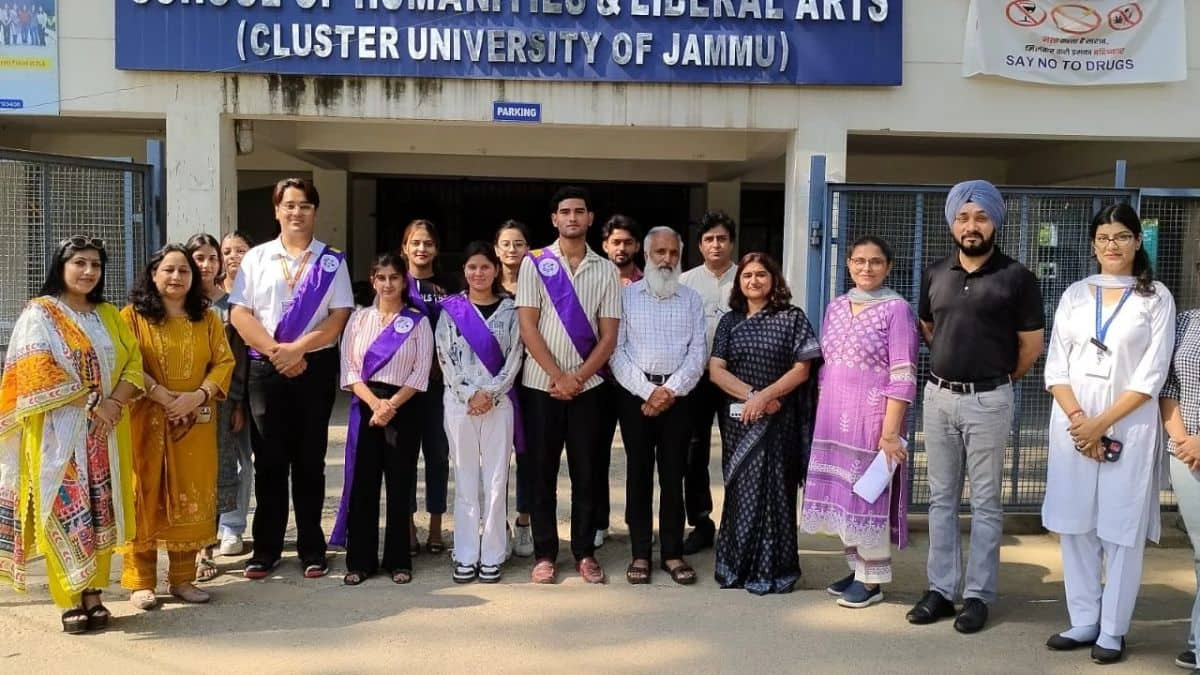
India has had a cluster university policy for over a decade but only a handful of clusters have actually come up and of those, only eight survive. Confusion about rules, funding strain and staffing challenges constantly threaten this approach to higher education expansion. Some clusters were simply dismantled and their core institutions reverted to standard state universities.
The government had announced plans for 400 cluster college universities as part of its 12th Five Year Plan (2012-17). The National Education Policy endorsed that approach in 2020 and the University Grants Commission (UGC) framed guidelines for transforming colleges and universities into multidisciplinary institutions.
Despite multiple governments suggesting clustering, the provision has found few takers with just eight clusters emerging with the merger of three or four existing colleges. In Odisha and Himachal Pradesh, the state governments ultimately scrapped the model.
Also read UGC helpline for reporting sexual harassment defunct from the start but listed on Saksham portal
Cluster Universities of Jammu, Srinagar, Maharashtra
The eight came up as part of the Rashtriya Uchchatar Shiksha Abhiyan (RUSA), a centrally-sponsored scheme with shared funding to support higher education in the states. It was revamped into Pradhan Mantri Uchchatar Shiksha Abhiyan (PM USHA) in June 2023.
Two came up in Jammu and Kashmir in 2018 and have made a reasonably successful run of it. They were able to secure funding from both centre and state, under both RUSA and PM USHA schemes. This made expansion possible without raising costs for students.
Maharashtra, on the other hand, has three cluster universities, the most of all states, but expansion has depended largely on self-financed programmes with high costs for students. None of them has received government funding. The state framed its own cluster university policy in 2023 but once again, the response has been tepid. Colleges have reservations about its provisions on VC selection, administrative and academic control of the new universities among others.
KS Chandrasekar, vice chancellor, Cluster University of Jammu, explained the reasons for slow growth, “First is the lack of understanding of the cluster concept. State governments have to hand-hold these clusters. Without government support it is difficult for these clusters to move forward.”
Also read After AMU and Jamia, BHU students launch agitation for union polls, on hold for 3 decades
The cluster university idea
The original goal was to create universities by clustering existing affiliated government and government-aided colleges. The selected colleges needed to have enough infrastructure to make a seamless transition possible. The rule stated that the selected colleges had to be within a 2-3 km radius and one had to have National Assessment and Accreditation Council (NAAC) grade of A++.
Governments have cited the large sizes of state universities to justify clustering.
The Cluster University of Srinagar, explaining why colleges previously affiliated to University of Kashmir were clustered, says on its website, “The [J-K] colleges established already and the new ones are offering traditional courses to pursue, which have lost relevance in the emerging economic scenario of the world. Moreover, the majority of the already established colleges are still under-staffed, without buildings, infrastructure and other necessary facilities and it is vexing to believe the condition of these institutions.”
The union territory has two central universities – Central Universities of Jammu and Kashmir.
Maharashtra is home to some of the largest state universities – the University of Mumbai (MU) and the Savitribai Phule Pune University (SPPU) have north of 900 and 800 affiliated colleges, respectively – their size has often been linked to administrative mismanagement and delays in the examination and evaluation process.
The new cluster universities, despite their shortcomings, have been fulfilling the NEP mandate of operating as large multi-disciplinary autonomous bodies, replacing disparate affiliated colleges.
10 cluster universities in 10 years
State | Cluster Universities |
Jammu and Kashmir | Cluster University of Jammu Cluster University of Srinagar |
Maharashtra | Dr. Homi Bhabha State University Hyderabad (Sind) National Collegiate University, Mumbai (HSNC) Karmveer Bhaurao Patil University, Satara |
Karnataka | Maharani Cluster University |
Andhra Pradesh | Cluster University, Kurnool |
Manipur | Dhanamanjuri University, Imphal |
Odisha | Khallikote Cluster University, Berhampur |
Himachal Pradesh | Sardar Vallabhbhai Patel Cluster University (Mandi) |
Dead cluster universities
In 2020, the Odisha cluster model was scrapped and Khallikote Cluster University became a unitary state institution. Over a century old, Khallikote Autonomous College had been upgraded to become the nucleus of the cluster in 2015.
Similarly, the Sardar Vallabhbhai Patel Cluster University in Himachal Pradesh became a regular state university in 2022, affiliating colleges across five districts – Mandi, Kangra, Chamba, Kullu, Lahaul-Spitti.
Manipur’s Dhanamanjuri University celebrated its first convocation in January this year after eight years of establishment. The Imphal Times reported it went without a VC and regular teachers till 2024. A VC was appointed in March, 2025.
The former vice chancellor of a central university said, “The states’ handling of the universities has not been a happy situation. States have practical, bureaucratic and administrative challenges. Funding is an issue due to which schemes fail to work.” He did not wish to be identified.
Cluster Universities: Growth in J-K
Chandrasekar, who moved from University of Kerala to take charge as VC of Cluster University of Jammu, said, “We fulfilled all the criteria and the colleges which were clubbed are all over 100 years old. These are the best colleges in Jammu. These colleges were taken from Jammu University and now we have a total of 16,000 students studying in the university. The purpose is to ensure that it becomes a multidisciplinary institution and there is no duplication of resources.”
He adds that with the college principals now part of the decision-making, operations have been smooth.
“Jammu and Kashmir cluster universities are functioning well. The colleges are reporting to the university. Principals are part of the syndicates and committees.They now take pride in being part of the decision making process, which was earlier missing. We conduct examinations on schedule, results are declared much faster,” he said.
Apart from initial grants, the administration is ensuring flow of funds.
“The constant support from the LG, who is the chancellor, and from the government, has really helped the universities grow. They understand the concept of it and we get good grants. The only difficulty we are facing is that the faculty gets transferred often. The faculty come [through] the J&K Public Service Commission. We are preparing to have a buffer. We have opened research and started PhD programmes and asked the government not to transfer the research supervisors,” he explained.
The university has also started five new PG schools and offers integrated UG, PG and PhD programmes. The first batch of fourth year will graduate this year.
“We are also launching what is called the “defining your degree programme”. Students can opt for the courses they want to study in each year. Second year, they can venture into major programmes, whether they want a BSc, BA or BCom degree,” said Chandrasekar.
The Cluster University of Srinagar also has affiliated colleges.
 Add as a preferred source on google
Follow us for the latest education news on colleges and universities, admission, courses, exams, research, education policies, study abroad and more..
To get in touch, write to us at news@careers360.com.
Next Story
]Latest Education News
]Related News
]BIMTECH, NBHI launch Joint Certification Programme 3.0 for PGDM- IBM students
UP Cabinet clears Rs 281 crore 'Deep Tech U-Hub' at IIT Kanpur Noida campus; 30 proposals approved
IIM Calcutta launches 9-month AI-powered product management course for working professionals


