
IISER Pune launches bilingual HEAL webzine on climate, health and community solutions
Vishnukumar V | September 21, 2026 | 06:52 PM IST | 3 mins read
The Hindi-English webzine launched under the CARE Project to connect climate research with grassroots storytelling and community-led solutions.
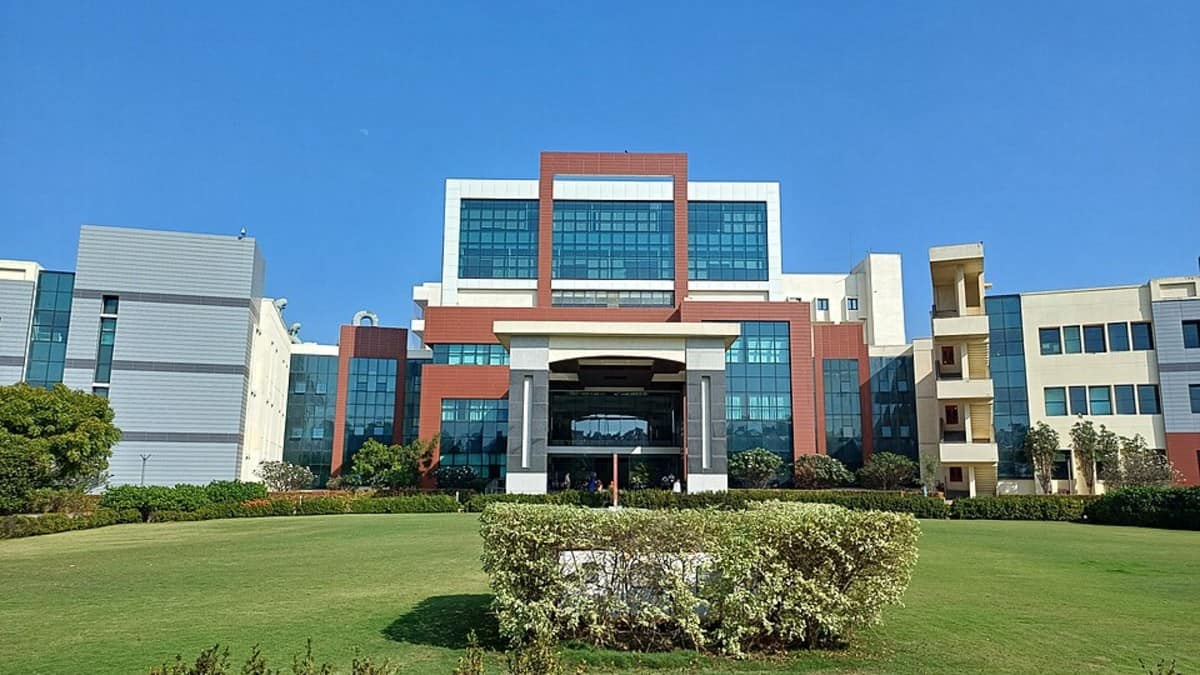
The Indian Institute of Science Education and Research (IISER) Pune has launched HEAL (Health, Environment, Action, & Learning), a bilingual webzine focused on climate science, public health and grassroots solutions. The webzine was launched on September 21, 2026, under the institute’s CARE Project.
The free-to-read webzine, available in Hindi and English, aims to connect scientific research with local experiences and community-led action on climate and planetary health issues. Its public portal is www.healwebzine.in.
Climate scientist and former Secretary of the Ministry of Earth Sciences, M Rajeevan, officially launched HEAL at an event at IISER Pune.
Rajeevan said, “Environmental change is ultimately a health story, and health is an environmental story. HEAL is an important initiative to bring this One Health perspective into public discourse through credible, accessible and solutions-oriented journalism."
He added that the platform could help people understand environmental challenges while also highlighting possible solutions.
He said, “By connecting scientific knowledge with community experiences and local action, HEAL can help people not only understand the environmental challenges we face, but also see that solutions are possible. In an era of climate and environmental uncertainty, we need journalism that informs, inspires and empowers people to act."
HEAL to make climate research accessible
According to the project, HEAL aims to make scientific information on climate and environmental change more accessible by combining research with stories from communities across India.
The webzine follows the One Health approach, which recognises the links between human health, animal health and the health of ecosystems.
The platform will focus on issues including climate change, biodiversity, air, water, soil and community health. It will also use bilingual reporting to address language barriers and make scientific information accessible to readers beyond academic and urban audiences.
The initiative is being developed as part of the CARE Project (Climate, Action, Research, and Education) at IISER Pune.
IISER Pune backs HEAL
IISER Pune director Sunil S. Bhagwat said the initiative would provide a platform for writers and readers from different parts of the country.
“Science communication in India is at an important juncture and ground-up efforts like this can give a platform to writers and readers from all tiers including cities, towns, and villages,” Bhagwat said.
He also extended his support to the initiative led by IISER Pune faculty member Shalini Sharma.
Sharma, a social scientist and associate professor at IISER Pune, leads the CARE Project and serves as the publisher of HEAL. Nidhi Jamwal, a climate journalist, is the founding editor.
“The CARE Project was established to pioneer a solutions-focused approach that unites scientific rigour with lived experience. HEAL is the live realisation of that mission,” Sharma said.
She added, “HEAL bridges the gap by marrying scientific rigour with the power of grassroots action, creating a space where research directly serves community well-being."
HEAL focuses on solutions-oriented climate journalism
Jamwal said the platform would focus on local reporting rather than relying on outside reporting of communities and environmental issues.
She said, “Climate change is not a distant, abstract threat—it is happening right now in our villages, towns, and local ecosystems."
Jamwal added, "Rather than relying on parachute journalism, HEAL is building true collaborative journalism. By empowering local reporters who understand the nuances of their own regions, we are shifting the narrative from despair to actionable, community-led solutions."
The platform is designed to work with grassroots communicators, particularly those reporting from rural and smaller urban areas.
Also read IISER Pune students launch indefinite sit-in, seek changes to mental health, hostel policies
HEAL launch linked to VOICE Fellowship 2026
The launch coincides with the VOICE Fellowship 2026, a fully funded residential training programme being hosted by the CARE Project at IISER Pune from September 20 to 25, 2026.
The 2026 fellowship has brought together 40 reporters, content creators and regional communicators from tier 2 and tier 3 cities and rural parts of India.
The fellowship was launched in December 2025 and focuses on building the capacity of local journalists to report on planetary health using scientific evidence, data and human-centred storytelling.
Around 50 grassroots journalists, storytellers and regional communicators attended the HEAL launch event at IISER Pune, according to the press release.
Through HEAL and the VOICE Fellowship, the CARE Project aims to strengthen grassroots communication on climate and planetary health and generate evidence that can contribute to public health discussions and policy.
 Add as a preferred source on google
Follow us for the latest education news on colleges and universities, admission, courses, exams, research, education policies, study abroad and more..
To get in touch, write to us at news@careers360.com.
Next Story
]‘Not individual failure’: IIT Bombay students protest suicide, want director to quit, action against professor
IIT Bombay students accuse professor of threatening deceased BTech student with a year’s suspension for cheating, IITB denies; blame academic pressure, casteism, flawed counselling system for three campus suicides in a year
Sheena SachdevaLatest Education News
]Related News
]UK universities withdraw admission offers to Indian students as visa refusals rise: Report
IIM Lucknow records 100% placements; 2026-28 batch secures over 600 job offers
IIT BHU forms panel to conduct urine-based drug tests for newly-admitted students


