
Removing deprivation points from admissions will change JNU’s character, make it elitist: Professor
Shradha Chettri | August 25, 2026 | 10:53 AM IST | 12 mins read
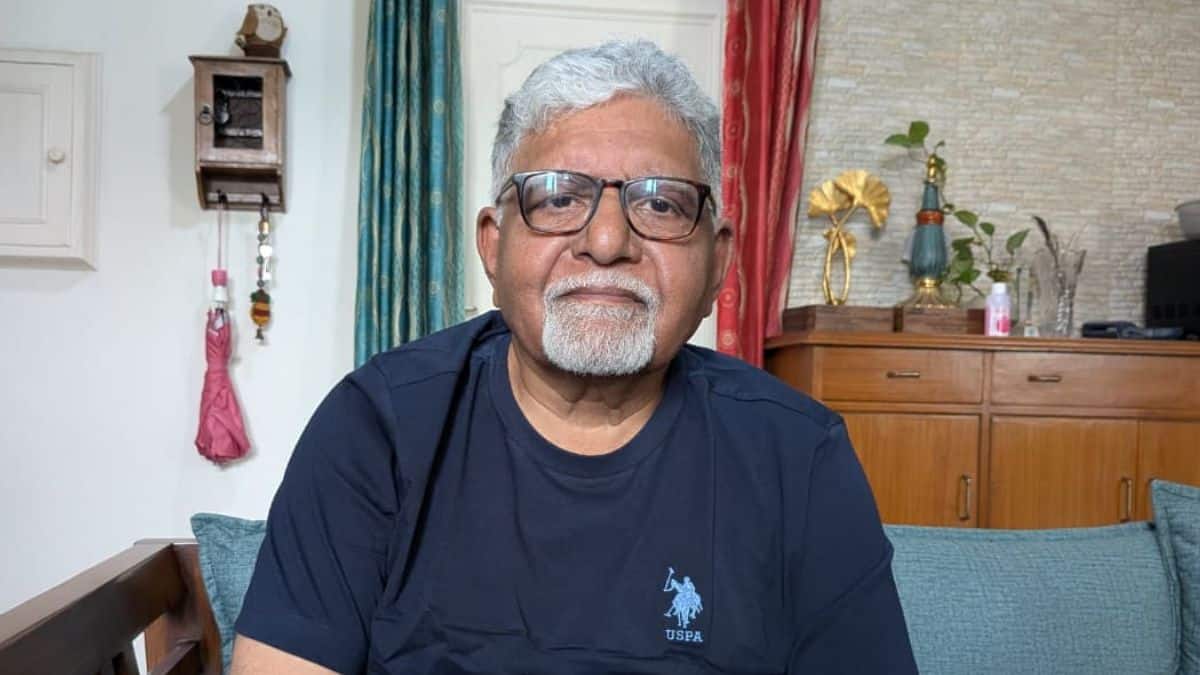
As student, Sachidanand Sinha benefitted from JNU’s deprivation points system. As faculty, he crunched data for it. He explains its origins, working and what will be lost if it’s gone
Jawaharlal Nehru University’s unique system of admissions, which awards “deprivation points” to candidates from poor and backward districts, is being challenged legally. A case in the Delhi High Court contests this salient feature of the JNU admissions system that has allowed students from some of the most backward regions in the country access high-quality education since the 1970s.
Sachidanand Sinha, former professor and head of JNU’s Centre for the Study of Regional Development (CSRD), was instrumental in updating the system for every admission cycle. He explains how the system originated and evolved, how it contributes to JNU’s unique character and diversity, and why teachers and students rallied to have it restored when the policy was withdrawn between 1984 and 1990. Edited excerpts:
What was the genesis of the deprivation points system in JNU?
The genesis of this lies in the parliamentary debate that led to the establishment of JNU. The parliamentarians were united and wanted a university that could really challenge the Western mode of thinking, not that it had to be indigenous. It was felt that much of the science and social science was Eurocentric; those ideas were centred on, or created to serve, the interests of European imperialists. It was both an anti-imperialist movement and the creation of an intellectual climate in which the problems of India, given its diversity, could be tackled.
Secondly, when the university was set up, the first vice-chancellor was appointed, along with Professor Moonis Raza, who was appointed as the officer on special duty. The first VC, Gopalaswami Parthasarathy, and Professor Raza came with those notes, which were being debated in Parliament. They started imagining a new kind of system. There was no architecture or template provided; objectives were provided on what was desirable. The pathways were not there. What we had were the British imperialist Acts, which were, in fact, designed when other universities were set up. It was basically a kind of bureaucracy, very much like a colonial one. This is pass, this is fail, this is attendance; you can be thrown out of university for inadequate attendance. But university should be a place where ideas can grow and where minds have nothing to fear. Young people are always rebels in their own way.
Also read ‘This is my way of giving back...’: CJP’s Ashutosh Ranka on ‘School Thik Karo’ campaign
It was hence emphatically stated that this has to be a university that is nationally represented. It should be national, as India’s population is diverse and disparate. In a hierarchical caste society, and in a society where land is unequally distributed, the means of production and opportunities are distributed in ways that reinforce the caste hierarchy. Until the 1970s, apart from all-India services, local appointments were made based on social, financial and cultural capital. There was hardly any competition.
Professor Raza, had implemented an idea during his days in Aligarh Muslim University (AMU). He had created a centre called the Department of General Education. [The actor] Naseerudin Shah is a product of that institute. His imprint was the visual makeup of JNU campus. The study places or centres should be like a blooming flower–narrow at the base and wider as you move up. The life sciences, social sciences buildings were built with that idea – where knowledge grows. The hostel should be in pyramid shape, as it is a place of resting. The other was that teachers' quarters and student hostels should be built together for better assimilation. Around the hostels, there are teachers' quarters. There is an environment which makes interaction easy.
It is not only the physical architecture but also the administrative and academic architecture that, in fact, he and people of his stature were trying to build. However, they were not independent; they were being pushed by students, most of whom came from privileged English-speaking backgrounds.
It was felt that [reservation for] SC, ST [Scheduled Castes and Scheduled Tribes] was not good enough. It is one way of addressing deprivation but there are others also who are deprived. There are religious communities. Sri VC Koshi was the students' union president; Prakash Karat, Ramesh Dixit, Sohail Hashmi and several others were part of the idea. One can easily say that the student union led this and was successful in sensitising the student community and teachers to the fact that deprivations are multifaceted. It is not just caste and tribal deprivation; it is bigger than that.
In the third five-year plan, the Government of India had already appointed a commission on backward areas. The backwardness framework was being talked about and discussed, and this was a result of that.
It is evident that a rich person in a poor area has fewer opportunities than a person in a relatively better-off area. It is not just income that determines it; the local macroeconomic level of society is also important. Regional and local macroeconomics are important.
Regional deprivations impact household-level outcomes, but there are also household-level deprivations that may be specific to the households. The first edition of the deprivation index was an amalgamation of various measurable regional and household-level deprivations.
There is also a community aspect, but disbursement is at the household level. You identified poverty and gave them ration cards; this is a family-based approach. The local economy- where is it? The real dynamics are actually there. Since it is multifaceted, the regional economic deprivation had to be addressed. It is important to note that deprivations are not only multifaceted and multidimensional but also intersectional.
This was actually the thought on how to get people from deprived areas to come and study at JNU.
What were the indices identified to allot deprivation points and how were they developed?
It was now understood that a deprivation index had to be developed and that the data would come from which source.
The index was identified. You will be surprised to note that it was not only about how much land you hold. It was individual-level information generated from the tehsildar’s office. What is my caste? This is not just to identify as SC/ST but also to identify backward classes. So, JNU had already identified backward classes before the Mandal Commission. We had a lot of students from South India, because in the south, they already had representation of backward classes in respective states.
The government knew there were classes of people cutting across religion, linguistic and cultural aspects who had reasonably comfortable sources of resources but were educationally lagging behind and therefore had little representation in formal regular employment. They may have some land but no proper education. They are not part of the framework. The structure of the society did not change after independence. Feudal relationships had not weakened, so the backward classes remained under the patronage of the high-caste/propertied class. These high castes were keeping the intermediate/ backward class on some kind of payroll. They used to work for them. The challenges confronting the deprivation index were huge and multifarious. Any index is not perfect on its own.
We had to create an index to represent regional backwardness. In the region, everyone is there: low-caste, scheduled-caste, women, men of all social and economic denominations. So, one was the macro economy. The household economy had to be addressed as well. How educated are the parents? What is their profession? What is their salary? This data was all there. The household index was built on this basis, even though its weightage was not very high.
We needed such data that is variable. It was important to identify the sensitive indicator of change and the sensitive indicator of variability. Two indicators had to be identified– one that shows deprivation and change, and the other that was sensitive enough to show variation.
In the 1970s people noticed literacy varied a lot. Literacy is a positive aspect which will show change as well as status. Literacy was an indicator which would identify all three – stock, process and change. The general literacy rate was more variable.
The other indicator was the agricultural productivity in rupee terms. It was the average of three years of agricultural production in that area. Why a three year cap? Because agriculture in India is rain fed. Professor GS Bhalla and others asked us to take the data of three years for better results. If agricultural production is increasing, the regional economy will be linked to the nearest urban area. Whatever purchases are taking place are in the local mandi. This captures the entire economic process and represents the region's economic dynamism. We took the per hectare agricultural productivity.
The third indicator is the agricultural labourer in that region. It will show deprivation and most importantly, indicate that they are landless. Landlessness data is available district-wise but it is not reliable. Agricultural labourers are not only landless but those with small holdings also work as labourers. We had first taken this as they were dependent on others' land. It was both a deprivation of dependence and dependence not only in economic terms but also in social terms. It was also cultural deprivation, as most of them were not only illiterate, but they also came from the lower class. Now, agricultural workers from SC, ST communities will constitute 80-90% of the total in any district.
The other indicator was the percentage of rural population. With these, 313 districts were identified and divided into Quartiles 1 and 2.
When was this admission policy implemented?
The deprivation point system was implemented in 1972 and the first admission with it was done in 1973.
When it was started in the 1970s, it carried 20 marks. Of the remaining 80 marks, 50 were allocated to the written examination and 30 to the interview. Then it was reduced to 10 and again increased to 12. When it was increased to 12, I was part of the committee.
It was reduced to 10 as certain household data were not available at Tehsildar’s office so it was removed and scaled down.
It was increased to 12 later, as I told the committee that the effect of deprivation points on women’s admission was getting reduced. Men were getting their mark, but rural women were being left behind so two points were increased. The two points were not just for women but also men from rural backgrounds. Wherever there is rurality, the student would get six marks.
The maximum marks that one could get was 12 and no one could get the full marks.
As Yogendra Yadav says, deprivation marks are not resulting in others being deprived. The university is just giving an opportunity to address inequality.
What was the source of the data for the indicators?
Our biggest limitation was that only district-wise information was available for these. This is the Census data, which was used because the Census is not sample data. We wanted to go to the block level, but to work with that kind of data, we would have needed five years with technology available then. The block level is an administrative unit but functionally, it is largely the district's representation.
I was not an architect of it, but used to do calculations for the system. The last time I did the calculation was with 2011 data. The 2021 Census was not undertaken.
The last committee on deprivation points was the Ajay Patnaik committee and I was a member of that.
This was regularly reviewed but the problem was that in 2001 there were 507 districts. By 2005, the number increased to 600. In 2001, my district was Saran. In 2005 it split into three districts – Goplaganj, Siwan and Saran. We devised a simple method by which marks of Saran would be awarded for the other two as well. If parts of two different districts were merged, we would take the average of both the districts and divide by two.
Has JNU ever removed deprivation points from the admission system?
In 1983, there was agitation in JNU against the administration and the university was closed. There was no admission that year.
From 1984 to 1990, JNU admissions took place without deprivation points. A committee was formed then which stated that the students who participated during the agitation came from districts listed in the index for deprivation points, though not stated in black and white.
But teachers observed that the students who were admitted in JNU over these years [1984-1990] then were elite students. There was no representation of students from rural areas or even women. Education as a social mobility was stopped in six years.
Also read Maharashtra allows two medical colleges to become private universities
In 1988, I was appointed faculty at JNU. Then I became a general secretary of JNUTA and Ramadhikari Kumar was the president. In the students union, Surajit Majumdar was the president. I canvassed with teachers on the need to bring back deprivation points. In 1990 it was accepted and in 1991 the system restarted.
JNU has Student-Faculty Committees (SFC), with an MA and research SFC. This body also plays an important role in discussing every issue apart from evaluation.
Teachers were supported by the academic council and the vice chancellor had changed. Professor Mohammad Shafi Agwani also played a positive role.
When were the deprivation points for women introduced?
We also then gave deprivation points to women and it was started in the late 1980s. You could be women from any background. The understanding was that women at all levels of social aggregation tend to have lower status and subordination in comparison to male in the same class. The Rupamanjari Ghosh committee understood this and introduced five deprivation points for women.
How important have the deprivation points been for students?
I can give you my own example.I came from a town with a population of 50,000. There were three or four colleges, but no library. We used to buy those key books as we were not able to get originals.
I am from Chhapra, Bihar; so, I got the deprivation marks. Of those in my batch to complete Class 12, there were two doctors, one engineer and two professors; one of them was me. 50% of the class went back to their family vocation, if they had any. So this mobility I got. When I came to JNU and saw the library, I just lapped up the opportunity.
Till 1983, you had to come to JNU to appear in the entrance exam. The university used to cover travel expenses.But admitted students did not receive reimbursement for the return journey. We could only take admission and then go back to collect our belongings. After that, the exams were conducted in different centres, not only in cities but also in smaller areas. The JNU system had a lot of flexibility.
Removing this will change JNU’s character and make it elitist. Not only that, the composition of students will change. We have representation from all sections; it creates a very different kind of dynamic.
 Add as a preferred source on google
Follow us for the latest education news on colleges and universities, admission, courses, exams, research, education policies, study abroad and more..
To get in touch, write to us at news@careers360.com.
Next Story
]Latest Education News
]Related News
]JNUSU ends 17-day hunger strike after admin agrees to withdraw FIRs, revoke rustication of students
JNU Strike: JNUSU hits back at VC's remarks over hunger strike, alleges denial of medical care
JNU VC defends handling of hunger strike, cites talks and twice-daily medical care for students


