
Delhi Private Universities Bill: New regulator, zero standards, minister as visitor; why teachers are wary
Azib Ahmed | August 20, 2026 | 04:25 PM IST | 8 mins read
The bill also provides for a 25% Delhi quota, fee waivers and concessions but no regulation. AAP teachers’ body has raised concerns about sharing of public resources, the 12 Delhi Govt-funded DU colleges
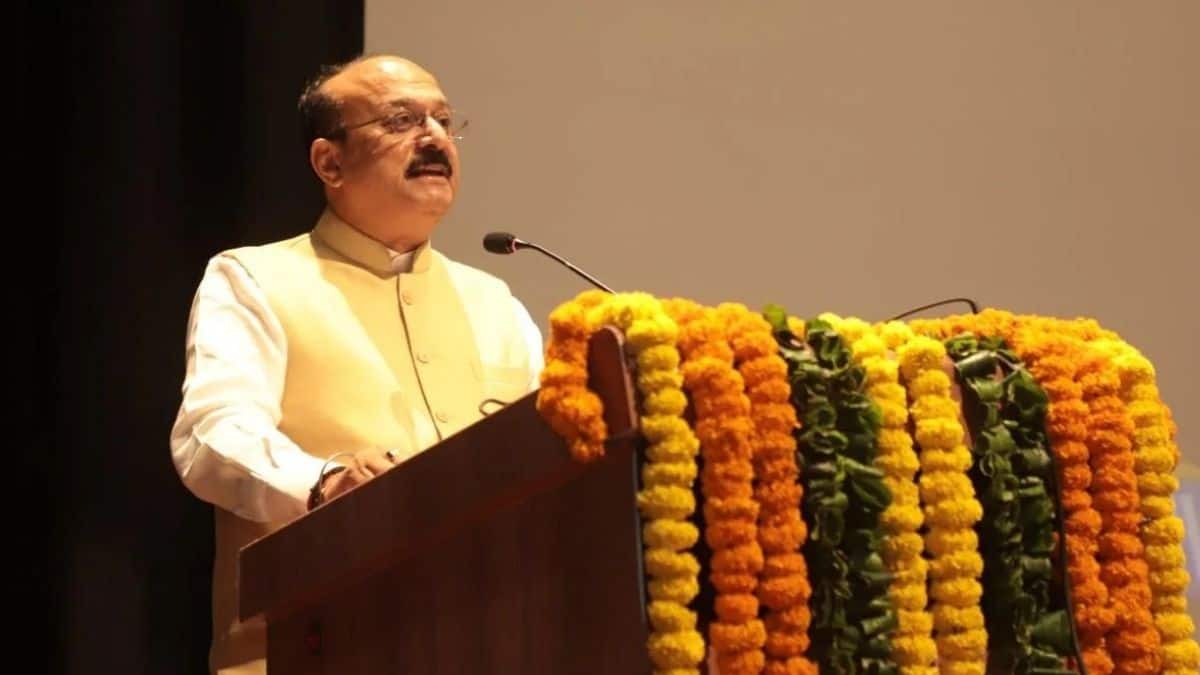
In the Government of Delhi’s first policy for private universities in the national capital, it proposes “greenfield” and “brownfield” universities, foreign university campuses and a new Delhi Private Universities Regulatory Authority. The Delhi Government’s bill also places the higher education minister in the top spot as visitor of all private universities.
As per the Delhi Private Universities Bill 2026, tabled in the assembly during the monsoon session, private universities will be allowed to set up constituent colleges, regional centres, additional campuses and study centres, but won’t have the power to affiliate or recognise other colleges. If enacted into state law, the policy will require all private universities to reserve 25% of seats for students from within the National Capital Territory of Delhi. This quarter will be further subdivided into slabs with varying levels of scholarships and fee concessions.
The bill also permits universities to use facilities belonging to other educational institutions, public authorities or private entities, through agreements.
It has raised concerns among academics and teachers over the possible use of public infrastructure by private institutions, government oversight, affordability and reservation policies.
The Academics for Action and Development Delhi Teachers’ Association (AADTA), a teachers association affiliated to the Aam Aadmi Party, has argued that the bill could facilitate the “privatisation and contractualisation” of higher education and has opposed several provisions of the bill.
The Delhi Private Universities Bill, 2026, was introduced in the Delhi Assembly’s monsoon session which concluded on August 11. Careers360 has seen a copy of the bill. Here’s what it says on reservation, governance of private universities and more.
Delhi Govt Bill: Greenfield, brownfield universities
A private university can be established either as a greenfield or brownfield institution.
A greenfield university would be a completely new institution, established independently of existing educational institutions. A brownfield university, on the other hand, could be created by converting or upgrading an existing college, campus or institution offering undergraduate, postgraduate or diploma courses into a private university.
In both cases, the institution must function as a unitary university, can set up constituent colleges, regional centres, campuses and study centres within Delhi, following the regulations of the University Grants Commission (UGC) and other bodies.
This has raised questions over the future status of existing institutions, especially those built with public funds. AADTA has specifically raised concerns about the possibility of existing public institutions being brought under private university structures. It pointed to 12 Delhi University colleges fully funded by the Delhi government, claiming that recruitment and salary-related issues in these institutions remain unresolved.
The bill also provides for off-campus centres which are defined as Delhi NCT centres of private universities headquartered elsewhere in India.
Delhi Private University Infra: No min standards
The BJP government in its draft has set no standards whatsoever for infrastructure at the private universities it proposes to allow. The bill states, “No minimum relating to books, journals, equipment, computers, classroom size, built-up area shall be prescribed under this Act or the rules.”
Similarly, there are no minimum standards set for land, buildings or other resources as long as the sponsoring body has legal rights over enough land and built-up space for the university’s courses, students and research.
The university would still be required to construct or maintain academic buildings, laboratories, libraries, digital equipment, student amenities and administrative facilities appropriate for its programmes, enrolment and research activities. The bill also requires the institutions to follow regulations of bodies such as the Bar Council of India (BCI) and All India Council for Technical Education (AICTE) which set standards for the professional courses they govern.
However, the bill permits the facilities to be shared with other educational institutions or accessed through agreements.
AADTA has raised concerns over the provision, saying the bill does not clearly explain how publicly-funded infrastructure will be used, who will bear its costs or what safeguards will be enforced to protect public ownership. “This could allow private institutions to benefit from publicly-created educational resources without adequate public accountability,” AADTA said in their statement.
Private University Bill: Delhi quota, fees, scholarships
The bill proposes a 25% reservation of seats in every course for students from within Delhi. It further says admissions against these seats would have to follow the reservation policy of the Government of NCT of Delhi for higher education, “in accordance with existing law on reservation”.
The 25% Delhi quota will be subdivided into three slabs varying levels of fee exemptions, based on their merit cum means.
The bill’s language implies that every student from Delhi will see some concession. 5% students will get full waivers; 10% will pay half the fee; and the remaining 10% within the 25% quota will get 25% exemptions.
Beyond this, the bill does not provide for any kind of fee monitoring or regulation.
The bill also includes "political or other opinion" in its broad non-discrimination clause. It states that "sex, race, creed, class, caste, place of birth, religious belief or political or other opinion" cannot be a reason for exclusion from any university office or post, qualification or function.
Parallel regulatory for private universities
The bill also proposes the creation of a Delhi Private Universities Regulatory Authority.
The authority would consist of a chairperson and five members appointed by the government, including representatives from academia, administration and the judiciary.
The bill gives the authority powers to assess standards relating to teaching, examinations, research and other matters concerning private universities.
Following an assessment, it can communicate recommendations to a university and issue directions for corrective action. If a university fails to comply within a reasonable period, the authority can issue further directions to ensure compliance.
The authority will also receive records concerning students admitted to different courses and their results.
[Also Read| Assam’s State Higher Education Council: Facilitator or another bureaucratic layer, ask academics
AADTA has questioned the creation of a parallel state regulatory structure, arguing that the “ NEP itself emphasises … a common, single point regulator”. The National Education Policy 2020 is also the basis for the union government’s efforts to replace the UGC, AICTE and National Council for Teacher Education (NCTE) with a single regulator, the Viksit Bharat Shiksha Adhishthan. The VBSA Bill is currently with a joint-parliamentary committee.
Private Universities: Higher education minister as visitor
The proposed approval process for a private university involves scrutiny by an expert committee constituted by the department of training and technical education (DTTE) GNCTD or department of higher education (DHE).
While the expert committee will assess the proposal, the government won’t be bound by the committee's evaluation. “The government reserves the right to accept or not to accept the evaluation report of the expert committee. The decision of the government in this regard shall be final.”
The Delhi Government will also be at the top of the chain of command. The bill proposes making the higher education minister the visitor of all private universities. At present, BJP’s Ashish Sood is the the education minister.
The visitor would preside over university convocations for conferring degrees and diplomas. The office would also carry oversight powers. The visitor may call for information relating to the affairs of a university and, if satisfied that an order, proceeding or decision of a university authority or officer is not in conformity with the Act, statutes or rules, may issue directions. The bill states that such directions issued shall be “binding on all concerned”.
Also read MGM University VC: FYUP adds to students’ skills, three-year degree puts them at disadvantage abroad
The visitor, in consultation with the chancellor, may also cause inspections, scrutiny, investigations, surveys or inquiries into administrative, academic or executive matters of the university.
AADTA has objected to the provision, arguing that the visitor should ordinarily be a constitutional authority such as the president, governor or lieutenant governor rather than a political office-holder.
Foreign universities
The Bill contains a separate chapter dealing with foreign higher educational institutions (FHEIs) seeking to establish campuses in Delhi.
A foreign institution would be able to apply to the Delhi Government for establishment of a campus after securing approval from the UGC under its applicable regulations. The Delhi government could then notify the establishment of the campus.
The bill exempts such institutions from the requirement of having a local sponsoring body and gives them autonomy over their fee structure, admission process and curriculum as long as they abide by UGC regulations.
Foreign institutions would be subject to periodic quality audits and would have to submit annual information to the government covering academic performance, student enrolment, faculty strength and financial transactions.
The bill also lays down provisions for closure of foreign university campuses, including advance notice, arrangements for students to complete their courses or transfer to recognised institutions, settlement of liabilities towards students and employees, and submission of a closure plan to the proposed regulatory authority.
AADTA has questioned the need to include a separate FHEI framework in the legislation, given the existence of UGC regulations governing foreign higher educational institutions.
Delhi Govt Bill: Limited teacher representation
The universities’ administrative bodies will be largely structured to have nominated members rather than elected ones.
Also read Why Maharashtra’s BATU University makes engineering, pharmacy graduates wait years for marksheets
AADTA has also raised concerns about the representation of teachers in statutory bodies such as the court, board of management and academic council, arguing that their representation is limited and largely dependent on nominations.
The organisation has also questioned the dispute-resolution mechanism for employees.
Under the Bill, the chancellor has a role in the final appeal in disputes involving employees. AADTA has argued that this could raise questions where the chancellor is the owner or nominee of the parent society.
 Add as a preferred source on google
Follow us for the latest education news on colleges and universities, admission, courses, exams, research, education policies, study abroad and more..
To get in touch, write to us at news@careers360.com.
Next Story
]Locked Toilets to Teacher Shortage: CJP’s school audit campaign reveals chronic neglect of govt schools
According to CJP’s Ashutosh Ranka, ‘between 1,200 and 1,500’ volunteers conducted school inspections across the country starting August 15. They uncovered severe infrastructure and manpower gaps the communities want fixed
K. Nitika ShivaniLatest Education News
]Related News
]'Spare India from anarchy': Indian-origin students, academicians condemn anti-EC protests
PM-SETU Scheme: Centre approves over Rs 1,000 crore for five ITI clusters in Maharashtra, Odisha, J&K
Madhya Pradesh government releases Rs 502 crore as RTE fee reimbursement to 20,456 private schools


