
MUHS plans virtual classrooms, remote lectures to tackle faculty crunch at new Maharashtra medical colleges
Musab Qazi | August 13, 2026 | 05:45 PM IST | 4 mins read
New MUHS Nashik VC also proposes 24x7 helpline to address ragging, mental health issues of students; annual PhD exams; blockchain tech to avoid paper leaks
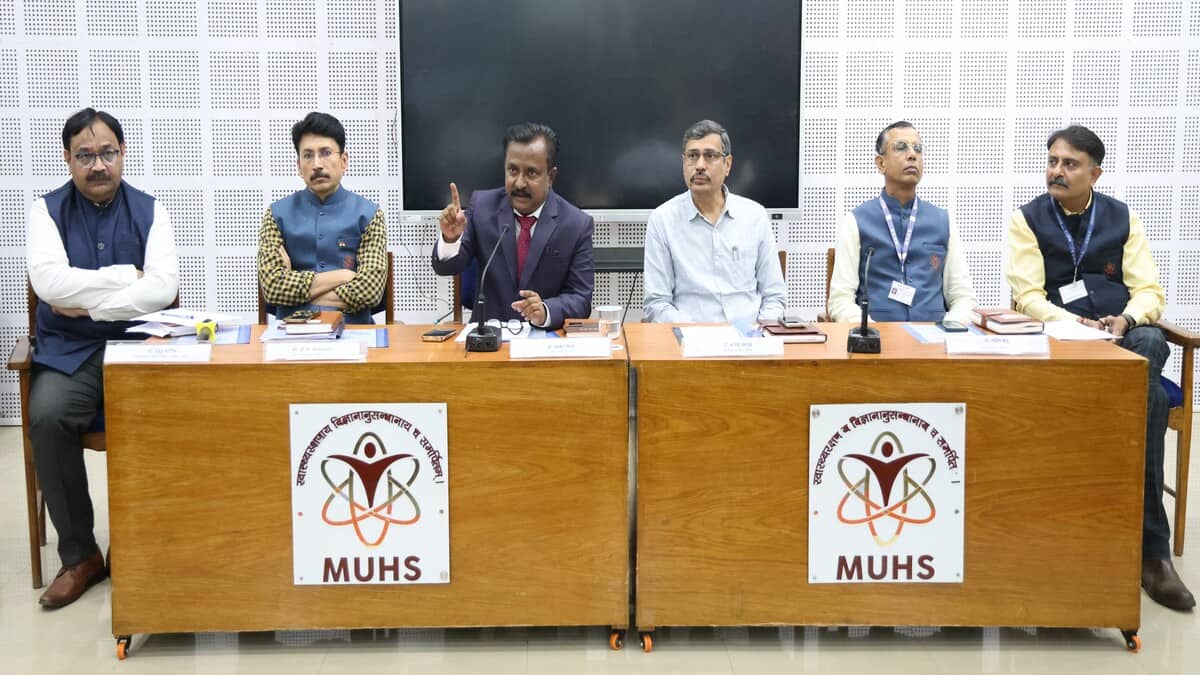
NASHIK, MAHARASHTRA: The Maharashtra University of Health Sciences (MUHS) Nashik is mulling putting in place 'virtual classrooms', where teachers would remotely provide instructions to students, as a short-term measure to mitigate the shortage of faculty members at the state's new medical colleges.
The university, which is the sole state varsity in Maharashtra for health science education, is also setting up a centralised grievance redressal portal to streamline the resolution of complaints related to ragging and other issues faced by students at the affiliated colleges. The institute is also considering using the blockchain technology to securely administer its exams and avoid paper leaks.
These measures were announced on Thursday by the varsity's new vice chancellor (VC) Venkat Gite, who assumed the charge around a week ago. MUHS has been working without a full-time VC for more than nine months after Lt Gen Madhuri Kanitkar (Retd) completed her tenure in October last year.
MUHS Nashik: Remote lectures, virtual classes
Acknowledging the paucity of teachers at the state's newer medical colleges, many of which have been set up during the last few years, Gite suggested that the subject experts from other institutes could be tasked with conducting lectures remotely through live video conferencing. He, however, asserted that this measure can only be a temporary solution and advocated for more long-term solutions, including increase in government spending on healthcare and making medical postgraduates take up teaching as part of their bond service.
"Once new medical colleges are set up, there's bound to be a shortage of teachers. We can let the available teachers prepare a module for a topic of their liking. It's not a long-term solution, but it will solve the problem for now," he said.
Explaining the modalities of such an arrangement, the new VC, who himself runs an educational channel on YouTube, said that the lectures at the state's prominent medical colleges can be videographed and streamed in real time to other institutes. The tutors at those colleges could help set up and coordinate interactions at these virtual classes. Multiple choice questions (MCQs) could be used as a feedback mechanism, in order to simultaneously prepare undergraduate students for the NEET PG exam, he suggested.
"This will cover the theoretical aspects of the curriculum. As for practicals, the students are gradually trained in providing care, starting with observation, working under guidance and then practicing on their own. As of now, there's no bulk requirement of instructors for this purpose," he said, adding that the university plans to present this proposal to the state government for its approval.
Stressing on prioritising students' concerns, the VC announced a centralised mechanism to address their complaints. He also said that the university will set up a 24x7 helpline to ensure that the calls to the varsity don't go unattended. The university departments and colleges have been directed to appoint one person as the point of contact. CCTV cameras will be set up to keep an eye on the university employees and officials.
"There will be a single window system. We need to fix accountability," said Gite.
The VC also assured that the university will ensure compliance of student wellness-related measures at all the colleges. These measures include appointment of anti-discrimination personnel, mentor-mentee system, sports activities and support for disadvantaged students. MUHS also plans to rope in alumni for helping the students with various aspects of learning such as communication skills.
MUHS University Nashik: Annual PhD exams, blockchain tech
Gite said that the university plans to conduct PhD entrance examination every year instead of biennially, so that the aspirants don't have to wait for extended periods for enrolling in doctoral programmes. He also underscored the need for carrying out socially impactful research at the university as well as other affiliated institutes.
The VC said that, in the light of the nationwide concern over paper leaks, the administration is looking at deploying blockchain technology and using encryption and decryption methods to safely carry out examinations. "The current situation is worrying. There's a deficiency in both humans and machines. Our job is to find and rectify them and rectify them," he said.
Acknowledging that MUHS currently doesn't figure in the national and international rankings, the VC set out a vision to alleviate the institute among the top ones within the next five years. He also announced that the varsity will collaborate with other institutes to offer newer programmes such as sports physiology and developing new equipment, while finding new income sources for the institute.
Also read Why Maharashtra’s BATU University makes engineering, pharmacy graduates wait years for marksheets
"University isn't really aggressive financially. We need to make efforts to create income sources. There are many ready to donate money, but they need to be assured where their money is being spent," he said
Weighing on the ongoing controversy over registration of homeopaths in Maharashtra Medical Council, Gite said that while he opposes 'mixopathy', the different systems of medicine should be 'complimentary'. "We can help each other, but shouldn't do someone else's work," he said.
 Add as a preferred source on google
Follow us for the latest education news on colleges and universities, admission, courses, exams, research, education policies, study abroad and more..
To get in touch, write to us at news@careers360.com.
Next Story
]Under 25% of candidates selected via NTA NET join NFSC; panel pulls up govt for coaching scheme’s poor show
The panel is not pursuing the issue of increasing the number of slots for National Fellowship for SC. But it wants MSJE to improve performance of the free coaching scheme for SCs, OBCs
Shradha ChettriLatest Education News
]Related News
]IIIT Ranchi student death: Education Ministry forms 3-member panel, students seek director’s resignation
SRM University-AP’s 20 faculty members feature in world’s top 2% scientists list
ANRF ACE scheme targets world-class research in science and engineering, invites institutional proposals


