
Why Maharashtra’s BATU University makes engineering, pharmacy graduates wait years for marksheets
Team Careers360 | August 10, 2026 | 03:11 PM IST | 13 mins read
Maharashtra made Dr Babasaheb Ambedkar Technological University the sole affiliating body for technical, engineering colleges. Then, everything went wrong
Musab Qazi and Azib Ahmed
LONERE, RAIGAD: It has been two years since Wahaj Amshan completed his undergraduate studies in computer science engineering but he is unable to pursue a master’s degree. Reason: He is yet to receive his degree certificate or even the final-semester marksheet. His college, Matoshri Pratishtan’s Group of Institutions School of Engineering and School of Management in Maharashtra’s Nanded, kept saying they had no clue why his documents were stuck, pointing instead to its affiliating university, the Dr Babasaheb Ambedkar Technological University (BATU).
A few months ago, Amshan took a 600 km trip from his hometown in southeast Maharashtra to the university headquarters at Lonere village, at the foothills of the Western Ghats, deep inside Raigad district, along the Konkan coastline. He completed all the formalities and was told that the results would be made available at the university’s Chhatrapati Sambhajinagar (previously Aurangabad) regional centre, much closer to his place, within a fortnight. He is yet to obtain his original marksheet.
“We are repeatedly asked to submit documents. We had to give college letters, fee receipts and copies of previous semester marksheets again. The university said they didn’t have complete details”, he said, adding that the university changed its online portal multiple times during his course, which may have led to the loss of data.
Also read Maharashtra hostels for SC, ST students run without wardens, overcrowded; some ‘bogus’: CAG report
Amshan is not alone. Complaints have been mounting about the various examination and result-related issues at BATU, which was designated as the state’s sole technical affiliating university in 2014. Delays in conducting exams and announcing results, errors in assessment and marksheets and paper leaks have become the order of the day.
The university’s remote location, coupled with erratic enterprise resource planning (ERP) and an unreliable communication system, compound the problem. The four regional centres and five regional sub-centres, which are supposed to decentralise administrative work, have been of little help.
BATU University Lonere and BAMU University
The situation has become so dire that many of the engineering and pharmacy colleges, which had left their regional state public universities to become affiliated to BATU are now eager to go back into their earlier parent institutions’ fold. Earlier this year, the management council of the Dr Babasaheb Ambedkar Marathwada University (BAMU), one such regional university in Chhatrapati Sambhajinagar, even passed a resolution that the institutes wishing to rejoin BAMU should be allowed do so.
Taking heed to these grievances, the state directorate of technical education (DTE) conducted an inquiry into the various problems plaguing BATU, highlighting what it saw as a lack of “student-friendly” system, poor communication channels and the colleges desirous of serving ties. Last March, the state formed another committee to make suggestions for improving the varsity’s functioning.
Also read Missing labs, teachers, entire colleges – why SRTMU Nanded cracked down on BSc admissions
Finally, the state government higher and technical education minister Chandrakant Patil, in a media interaction in April, announced that the state will no longer mandate that the new technical institutes – engineering, pharmacy, architecture and hotel management colleges – be affiliated to BATU, and that existing affiliated colleges will be allowed to return to their previous universities. The government has since deferred the plans, and is now focusing on resolving the pending exam-related complaints.
But conversations with government and university officials, faculty members, affiliated colleges, and current and former students indicate that BATU’s troubles are more structural than operational.
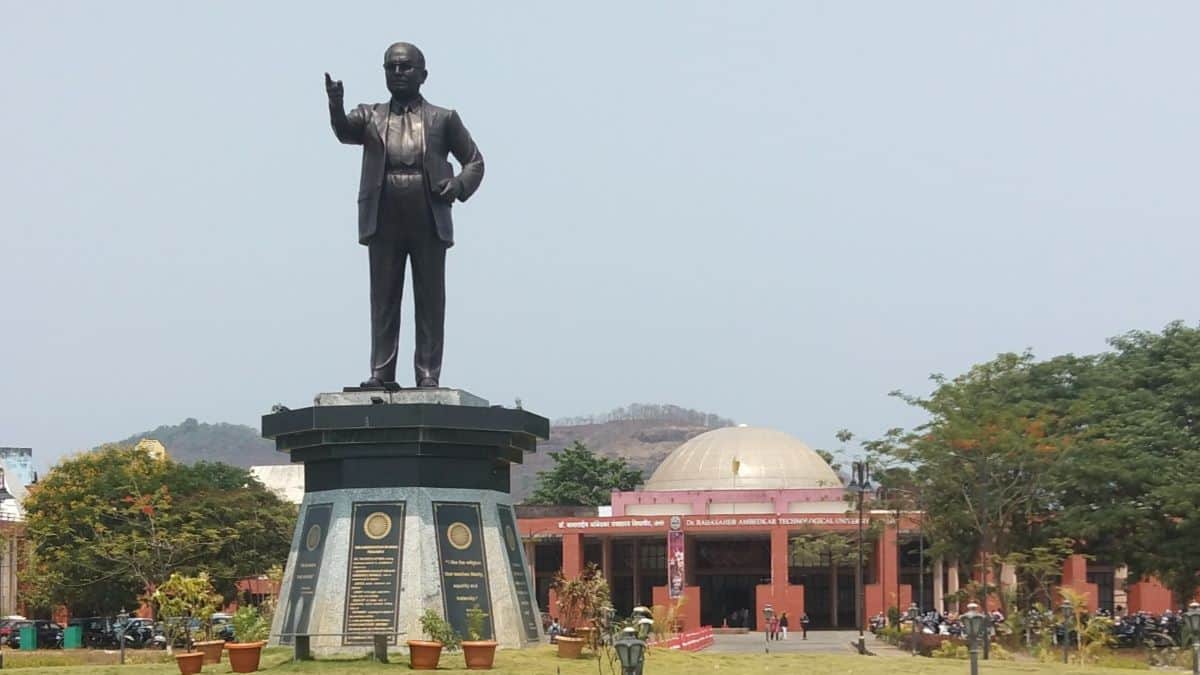
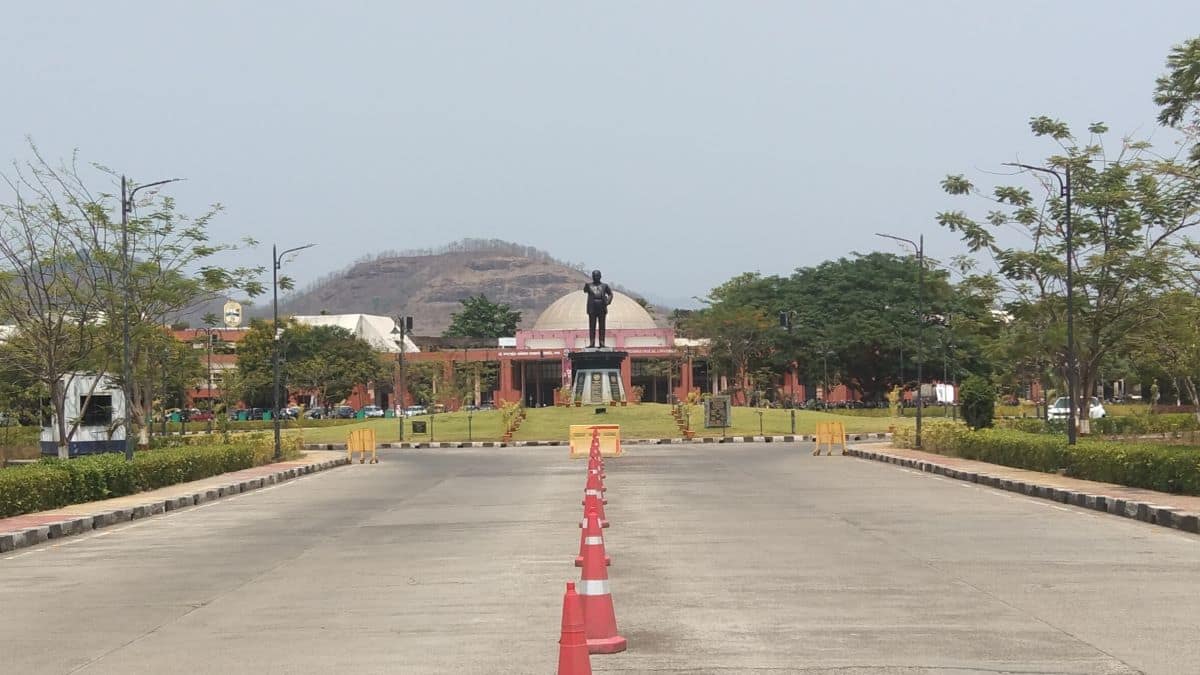 BATU campus in Lonere, Raigad. (Image: Musab Qazi)
Maharashtra’s pharmacy college surge
Ever since the university’s status was changed from a standalone institute to an affiliating university, it was rapidly saddled with an ever-increasing number of affiliated colleges, bulk of them being new pharmacy education institutions. In barely a decade’s time, the university’s institute count has reached 455 – 333 pharmacy colleges, 113 engineering and a handful of architecture, hotel management and catering technology (HMCT) and vocational institutes. Together, they enroll around 2 lakh students. This makes BATU the fourth-largest public university in the state, behind only the University of Mumbai (MU), Savitribai Phule Pune University (SPPU) and Rashtrasant Tukadoji Maharaj Nagpur University (RTMUN).
Even as its footprint kept growing, BATU never got any additional regular staff, teaching or non-teaching. On the contrary, the university is compelled to operate with a much smaller permanent workforce than was available when it was a unitary university. The state’s hiring freeze, in effect for the better part of the last decade, meant that the retirees weren’t replaced, forcing the university to rely on ad-hoc staff.
The lack of expertise and administrative experience in carrying out the business of affiliation and large-scale examination among the existing staff contributed to the university’s woes.
The DBATU Lonere experiment
BATU was established in 1989 as a unitary technical university, the only such institute in the state then, to drive economic development in the Konkan region. Despite the challenges of a remote location – frequent power cuts, inadequate hostel facility, poor healthcare facilities and water shortage – the varsity continued to grow, offering diploma, undergraduate (UG), postgraduate (PG) and doctoral programmes in multiple engineering disciplines. Despite being a relatively-young and less-pedigreed engineering institute, a significant chunk of its faculty was drawn from the Indian Institutes of Technology (IITs). It’s also credited with expanding access to technical education in rural parts of the state.
In 2014, the state decided to convert BATU into a collegiate university, envisaging it as a sole affiliating body for the four ‘technical’ streams of education – engineering, pharmacy, architecture and HMCT – and expanding its jurisdiction from its own campus to the entire state. It was modelled on the affiliating technological universities in other states, such as Dr APJ Abdul Kalam Technical University (AKTU) in Uttar Pradesh, Visvesvaraya Technological University (VTU) in Karnataka and Gujarat Technological University (GTU). The BATU transformation was aimed at standardising curricula, improving academic governance, and bringing uniformity in technical education.
However, the BATU experiment was hamstrung from the get go. While the state mandated all the new technical institutes to join BATU, the existing institutes were given a choice between staying with their older parent institute or tying with the technical university.
The policy led to a clear divide: most colleges in the urban centres of Pune and Mumbai, including some of the most prominent institutes like the Veermata Jijabai Technological Institute (VJTI) and the College of Engineering Pune (COEP), chose to continue their association with the more recognised brand of MU or SPPU. On the other hand, quite a few colleges from Marathwada, Vidarbha, north Maharashtra and western Maharashtra opted for the new arrangement. As a result, BATU couldn’t hold exclusive sway over the state’s technical education landscape.
“Several established institutes preferred to remain with traditional universities due to stability and predictability of systems, concerns about administrative readiness at BATU and transitional uncertainties. The lack of regional centres and difficulties due to geographical location were other possible reasons. This did impact the experiment, as initial participation from top-tier institutions could have strengthened credibility,” said a BATU alumnus, currently teaching at a top Mumbai college.
BATU: 10 years to frame policy, staff crunch
While BATU was asked to begin affiliating colleges, drafting curricula and conducting tests, the state moved at snail’s pace to put together a proper affiliating university. The university’s first statutes (by-laws) weren’t approved until May 2022, almost eight years after Dr Babasaheb Ambedkar Technological University Act, 2014, was enacted. It took another two years to frame the first ordinances, or regulations defining broad policies.
The delay in drafting the statutes and ordinances meant that the university couldn’t appoint key administrators – the deputy registrars and assistant registrars – who head the various executive departments in the public university, such as the student section, establishment, affiliation, accounts, examination and store.
Besides the vice chancellor (VC), registrar, finance and accounts officer and controller of examination, there are only two Officers on Special Duty (OSDs) to look after the entire administration. To make matters worse, at the moment, all the leadership positions, including the deans of faculties, are being handled by the university’s faculty members as additional responsibilities.
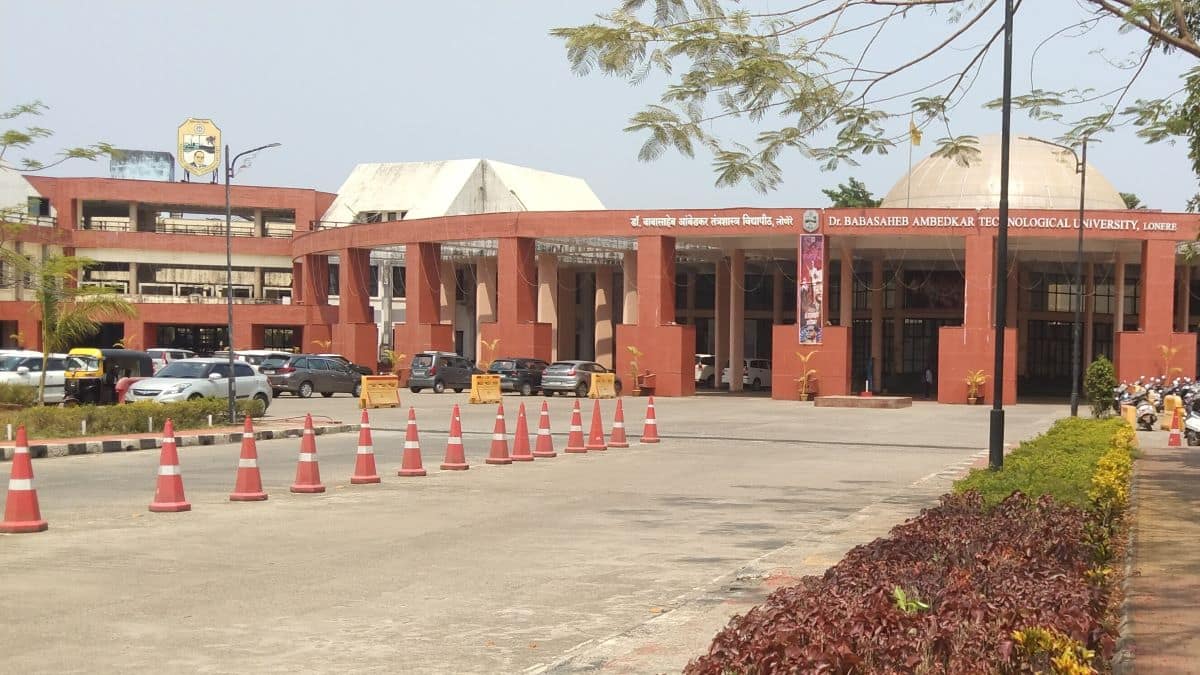 BATU main building in Lonere, Raigad. (Image: Musab Qazi)
Even the current VC, Rajanish Kamat, is holding the post as an additional charge alongside his primary job as the head of the Homi Bhabha State University (HBSU) in Mumbai. He was appointed in March this year, after Karbhari Kale, the previous VC, suddenly resigned from the post before completing his tenure, without offering any explanation.
In the initial days, BATU could handle the limited workload but it soon became apparent that they will need additional staff to make things run seamlessly. By 2020, the university had submitted a proposal to the state to create around 1,200 non-teaching posts. In the last five years, and several communications back and forth with government officials later, the requirement has been whittled down to 400. But the state finance department is yet to sign off on the new staffing pattern. The government, however, recently did approve the expansion of teaching posts, clearing the way for hiring 120 new faculty members.
“The finance department has held the non-teaching hiring across public universities. They are first asked to fill the teaching posts,” said an official from Mantralaya, the state secretariat.
In the meantime, the university has lost its existing manpower considerably due to retirements. Of 90-odd teachers working in 2016, only 40 remain. A similar number of non-teaching staff out of 200 sanctioned posts is employed currently, after almost 100 retired in the last decade. The university had to hire temporary staff – 110 teachers and 224 non-teaching staff – to mitigate the shortfall.
While the state bears the expenses of the ad-hoc employees hired against sanctioned posts – though their salary is significantly smaller than that for regular staff – the varsity pays for the rest from its own kitty.
The university teachers are aware of their own limitations. “We need highly-skilled manpower,” said a faculty member. “Everyone is overworked. Every faculty member works five times their capacity,” said a BATU official.
Exam woes, BATU sub-centres
While the university tried to rely heavily on digital systems and decentralisation through its regional centres to overcome the shortage, those efforts were marred by a paucity of resources and a lack of adequate training among staffers in managing large-scale digital infrastructure.
Though BATU had put in place a digital system as early as 2017, the frequent changes in it haven’t helped the students. It initially adopted the Maharashtra government’s Integrated University Management System (IUMS) before it was shut down following a change in the government. A private service provider hired subsequently was shown the door within a year after one of its employees was found tampering with the test scores. For an entire year, the university carried out evaluation work manually as it couldn’t find a replacement. The variations in data format used by various vendors became another headache.
The university, however, asserts that the bulk of the issues have now been resolved. “Only a few students have some problems. Now everything has been streamlined,” said an official.
The university’s regional and sub-centres, too, weren’t fully functional, making students travel long distances to get their work done. A member of a probe committee appointed by the state told Careers360, “BATU didn't have manpower. The regional centres should have had officials and working groups.”
However, a BATU official blamed the colleges for not cooperating with them. “We have given strict instructions to colleges. We no longer entertain the students [visiting the main campus]. We have delegated powers and responsibilities to sub-centres working under the regional centres,” he said.
Also read IISERs plan admissions based on Science and Maths Olympiads, explore sports quota
There was another hurdle for the regional centres. While the BATU Act required the state’s public universities to part with five acres of their land for the technological university to build its regional centres, some of the universities, such as MU, resisted it, citing a shortage of space on their premises. However, following the state’s intervention, almost all the universities have agreed to transfer one acre of land apiece to BATU.
“The VCs at those universities will work as mentors to BATU students in their respective regions,” said the Mantralaya official, assuring that the pending grievances will be resolved in a month or so.
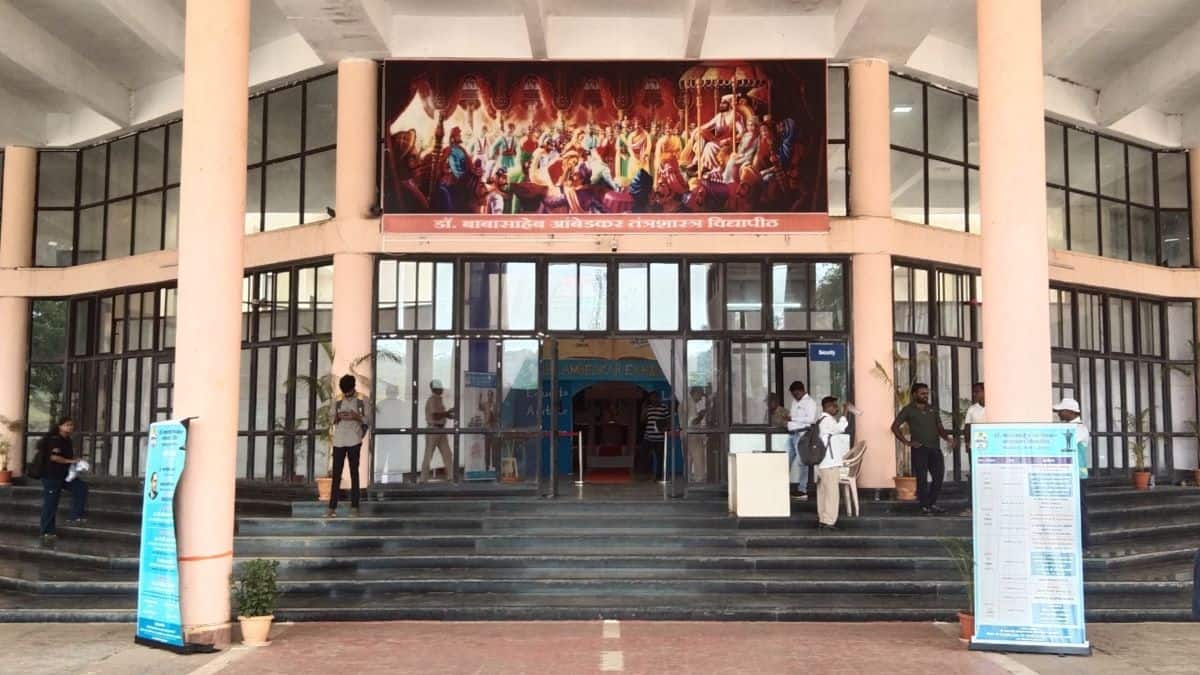 Entrance to BATU's main building at Lonere, Raigad. (Image: Musab Qazi)
Students bear the brunt
These teething problems took a heavy toll on students and colleges. For instance, a sixth-semester civil engineering student from Deogiri Institute of Engineering and Management Studies, Aurangabad, who requested anonymity, said delays in exams and results are routine. Even when exams are conducted, results are often late and sometimes inaccurate.
“I had three backlogs in the second semester despite writing my papers well. After rechecking, all three were cleared,” he said, adding that students spend around Rs 600-700 per subject for rechecking.
The student also pointed to disruptions in the academic calendar. “Our fifth semester ended in November last year, but exams were held from the last week of January to February. Meanwhile, classes for the next semester had already begun in December,” he said.
Geeta Lathkar, principal of MGM’s College of Engineering, Nanded, acknowledged that BATU has been functioning with limited manpower and has relied heavily on outsourcing for administrative processes, but said the issues cannot be entirely attributed to the university. She pointed to the rapid expansion in affiliated colleges.
“There was a sudden increase in the number of institutions, and the university could not cope with the workload,” she said, adding that the regional centres have helped to a certain extent.
Research against all odds
The officials and teachers at BATU rue that the exam controversies have overshadowed the many academic and research strides the university has made in recent years, despite the resource crunch.
The varsity began incorporating several of the curricular reforms proposed in the National Education Policy (NEP) 2020, including six-month internships, online courses, honours degrees, interdisciplinary minors, and vernacular (Marathi) language courses in 2019, well before the new policy came into vogue.
As part of its mission of taking technical education to the hinterland, the university has translated 98 engineering books into Marathi, which have been made available publicly by the All India Council for Technical Education (AICTE). A Marathi language programme in electronics and telecommunications is in its third year. The varsity has also signed pacts with other universities in the state for joint programmes and credit transfer to facilitate multidisciplinary education.
Also read NITs plan for BTech student exchanges, minor degrees and credit sharing with other CFTIs
A section 8 (non-profit) company set up by the university six years ago has so far incubated 90 startups, with plans to support budding entrepreneurs across the university’s regional centres. As much as 2% of the university budget is earmarked for the incubator, with a focus on interdisciplinary research in agriculture, engineering and indigenous knowledge. So far, it has set up three research centres in Beed, Nanded and Nashik districts, working on Internet of Things (IoT) in agriculture and herbal research. A Bamboo Research Centre in the main campus helps tribals in the area.
The people associated with the university also sought to underscore that BATU’s rocky start shouldn’t be viewed as a referendum on the idea of technical university itself. “Technical universities remain highly relevant, especially when aligned with multidisciplinary frameworks. However, their success critically depends on adequate academic and administrative workforce support,” said an official.
The varsity alum echoed these sentiments. “BATU’s journey reflects a strong vision challenged by execution gaps. The issues are largely administrative and leadership-driven, not institutional limitations. With corrective measures, the university has the potential to become a model technical institution in India.”
 Add as a preferred source on google
Follow us for the latest education news on colleges and universities, admission, courses, exams, research, education policies, study abroad and more..
To get in touch, write to us at news@careers360.com.
Next Story
]Three years on, BUHS has left 2 lakh paramedical students with no exams or results and a bleak future
Exam and result delays, steep fee hikes, no permanent VC and no proper academic calendar add to woes of understaffed Bihar University of Health Sciences managing 126 exams for 56 health science courses
Musab QaziLatest Education News
]Related News
]CJP Protest: Delhi Police detain students, party leaders; IYC announces legal helpline
Chandigarh University launches ‘Campus Tank Season 2’, offers 15 million US dollars for student startups
Patna: JD Women’s College teachers oppose Mata Sita University affiliation, demand repeal of Bihar Act


