
IIT Kharagpur tackling mental health crisis with ‘mothers’, mentors and an app: First student wellbeing dean
Sheena Sachdeva | May 15, 2026 | 02:30 PM IST | 9 mins read
IIT Kharagpur student wellbeing dean says peer pressure, parental expectations – not academics – driving BTech students to mental health crises; re-exam, flexible attendance among reforms
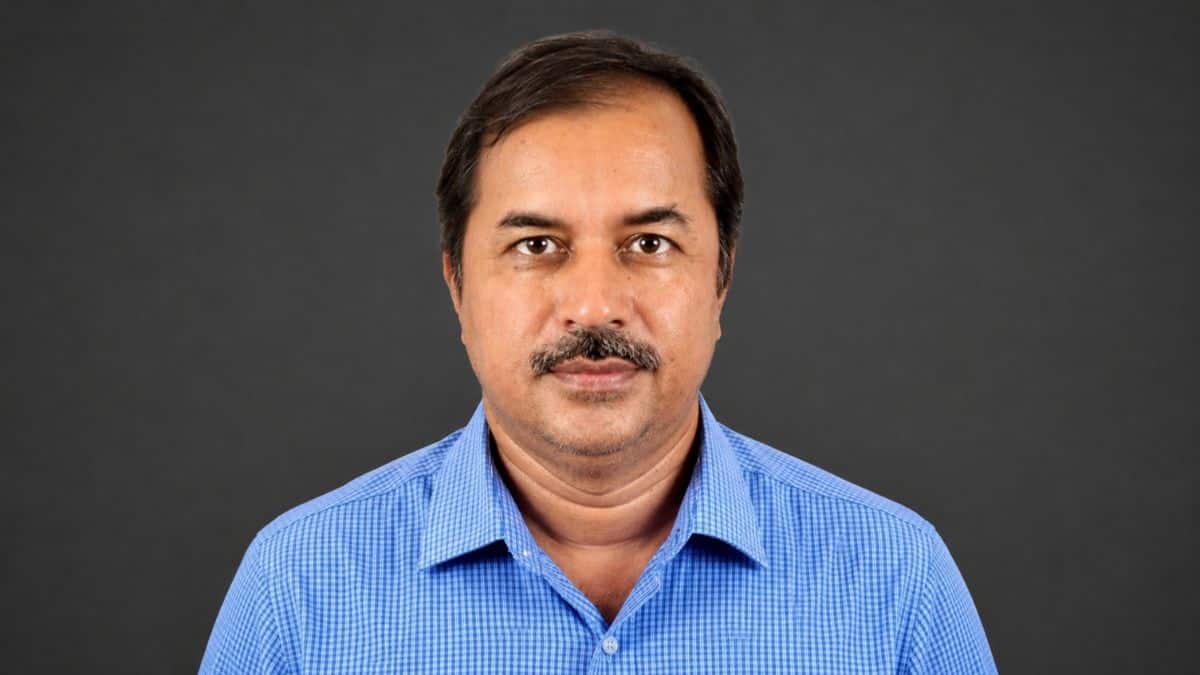
In a first-of-its-kind initiative among all Indian Institutes of Technology, IIT Kharagpur (IIT KGP) has introduced the role of a dean of student wellbeing. Professor Arun Chakraborty, who also serves on the faculty at the Centre for Ocean, River, Atmosphere and Land Sciences (CORAL), was appointed to this position in August 2025, and has been tasked with addressing the wellbeing and mental health issues of students on campus. During a conversation with Careers360, he spoke about the new initiatives – from easing academic pressure and expanding counselling resources to fostering a more supportive campus environment. Edited excerpts:
Q. IIT Kharagpur has for the first time appointed a dean for student wellbeing – a first in the whole IIT system. Why was this step taken?
The portfolio of dean of student well-being was not my idea. It was the idea of our director Suman Chakraborty – one of the renowned IIT faculty members. When he became the director at IIT Kharagpur, after his many years of association with students, he realised that student support is key. A student needs support physically, mentally, and emotionally. They need somebody to whom they can vent or talk easily.
The IIT system already has a student affairs portfolio. But there is a need for a dedicated space where someone specifically thinks about students’ mental, physical, and emotional well-being and listens with empathy without being judgmental. That is why he introduced this portfolio at IIT Kharagpur.
Also read IIT Jodhpur’s Hindi BTech is breaking the English-only mould, model for others to follow: Director
Q. What was the first thing you felt needed to change in how IIT Kharagpur thought about student wellness?
In February, we introduced IIT Kharagpur’s mental health and well-being policy. Measures include re-tests, continuous evaluation, and prior infrastructure support for weak students. Other steps are reducing end-semester exam duration from three to two hours.
We already had counseling centres and experienced doctors. We developed the policy based on the Mental Healthcare Act 2017, and our understanding.
This policy has a structured approach based on three pillars. The first is breaking stigma. Students often think that if they talk about mental health, people will think they are “mad”. We are fostering an environment where talking about mental health is normal. We want all students to come forward. Students should be able to speak without fear of judgment. This builds confidence that their concerns are safe and that they are supported.
The second pillar is access to resources. We provide enhanced, confidential, free, and non-judgmental counseling sessions. Students can go to counseling centres or approach the dean of student wellbeing anytime. There is no time restriction.
The third is flexibility and balance. We are introducing flexibility to help students balance academic workload and personal life, thereby reducing burnout. We are also aligning with the National Education Policy (NEP) 2020. Students can exit or shift paths if they want to pursue something else. Earlier, there was excessive paperwork; now we aim to reduce it.
Students start preparing from Class 7, 8, 9, or 10 for competitive exams. Many are away from their loved ones, and many come from nuclear families. Their adolescent priorities often get suppressed. They are trained only to succeed, but not to accept failure.
When these students come to IITs, they don’t know how to navigate. They come from different backgrounds and often haven’t learned to mingle because they spent most of their time studying. This creates problems. Parents also reinforce only success – 20 out of 20 is appreciated, but 19 is not.
But at IITs, everyone is brilliant. When competition and peer pressure increase, students hesitate to share their struggles with their parents and start hiding things, which leads to stress.
We need platforms where they can express themselves, accept setbacks, and regain confidence. They need spaces to share, relax, and release mental pressure. Through the Student Wellbeing Office, we try to resolve issues quickly. Delays create panic.
Q. What new services have been added for students?
We have around 25 full-time counselors on campus, available 24/7. They visit hostels and stay overnight. Students can approach them anytime and everything is confidential. Issues are taken up with the administration and resolved.
In emergency cases, our teams, including student teams and administration, are on the ground immediately, at any time of the day or night. We have representatives in every hostel and wing to identify stress or issues quickly. We also have crisis management and student wellbeing teams that respond immediately.
Our director also introduced the SETU app (Support, Empathy, Transformation, and Upliftment), which acts as a bridge between students and the administration. Students can raise issues, including medical emergencies, and receive immediate responses. All students are registered, and we receive messages as soon as they raise a request.
We also have a “Campus Mothers” initiative. These are non-faculty members, like wives of faculty, mothers whose own children may be studying outside. They are connected with students and anyone can share their issues.
Q. What mental health challenges are particularly prevalent among IIT Kharagpur? How has the institute addressed those?
I have realised that most of the time, these challenges are not much academic-related. Most issues are related to identity and relationships. Others are related to concerns about the future – like some feel they are not in the right discipline.
Q. How have you bridged the gaps for students reluctant to walk into a counselling centre?
There are people available for different kinds of conversations, which give students confidence and help them break the ideas or inhibitions they might have. Interventions like the SETU app have helped bridge the gap. They can connect online, where they can enroll or seek help, or can visit in- person. The entire process is confidential. Only in serious cases, a red flag is raised. For example, if a PhD student raises a concern about their supervisor, it comes to me.
If it relates to a particular department, the department carries out further checks without naming anyone.
Also read Teacher recruitment to scholarships – what SC wants universities to do for suicide prevention
Q. What peer-support infrastructure has been created?
Weak students in the class are being supported through peer help or mentors. This is also facilitated by the dean of students affairs. We have created dedicated spaces within IIT. Peers from masters and PhD courses, who are willing to help, including senior students, provide support. Many are coming forward and have found the initiative helpful. We are also connecting them to appropriate teachers or teaching assistants.
Q. What has been the hardest part of institutionalising wellbeing within an IIT, which is primarily built around academic rigour and competition?
More than 90% of students adapt after coming to IIT. Every IIT has induction programmes through which they learn how to adjust. Only around 10%-12% face difficulties, and that is where most problems arise. If that segment is taken care of, many issues can be resolved. Keeping that in mind, we are introducing some flexibility, especially for students facing medical or mental health issues.
For example, if a student is not performing well or is unable to appear for an exam, earlier the system did not allow them to take a re-exam. Now, the administration, faculty, and the entire system are coming forward to support such students.
Students can now appear for re-exams. This is now applicable across programmes. Earlier, this provision existed but with very strict rules, as teachers had to prepare separate question papers. Now, there is a collective effort to support such students by providing study materials and guidance through professors, teaching assistants, and others.
We have also introduced flexibility in the attendance system. Students attend classes, but if some feel that they can cover certain parts on their own, it is fine. However, they must appear for different tests, quizzes and class discussions. Teachers assess student learnings through these evaluations. Through a continuous evaluation process, the burden on class tests has decreased.
Earlier, exams were three hours long, but now they are two hours. There are also enough opportunities for students to contribute through presentations, quizzes, and other activities based on their interests. All of this has been implemented over the last three to four months.
Also read ‘Part of culture’? IIT Ropar PhD scholars say fear keeps harassment cases buried, rarely reach ICC
Q. Stigma around mental health remains a barrier. How have all these steps changed the mindset of people on campus?
I think the situation now has improved compared to that nine months ago. Many are openly telling us that they have issues and are seeking help. I think this will improve with time.
Q. How have you ensured that students from marginalised backgrounds, first-generation learners, students from smaller towns, those from reserved categories are able to access the services?
Within IIT, during the induction programme and also in classes, we tell students to talk to their peers. Some feel shy, and some struggle to communicate in English. I also tell them not to be afraid, even if they say something wrong. They should try to speak, and their friends can help.
Q. What has been your approach to address any severe student issue which requires hospitalisation or intensive external support?
We realise students need this kind of support. My approach has always been, “Yes I am here, tell me what you want”.
If it is research-related, or if there is an issue between a student and a supervisor, we try to resolve it. If something is not resolvable, the supervisor can be changed. That also happens. In many cases, the issues are small misunderstandings.
However, in case of suicide or attempt to suicide, the institute creates a fact-finding committee, and based on their recommendations, steps are taken accordingly.
After I joined, a PhD student died by suicide in September 2025, and I was not in India at the time. But after that, everything has been fine.
Q. Any other steps related to mental health in the pipeline?
We want to know how students are doing even within the mess and community student halls. We are planning to introduce a face recognition system for this purpose. A pilot will be started, and then we will see how it can be implemented across all halls. This will help us identify students who may be feeling dull.
We also plan to have a better mess system to improve food quality. We are planning a common mess, like a mega kitchen, for students.
Q. While many IITs are facing high number of suicides and mental health issues, how do you think institutes should address them?
All institutes must have a Student Wellbeing Dean portfolio. Students’ issues will be resolved quickly through this and will not linger. Also, the student well-being team is not meant to stay only in the office but to be present on the ground.
This interview was conducted before the latest case of suicide on campus.
 Add as a preferred source on google
Follow us for the latest education news on colleges and universities, admission, courses, exams, research, education policies, study abroad and more..
To get in touch, write to us at news@careers360.com.
Next Story
]Latest Education News
]Related News
]IIT-Kharagpur's solar-powered cart aims to make street vending more flexible
IIT Kharagpur distributes wellbeing cards to 16,500 students to promote mental health
IIT Kharagpur launches AI learning tool, free online GATE-JAM preparation platform


