
NIT Rourkela patents high-strength road material made from coal-mining, industrial waste
Sakshi Gupta | August 18, 2026 | 05:42 PM IST | 2 mins read
The composite uses coal mine parting, fly ash and a binder, with pilot-scale trials planned to test durability
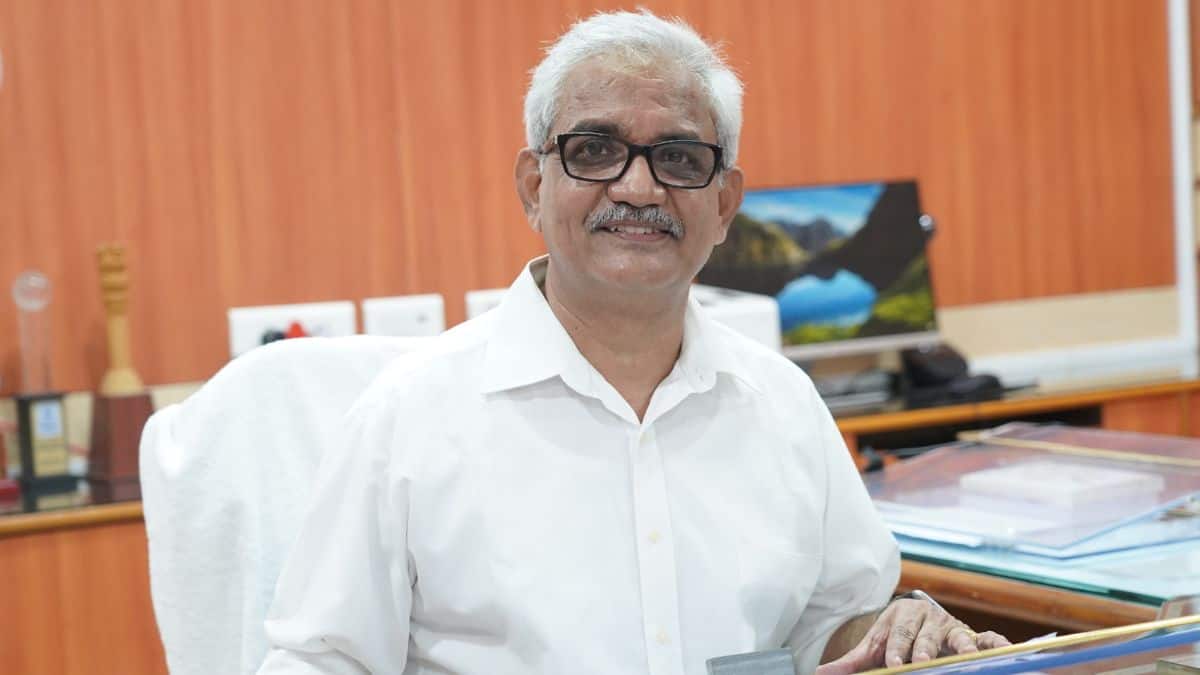
National Institute of Technology (NIT) Rourkela researchers have secured a patent for high-strength composite material developed using coal-mining and industrial waste. The material has potential applications in road construction, particularly for roads exposed to heavy vehicle traffic.
The technology seeks to address two challenges simultaneously-the management of large quantities of mining and industrial waste and the need for durable road infrastructure capable of supporting heavy traffic.
The research team comprised K. Umamaheshwar Rao, professor and director; Manoj Kumar Mishra, professor; and research scholar Subhasrita Chodhury, PhD graduate, from the department of mining engineering, NIT Rourkela. The technology has been granted patent no. 597749, with application no. 202331070306.
Composite material uses industrial waste
The research team focused on coal mine partings, which contain silica, alumina and clay minerals that can be used as raw materials for construction applications. The clay minerals have properties such as compressive strength and stiffness that can be combined with industrial additives.
The researchers developed a composite by combining coal mine parting, fly ash and a binder. The team also evaluated the mixture formulation to determine its optimum performance.
Explaining the research, K. Umamaheshwar Rao, said, “The developed technology is particularly relevant to coal-mining regions, where roads routinely carry heavy vehicles transporting mined materials. Such roads are exposed to significant loads and repeated traffic, resulting in frequent deterioration.”
Also read NITs plan for BTech student exchanges, minor degrees and credit sharing with other CFTIs
Technology follows circular economy principle
Manoj Kumar Mishra described the composite as an example of the circular economy principle, noting that the technology uses two large-volume industrial wastes as a resource.
He said, “The developed composite is a classic example of the circular economy principle. We have used two industrial wastes of huge volume into a resource with significant engineering potential and economic value. It not only addresses waste management issues, but also offers indigenous and sustainable infrastructure improvement.”
The technology could address waste management concerns while providing a material with engineering and economic potential for infrastructure applications.
As the next step, the research team plans to conduct pilot-scale field trials. The trials will be used to assess the developed material's long-term durability and strength under real-world conditions.
 Add as a preferred source on google
Follow us for the latest education news on colleges and universities, admission, courses, exams, research, education policies, study abroad and more..
To get in touch, write to us at news@careers360.com.
Next Story
]Valliappa Foundation launches research fellowship to honour IISc dean; 3 PhD scholars get Rs 1 lakh per year
Valliappa Foundation has announced three Rajinder Kumar Research Fellowships for PhD scholars. Each fellow will receive Rs 1 lakh annually for three years. Check eligibility and application deadline.
Vishnukumar VLatest Education News
]Related News
]NCERT University to introduce multilingual teacher training programmes for UG, PG, research students
Jamia forms high-level committee to interact with protesting students, restore normalcy on campus
NIT Karnataka’s entrepreneurship model goes beyond incubators and into classrooms; now it’ll guide other NITs


