
The top 2% scientists' list counts papers, citations well; retractions may need a closer look
Team Careers360 | October 15, 2026 | 11:36 AM IST | 10 mins read
The Stanford–Elsevier top 2% scientists list tracks paper retractions too. 3 years of it suggest India should celebrate its rise and also read the fine print, writes Amrita Vishwa Vidyapeetham dean
By Raghu Raman
Every year, around September or October, a list from Stanford University and the publisher Elsevier sets off celebrations on Indian campuses. It ranks the world's most cited scientists, about 2.5 lakh of them, and its names turn up in press releases, convocation speeches and, occasionally, on hoardings outside campus gates.
This year there is real cause for pride. On the single-year list, which counts citations received in the latest year, India-based scientists numbered 6,954 in the 2026 release, against 5,351 two releases earlier. That is a 30% rise while the list as a whole grew by about 12%, and it lifts India's share from 2.4% to 2.8%. Behind those numbers are laboratories that have matured and young researchers who now publish alongside the best in the world.
The same list has a set of columns that few people open. Since 2024 it has recorded, for every scientist, how many of their papers have been retracted, that is, formally withdrawn by the journal or the authors because they cannot be relied on, using the Retraction Watch Database, the largest public record of such cases. In the 2024 release, 462 India-based scientists on the single-year list, or 8.6%, had at least one retracted paper. A year later it was 738, or 11.8%. Now it is 923, or 13.3% (Figure 1). The share has risen across the whole list too, from 3.9% to 5.3%, so India is not alone. Still, India's figure is about two and a half times the list average, and the gap is wider when retractions are counted per paper: about two for every 1,000 papers by India-based listed scientists, against half of one per 1,000 for the list overall.
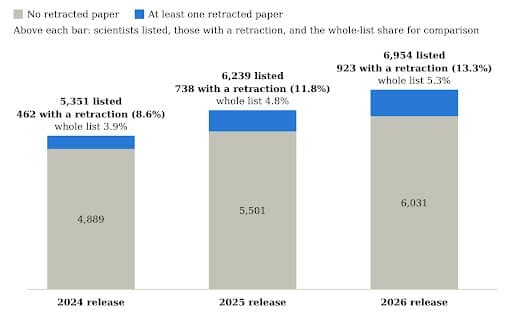
Figure 1 | More India-based scientists on the list, and a growing share with a retracted paper
Single-year lists of the 2024, 2025 and 2026 releases. 'India-based' means the scientist's most recent institution is in India. The sources are Stanford–Elsevier and Retraction Watch databases.
Retraction in academic publishing
A few words of caution belong here. A retraction does not, on its own, prove wrongdoing. Papers are withdrawn for honest errors, for publishers' mistakes, and sometimes at the authors' own request, which is exactly what good science expects. Part of the rise also reflects better record-keeping, since the matching of retraction records improves each year.
And 87% of India-based listed scientists, 6,031 of 6,954, have never had a paper retracted. A small group does account for a large share: 106 India-based scientists with five or more retractions hold almost half of all the retracted papers. But another 817 have between one and four, most of them just one, and they hold the other half. A problem this widespread points less to individuals than to how research is done and rewarded, which is why answers aimed at the whole system tend to work better than singling out people.
Most retractions in computing, enabling and strategic tech
India, to its credit, is not looking away. The National Institutional Ranking Framework (NIRF), the government's annual ranking of universities and colleges, introduced negative marks for retracted papers in its 2025 edition, something most international rankings have yet to attempt. During this year's exercise, retracted papers were flagged again, institutions were cautioned, and the National Board of Accreditation, which conducts the rankings, is reported to be considering barring repeat offenders. With Retraction Watch counting 887 retractions from India in 2025, second only to China, the timing is right. The message to institutions is clear: integrity now carries weight nationally, and it is worth putting one's own systems in order.
Where, then, are the pressure points?
Computing and the field the database calls enabling and strategic technologies, which covers materials, energy and biotechnology, together account for 31% of India-based listed scientists, 41% of those with a retraction and 48% of all their retracted papers.
In computing, 21% of India-based listed scientists have a retraction, against 6% worldwide. Its largest subject, artificial intelligence and image processing, has 649 India-based scientists on the list, and 24.5% of them have a retraction, more than three times the global rate of 7.2% (Figure 2). Yet the picture is far from uniform. Indian mathematicians on the list have a lower rate than mathematicians worldwide, 2.9% against 3.8%, several other subjects are at the world level, and no India-based social scientist or humanities scholar on the list has a retraction.
Also read Sociology at a Crossroads: Why the discipline must move beyond departments to reclaim relevance
The issue lies not with Indian researchers as such but in fields where fast-turnaround special issues, conference proceedings and paper mills, businesses that sell authorship of fabricated papers, have caused trouble worldwide. And between the 2024 and 2026 releases the share rose in every subject area with at least 60 India-based scientists, which points to a shared cause in how research is rewarded.
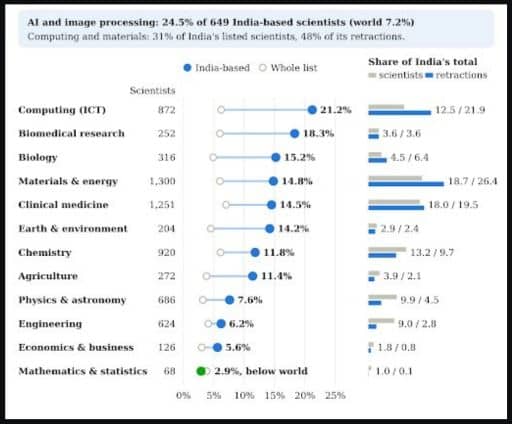
Figure 2 | Retractions are concentrated in a few fields; in others India is close to, or better than, the world
Each scientist is counted in their main field. 'Materials & energy' is the field Enabling & Strategic Technologies, which also covers biotechnology. In the right-hand column 'retractions' means retracted papers. Green marks the one field where India is below the world rate. Fields with at least 60 India-based scientists in the 2026 single-year list have been considered for the chart above.
More papers, more retractions
The clearest pattern of all is with output. Among India-based scientists who have averaged five or fewer papers a year over their careers, 5.9% have a retraction. Among those averaging more than 20 a year, roughly one paper every two or three weeks, the share is 37%, and the number of such very prolific scientists on the list has almost doubled in two releases, from 150 to 292.
The pattern holds when retractions are counted per paper. Who leads the papers matters as much as how many there are. The database records how often each scientist is the sole, first or last author, the positions that usually belong to whoever did or directed the work. Among India-based scientists who publish more than 20 papers a year and lead fewer than half of them, 43% have a retraction; among those who publish five or fewer and lead more than three quarters of them, the figure is under 4% (Figure 3). Not every cell follows the pattern, but the direction is clear. A recent study by the bibliometrician Lokman Meho in the journal Scientometrics found the same signs at the world's fastest-growing research universities: a sharp rise in authors publishing 40 or more articles a year, a fall in lead authorship and high retraction counts. He proposes a Research Integrity Risk Index that combines such warnings and adjusts them for subject.
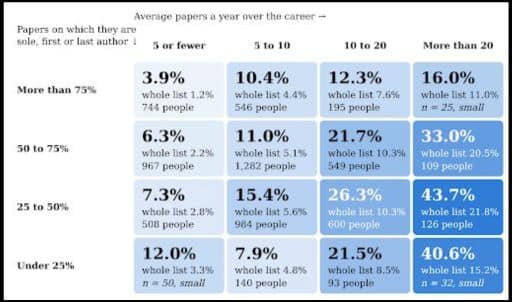
Figure 3 | Prolific but rarely in the lead: where retractions are most common
Darker cells mean a higher share. Columns show the average counter of papers in a year and rows, how often the scientist was the sole, first or last author. Cells marked 'small' rest on fewer than 60 people on the 2026 single-year list.
Research and retraction surge at private universities
The type of institution matters too, though not quite as one might assume. Private institutions, mostly universities and colleges, have driven much of India's rise: their listed scientists grew by 55% across the three releases, against 18% at public institutions.
In the 2026 list, 17.5% of scientists at private institutions have a retraction, against 10.6% at public ones, and the gap remains, at about 1.6 times the odds, after allowing for output, career length and subject. Look closer, though, and the picture changes. Among scientists who publish five or fewer papers a year the two sectors are almost identical, at about 6%. The gap then widens steadily with output and is widest among the most prolific, where 44% of private-sector scientists have a retraction against 20% in the public sector (Figure 4).
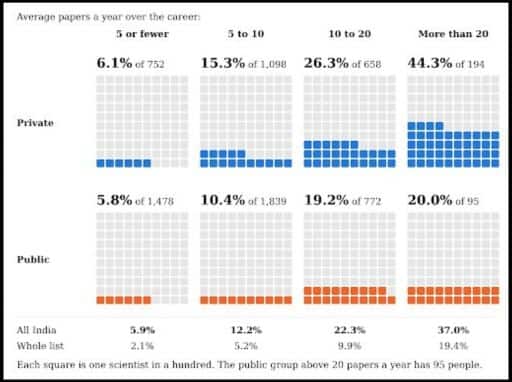 Figure 4 | Out of every 100 scientists, at modest output the sectors look alike; among the most prolific, the gap opens wide Each grid shows 100 squares; coloured squares are the share with a retracted paper. Again, this is based on the 2026 single-year list.
Ownership is not the whole story either. Non-profit research institutes and hospitals, which are also privately run, have the lowest rate of any group, under 2%. Central government institutions such as the IITs and IISc sit at about 9%, state public universities at about 14.5%, and private universities at about 19% (Figure 5). What seems to matter is less who owns an institution than the incentives it sets.
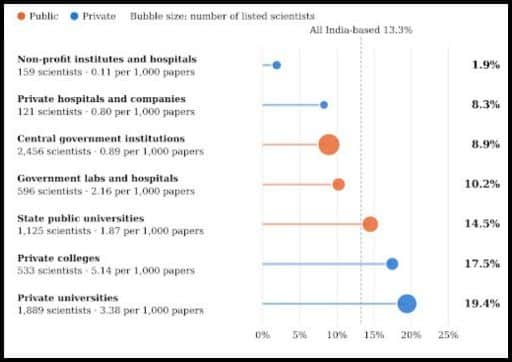
Figure 5 | Retraction shares vary more by type of institution than by ownership alone
Ownership was classified from each institution's name. 'Per 1,000 papers' divides all retractions in a group by all papers its scientists have published. 2026 single-year list. Seven scientists at public-sector companies are not shown. This is also based on the 2026 single-year list.
Retracted papers still ‘collecting citations’
Two further patterns stand out. The higher Indian scientists climb, the more often a retraction appears: 23.4% of the 141 in the global top 10,000 have one, against 11.4% of those who reach the list through their subject ranking. Self-citation, citing one's own earlier work, is a separate matter. About one in ten India-based scientists in the global top 100,000 would drop out of it if those citations were not counted, double the worldwide share, yet heavy self-citers are less likely than average to have a retraction. The two signals point at different people, and each needs its own answer.
All of this should give pause to anyone who uses the list to make decisions about people. The score that ranks scientists barely notices retractions. Three in four India-based scientists with a retraction were still collecting citations to the withdrawn work in 2025. Yet if every citation to and from retracted papers were removed, only two India-based scientists would leave the single-year top 100,000. The list measures influence, not reliability. Treating a place on it as a seal of quality asks it to do a job it was never built for.
‘Sensible habits’ for the research system
All of this is a warning signal but it certainly does not call for naming individuals. It does suggest some sensible habits for a research system that is growing fast and is rightly proud of it:
- Universities could check the retraction columns before issuing a press release. The data are public, and it takes minutes.
- Hiring and promotion committees could treat the list as one input among several, alongside a candidate's best papers, how often they led the work and any retractions. A single retraction, especially one the author asked for, should count against no one; a pattern deserves a conversation.
- Research incentives could reward quality over volume, and training in publication ethics could become part of every doctoral programme, particularly in computing, materials and the life sciences.
- NIRF could build on its lead by publishing, in aggregate, how many retractions it found and how they affected scores, and by considering a subject-adjusted measure of the kind Meho proposes. This will be first of its kind and others can learn.
- The team behind the 2% list could publish a version of its score that leaves out citations to and from retracted papers.
India's rising presence among the world's most cited scientists is a real achievement, built by thousands of researchers who work carefully and well. The retraction data do not take that away. What they offer is an early signal, visible across three releases and concentrated in particular subjects, institutions and publishing habits. India's ranking authorities have already moved. If the rest of the system follows, next year's list may show India's numbers rising again while its retraction share falls.
Raghu Raman is Dean of the Amrita School of Business and Director of the Centre for Policy Research at Amrita Vishwa Vidyapeetham, a private university whose researchers appear on the list. The author used an AI language model with processing the public Stanford–Elsevier data files and drafting parts of the text and figures. Views are personal.
 Add as a preferred source on google
Follow us for the latest education news on colleges and universities, admission, courses, exams, research, education policies, study abroad and more..
To get in touch, write to us at news@careers360.com.
Next Story
]IIT Kanpur aims to raise USD 1 billion, focus on cybersecurity, medtech, drones, 4 other strategic areas
IITK Kanpur director says institute needs 3,000 more hostel beds, salary top-ups to attract faculty talent as govt funds, HEFA loans fall short; half the money raised, rest in next 2.5 years
Sheena SachdevaLatest Education News
]Related News
]Sociology at a Crossroads: Why the discipline must move beyond departments to reclaim relevance
Soon, your first job in finance may be arguing with a machine; B.Com isn’t preparing you for that


