
Sociology at a Crossroads: Why the discipline must move beyond departments to reclaim relevance
Team Careers360 | October 9, 2026 | 12:10 PM IST | 6 mins read
To rekindle interest in BA, MA Sociology, universities must push students to investigate real social problems and show a clear pathway to employment, write Christ Deemed-to-be University scholars
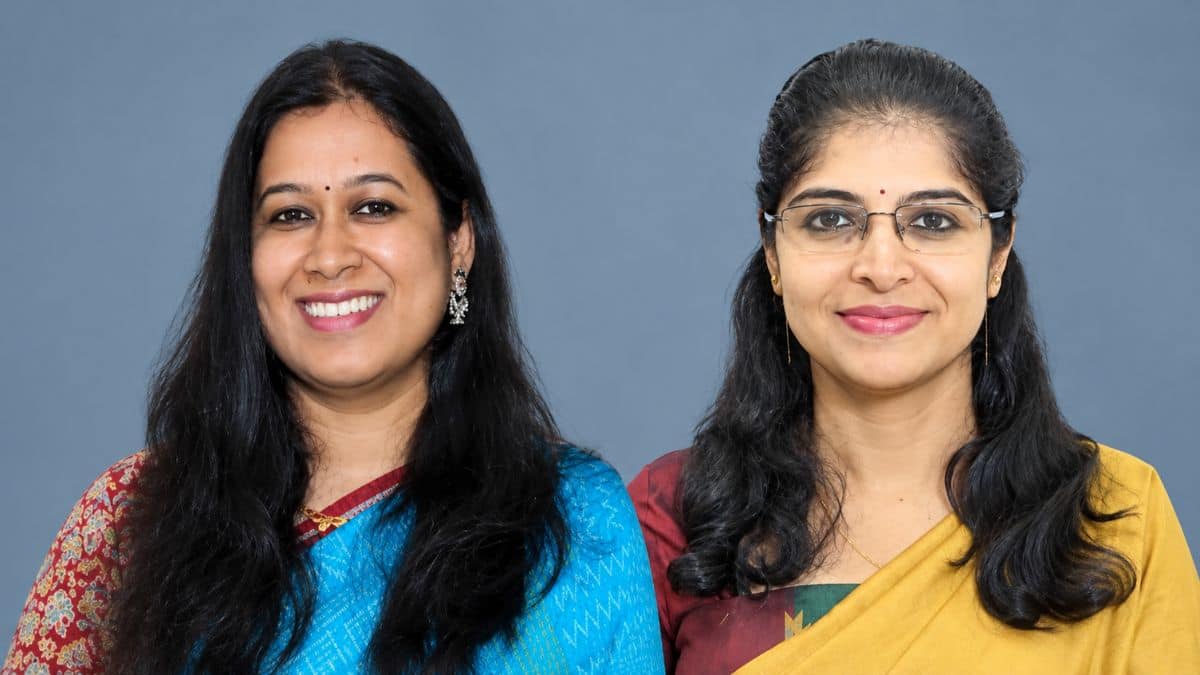
By Sanjukta Bhaumik & Sudhansubala Sahu
Something significant is happening to sociology. A July 2026 essay in The Wall Street Journal, provocatively titled “Is It Time to ‘Liquidate’ the Study of Sociology?”, questioned the discipline’s relevance amid declining enrolment, ideological battles and concerns about its relationship with activism.
The provocation is uncomfortable, but the underlying question deserves attention: what happens when a discipline devoted to understanding society struggles to convince young people that studying society remains valuable?
The concern is not confined to the United States. In India, recent admission patterns suggest that sociology and other traditional social-science subjects are facing pressure from students’ preference for professional, technical and apparently more employment-oriented programmes.
Sociology Degrees: Low enrolment problem
Karnataka provides an example. On May 28, 2026, Deccan Herald reported that 458 undergraduate course combinations in government colleges had been scrapped because of poor admissions, with political science, economics, optional Kannada and sociology among the subjects affected. The report noted that 1,091 course combinations had received no admissions in 2025–26, while another 190 had recorded single-digit enrolment. At the postgraduate level, Deccan Herald reported in March 2026 that Karnataka was considering discontinuing courses with zero or single-digit admissions over several years; MA Sociology was among the programmes identified as having low enrolment.
In June, The New Indian Express reported that three government colleges affiliated with Mangalore University would not begin certain new BA batches for 2026–27 because of insufficient student interest, with sociology among the affected subjects. In September, Mangalore University temporarily suspended admissions to 16 postgraduate programmes after they failed to meet its minimum enrolment threshold of 15 students. Sociology was among the affected programmes.
Also read With CSE surge, these specialised BTech courses are vanishing from engineering colleges
Karnataka is not an isolated case. In Madhya Pradesh, Rani Durgavati University – or, Rani Durgavati Vishwavidyalaya Jabalpur – recorded only 646 admissions against 5,946 available seats after its third counselling round in July 2026. Sixty of its 129 programmes had received no admissions, while low enrolment was also reported in BA Sociology. These examples do not establish a uniform national decline, but they raise an uncomfortable question: why are students becoming less certain about sociology’s value?
Sociology is ‘relevant to national priorities’
Part of the answer lies in changing expectations of higher education. Students increasingly want a degree to offer not intellectual growth but also a visible pathway towards further study and employment. Sociology, unlike medicine, law or engineering, does not lead to one clearly-defined profession. It is therefore understandable when students ask: What can I do with this degree?
Yet sociology develops skills that are increasingly valuable across sectors: research, interviewing, fieldwork, data interpretation, institutional analysis and understanding communities and social behaviour. These capabilities have applications in public policy, development, public health, education, journalism, social research and programme evaluation.
This is where NEP 2020 creates an opportunity. The policy promotes holistic and multidisciplinary education, research opportunities and practical engagement. It also identifies sociology among the disciplines that should be strengthened within multidisciplinary higher education institutions.
The emerging research ecosystem reinforces this relevance. In 2026, the Indian Council of Social Science Research launched the Yuva Shodh Pratibha Scheme, supporting undergraduate research under four-year degree programmes. Its themes include governance, education, health, rural development, environment and knowledge systems. The paradox is clear: if sociology remains relevant to research and national priorities, why does it struggle to communicate that relevance to students?
Politics and sociology
The discipline must also confront its association with politics and activism. Because sociology studies inequality, power, institutions, identity and social change, it can become entangled in political debates. A 2025 editorial in the journal Sociology examined the pressures facing the discipline amid wider culture wars and ideological conflicts.
But sociology cannot be reduced to any political ideology. Its task is to investigate how societies work through evidence and critical inquiry. Studying inequality does not automatically make a scholar left-wing, just as studying institutions does not make a scholar right-wing.
Sociology may inform activism and public debate, but its academic responsibility remains intellectual rigour.
India’s growing interest in Indian Knowledge Systems offers another opportunity. The Ministry of Education’s IKS initiatives encourage interdisciplinary research and seek to connect traditional knowledge with contemporary education and societal applications. Sociology can contribute because knowledge does not exist outside society. It is produced, transmitted and preserved through communities, institutions, languages and generations, while access to it can be shaped by caste, gender, occupation, geography and social power. A sociological approach therefore asks: Who produced this knowledge? Who preserved it? Who had access to it? How was it transmitted? What happens when traditional knowledge enters modern educational, technological and policy institutions?
Also read Soon, your first job in finance may be arguing with a machine; B.Com isn’t preparing you for that
‘Investigate real social problems’
However, sociology’s future cannot depend only on research schemes or policy initiatives. The discipline must reconsider how it is taught. Students should encounter classical thinkers, but also learn to conduct interviews, undertake fieldwork, analyse data and investigate real social problems.
A student studying migration should connect theory with migrant workers’ experiences. A student studying inequality should examine inequalities in their own city. A student studying digital society should investigate how technology changes relationships, work and access to information. Theory and application should strengthen each other.
Language and accessibility matter too. A discipline that studies ordinary people’s lives should not become inaccessible to the communities it studies. Research in regional languages, public lectures, community engagement and accessible writing can help sociology move beyond classrooms and academic journals.
‘Move beyond sociology departments’
Most importantly, sociology must move beyond sociology departments. Technology institutions need social perspectives on artificial intelligence, automation and digital inequality. Healthcare needs to understand how culture, class and institutions shape health outcomes. Management needs insights into organisations and changing labour markets. Urban planning needs an understanding of communities, displacement and social exclusion. Public policy requires an understanding of how programmes affect different groups. Migration, urbanisation, climate change, technological transformation and changing family structures are not merely economic or technological phenomena.
They are social questions. Instead of asking only how to preserve sociology, universities should ask: Where is sociological thinking needed?
Declining enrolment cannot be addressed simply by defending sociology’s historical achievements. The discipline must demonstrate its contemporary value through visible applications, research opportunities, interdisciplinary programmes and clearer pathways from classroom learning to professional work.
The evidence from Karnataka and Madhya Pradesh should not be read as a death certificate for sociology. It should be read as a warning. Students are asking harder questions about the relationship between what they study and the lives they expect to lead. Sociology needs to answer those questions more convincingly. Sociology has spent more than a century explaining society to the world. It is now time to explain its value to a new generation.
If India’s future depends on understanding its communities, institutions and changing social realities, the need for sociology has not diminished. It has become more urgent.
Dr. Sanjukta Bhaumik is an Adjunct Faculty member in the Department of Sociology at CHRIST (Deemed to be University), Bengaluru. She has over 12 years of teaching experience in sociology, having taught in both Kolkata and Bengaluru. Dr. Sudhansubala Sahu is an Associate Professor of Sociology at CHRIST (Deemed to be University), Bengaluru. Her research interests include gender studies, sociology of media, disability studies and pedagogy.
 Add as a preferred source on google
Follow us for the latest education news on colleges and universities, admission, courses, exams, research, education policies, study abroad and more..
To get in touch, write to us at news@careers360.com.
Next Story
]NHRC seeks report from Bihar authorities over pillar collapse, bench-supported roof at Darbhanga school
The National Human Rights Commission has taken suo motu cognisance of reports that a Kiratpur primary school roof is held up by benches, desks, and bricks, risking the lives of 191 students and staff
Vaishnavi ShuklaLatest Education News
]Related News
]Soon, your first job in finance may be arguing with a machine; B.Com isn’t preparing you for that
Tagore in the morning, Shakespeare at noon: My Bengali-medium schooling doesn’t hamper my English-medium job


