
No lab, little funds, full-time job: Midnight equations land Tumkur University prof on top 2% scientists list
Azib Ahmed | October 15, 2026 | 03:35 PM IST | 4 mins read
Yogeesh N’s foreign collaborations helped him with expenses, publish articles; says government college faculty need time, funding, and faster approvals
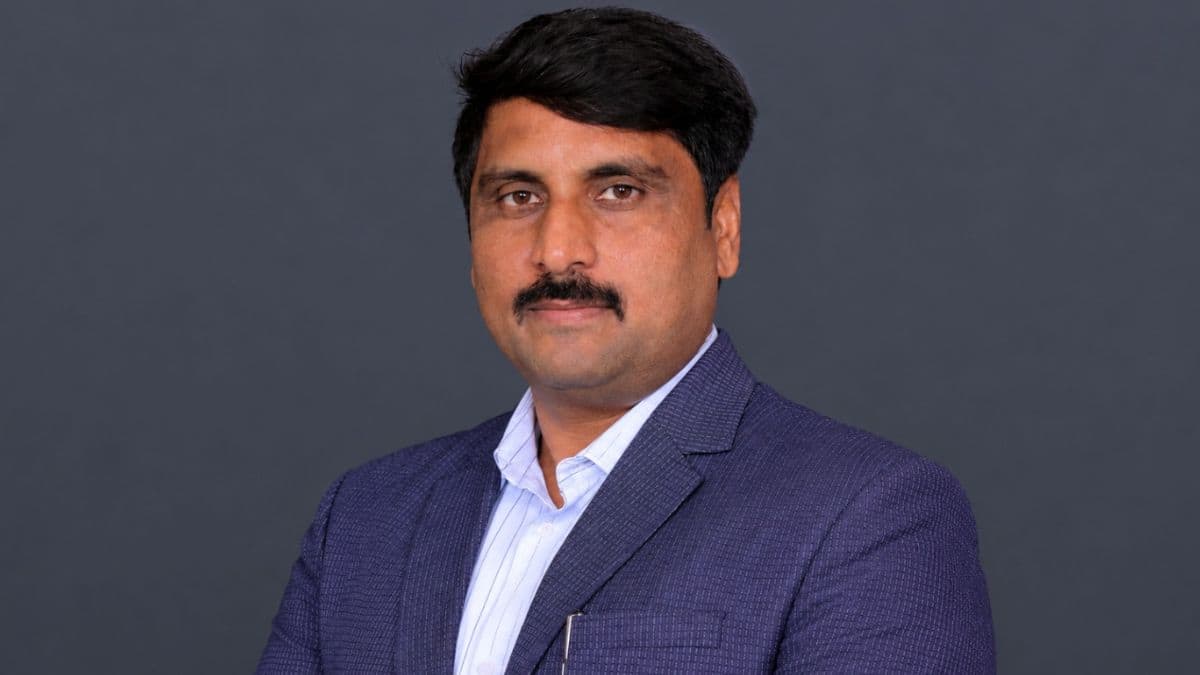
When the lectures are over, the answer scripts are checked, and departmental paperwork is done, Yogeesh N’s second working day begins. Often until midnight or even beyond, when the house is quiet, the head of mathematics department at a government degree college in Karnataka sits down to the research that has now earned him a place among the world’s top scientists.
“Many university professors have research facilities, laboratories, research scholars and other resources. In degree colleges, we do not have the same facilities, but I decided to pursue research independently,” says Yogeesh, who heads the department at Government First Grade College, Tumkur, affiliated to Tumkur University.
Yogeesh’s work in applied mathematics has earned him a place in the 2026 Elsevier and Stanford University’s ‘World's Top 2% Scientists’ list under the single-year impact category. His global rank is 558291 and his subfield (applied mathematics) rank is 1261, with an H-index of 9 and 94 publications. His main research field is information and communication technologies.
The recognition comes after years of research alongside a full-time teaching job in a system where, he says, faculty members often have limited facilities and time for academic work.
Yogeesh joined the Government First Grade College, Badavanahalli, as an assistant professor in 2009 and moved to the Tumkur college in 2013.
His work focused on optimisation, numerical techniques, computational mathematics and fuzzy mathematical modelling. His research uses mathematical models and computational methods rather than large experimental laboratories, although it still requires computers with sufficient processing capacity and appropriate software, he said.
Tumkur University Prof: International collaborations
Collaborations with researchers outside India have helped Yogeesh publish papers and participate in international academic activities. He has published in Scopus-indexed journals and presented his work at international conferences.
He completed a postdoctoral fellowship (PDF) at SR University in Warangal, Telangana, in June 2026 and is pursuing another at Amity University, Dubai. He is also a research fellow at INTI International University in Malaysia and a visiting research professor at the Gulf University of Science and Technology (GUST), Kuwait. Much of this work takes place online through research discussions, exchanges, and joint publications.
The appointments primarily involve research collaboration rather than regular paid employment. “Building international collaborations is difficult at first, but maintaining good research and relationships with other researchers opens up more opportunities,” he said.
Some collaborators also support publication expenses, including article processing charges, which can run into lakhs of rupees. This assistance has helped him meet publishing costs.
Also read Sociology at a Crossroads: Why the discipline must move beyond departments to reclaim relevance
Tumkur University College: Limited infrastructure
Yogeesh points to limited research facilities, heavy teaching workloads and inadequate funding as the main hurdles for faculty members in government degree colleges.
Needs, he says, differ by subject. “Mathematics research can be carried out using computers and numerical methods, while subjects such as physics and chemistry require specialised equipment and laboratories,” Yogeesh said.
According to him, the administration may offer moral support, but financial and infrastructural assistance remains limited. He believes better facilities, dedicated time and opportunities to collaborate could help more government college faculty members pursue research.
“Faculty members need support and an environment that allows them to conduct meaningful research and produce reliable findings,”
Quality versus quantity
Yogeesh questioned the focus on publication numbers for academic promotions, saying it can shift attention from research quality to just meeting requirements for getting promoted.
“In many cases, teachers focus on publishing the required number of papers for promotion. The emphasis should be on research quality, not just the number of publications,” he said.
Yogeesh also wondered whether the focus on institutional accreditation scores encourages colleges to prioritise the number of research papers over their quality.
“Many government institutions get their faculty’s research work published in lesser-known or less credible journals. They focus on the number of papers rather than where they are published. This is done in the race for accreditation scores,” he said.
Also read The top 2% scientists' list counts papers, citations well; retractions may need a closer look
The pressure to publish can affect research quality and raise concerns about research ethics and paper retractions, he said, and believes government colleges need greater institutional support and a stronger focus on quality research.
With limited research exposure in degree colleges, he focuses on preparing students for postgraduate entrance examinations and admission to institutions with better research facilities. “Last year, we prepared four students who secured admission to postgraduate programmes at central universities,” he said.
Research in India: Simpler approval process
Yogeesh has received opportunities to work at other institutions, including abroad, but has stayed in Karnataka due to family and professional responsibilities.
He wants to visit international institutions to meet collaborators and attend academic events but says government approval can make short visits difficult.
“For some visits, we have to submit a proposal around two months in advance and complete the required documentation. If an institution invites us for a visit of just two or three days, the process becomes difficult,” he said.
He hopes better institutional support will enable more teachers and students in government degree colleges to take up research.
 Add as a preferred source on google
Follow us for the latest education news on colleges and universities, admission, courses, exams, research, education policies, study abroad and more..
To get in touch, write to us at news@careers360.com.
Next Story
]Latest Education News
]Related News
]BJP MPs seek Ethics Committee probe into JNU’s sacked professor Bimol Akoijam
SRFTI students write to chairman amid campus crisis, seek dialogue and VC’s resignation
Delhi CM inspects Mukherjee Nagar, promises PG policy and free library spaces for students


