
Victoria University India’s Block Model ensures learning remains connected to real-world outcomes
Careers360 Connect | October 30, 2026 | 09:34 AM IST | 5 mins read
‘Victoria University's Global Mobility Program will give Indian students semester exchange, UG transfer pathways to Melbourne and PG opportunities’, says Pro-VC
India's higher education sector is entering a new phase. The National Education Policy (NEP) 2020 has created pathways for international universities to establish campuses in the country, expanding access to globally benchmarked education while creating new opportunities for students to pursue international qualifications closer to home.
Against this backdrop, Victoria University India has recently welcomed its first cohort of students at the Delhi NCR campus. With programmes across business, data science, information technology and cybersecurity, and an education model built around the award-winning VU Block Model®, the university aims to offer a different approach to student learning and engagement.
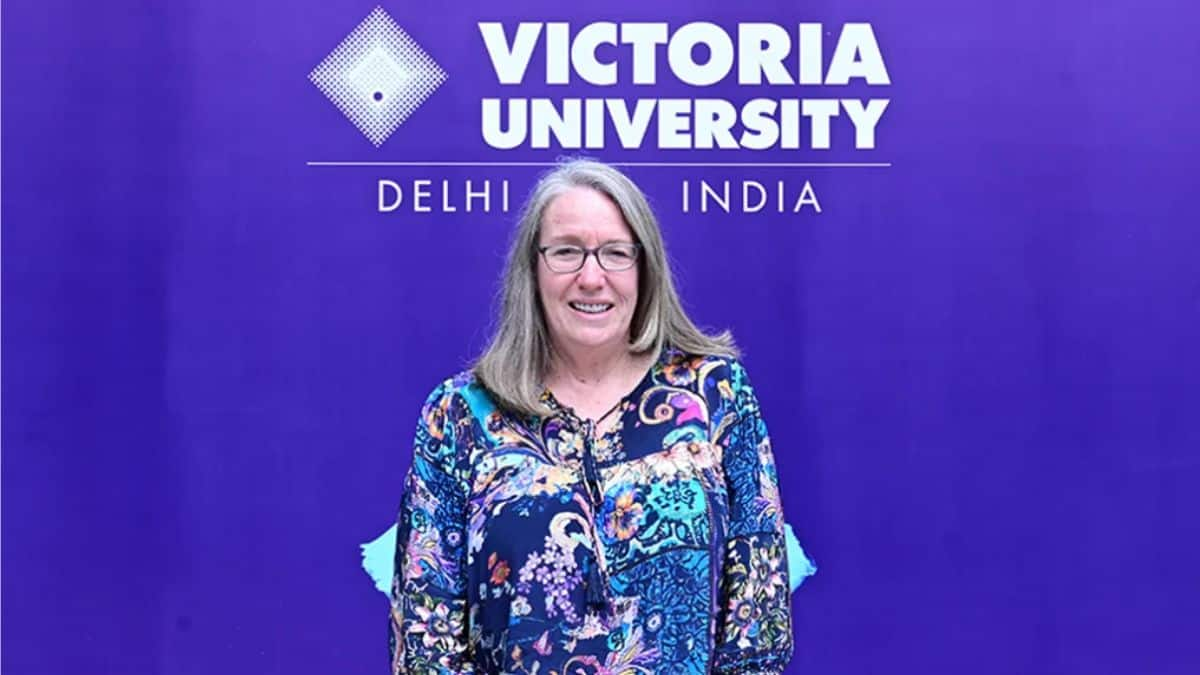
Karen Dodd, pro vice-chancellor (academics), Victoria University India, shares her perspective on the changing higher education landscape and what students can expect from international campuses in India.
With more international universities entering India, how do you see the role of these campuses evolving within the country's higher education ecosystem?
The NEP reforms have created a landmark opportunity for India to emerge as a major global higher education destination. International campuses entering India will fundamentally expand access to world-class education while reducing the financial and logistical barriers traditionally associated with studying abroad.
More importantly, international campuses can contribute to the broader ecosystem by encouraging stronger industry alignment, interdisciplinary learning, innovation-led academic models and globally benchmarked teaching practices. Their presence can complement India's existing strengths while creating new opportunities for students to access international-quality education without necessarily leaving the country.
What gap do you believe still exists in higher education, despite the growing number of institutions and programmes available to students?
India's higher education ecosystem is evolving rapidly, but there continues to be a significant gap between academic learning and industry readiness. Students today are looking for more than just a degree. They want employability, global exposure, flexibility, entrepreneurial capability and practical learning that prepares them for a rapidly changing workforce.
At Victoria University India, our focus is on building an industry-integrated global education ecosystem that combines international academic standards with strong local relevance. From curriculum design to student experiences, the objective is to ensure that learning remains connected to real-world outcomes.
Victoria University is bringing the VU Block Model to India. Why has this approach become central to the university's identity?
The VU Block Model® sits at the heart of Victoria University's approach to teaching and learning. Under this model, undergraduate students study one subject at a time in intensive blocks rather than managing several subjects simultaneously. Postgraduate students typically take two subjects over an eight-week block, while undergraduate students focus on one subject over four weeks.
The model combines smaller class sizes, interactive learning environments and continuous assessment, enabling students to focus more deeply on each subject while building practical, industry-relevant skills.
This focus on immersion and engagement is one of the reasons why we believe the model resonates strongly with students looking for a more application-oriented learning experience.
As international campuses become more accessible, how are student expectations changing beyond simply obtaining an international degree?
Students at Victoria University India will receive the same globally recognised degree as students studying in Australia, supported by aligned curriculum frameworks, assessments and academic outcomes.
The learning management systems, student management systems and broader academic framework have been designed to provide a seamless experience between India and Melbourne. This creates opportunities for student mobility while ensuring consistency in academic quality and student experience.
For many students and families, this provides access to international education while remaining closer to home.
Global mobility continues to be an important aspiration for Indian students. How is Victoria University approaching this?
International education is becoming all about quality, flexibility and choice.
Through Victoria University's Global Mobility Program, students can access semester exchange programmes, UG transfer pathways to Melbourne and PG progression opportunities. These pathways are designed to give students international exposure while allowing them to structure their academic journey in a way that aligns with their goals and circumstances.
The programme reflects our commitment to delivering globally integrated education in India under the framework of NEP 2020.
Victoria University India is also introducing its postgraduate offering with the Master of Business Administration (Global). What can students expect from the programme?
The Master of Business Administration (Global) is designed for professionals and graduates looking to strengthen their business knowledge while developing the skills needed to operate in an increasingly global and dynamic business environment.
The programme brings together core areas of business education with an international perspective, helping students build capabilities across leadership, strategy, decision-making and business management. The VU Block Model® also allows postgraduate students to focus on a smaller number of subjects at a time, creating greater scope for deeper engagement, discussion and application of concepts.
For students in India, the programme offers the opportunity to pursue a globally recognised Australian university qualification while remaining connected to the country's growing business ecosystem. The Delhi NCR location also provides proximity to a diverse mix of corporates, startups and emerging businesses, creating opportunities to connect classroom learning with real-world business contexts.
The postgraduate offering is an important part of Victoria University India's broader vision to build a comprehensive international higher education ecosystem in India, with opportunities spanning both undergraduate and postgraduate education.
How should universities rethink employability in an era where skills are evolving faster than traditional curricula?
Industry engagement is an important component of the Victoria University India experience.
Delhi NCR offers a significant strategic advantage due to its proximity to one of India's largest business ecosystems. Students will have opportunities to engage with startups and corporations through projects and assignments integrated into the curriculum.
The university is also establishing collaborations with leading global organisations in areas such as research, curriculum enhancement, training and placements, helping create stronger connections between academic learning and industry expectations.
What do you think will define a successful university in India over the next decade?
Our vision is to create a campus that reflects Victoria University's academic standards while responding to the aspirations of students in India. From learning spaces and student support services to industry engagement and career development, the objective is to deliver a seamless Australian university experience in India.
More broadly, we see Victoria University India as part of India's higher education transformation. By combining global academic standards, industry-integrated learning, student mobility opportunities and innovative teaching approaches such as the VU Block Model® , we hope to contribute meaningfully to the next chapter of higher education in the country.
Disclosure: A third party associated with Victoria University India is a Careers360 client. This has been published as part of a wider marketing initiative.
 Add as a preferred source on google
Follow us for the latest education news on colleges and universities, admission, courses, exams, research, education policies, study abroad and more..
To get in touch, write to us at news@careers360.com.
Next Story
]Karnataka coaching centres may face 5-hour daily cap, no under-15 enrolment, Rs 5 lakh fine for violations
Karnataka draft rules bar enrollment under 15, govt teachers from working at coaching centres; requires fees in 4 instalments and pro-rata refunds; those with over 20 students must register on Seva Sindhu portal for Rs 15,000
K. Nitika ShivaniLatest Education News
]Related News
]Jamia accepts all demands of protesting students; offline classes, exams to resume on November 2
Amid protests, JMI sets May 15, 2027 deadline to finalise students' union constitution


