
‘False narratives with no evidence’: West Bengal Christian schools’ body on teacher’s saffron saree row
Pritha Roy Choudhury | November 26, 2026 | 06:00 AM IST | 6 mins read
Christian institutes like St Xavier’s Kolkata, Serampore College, Scottish Church, have contributed to state’s education, Christian Schools’ body seeks names of schools concerned
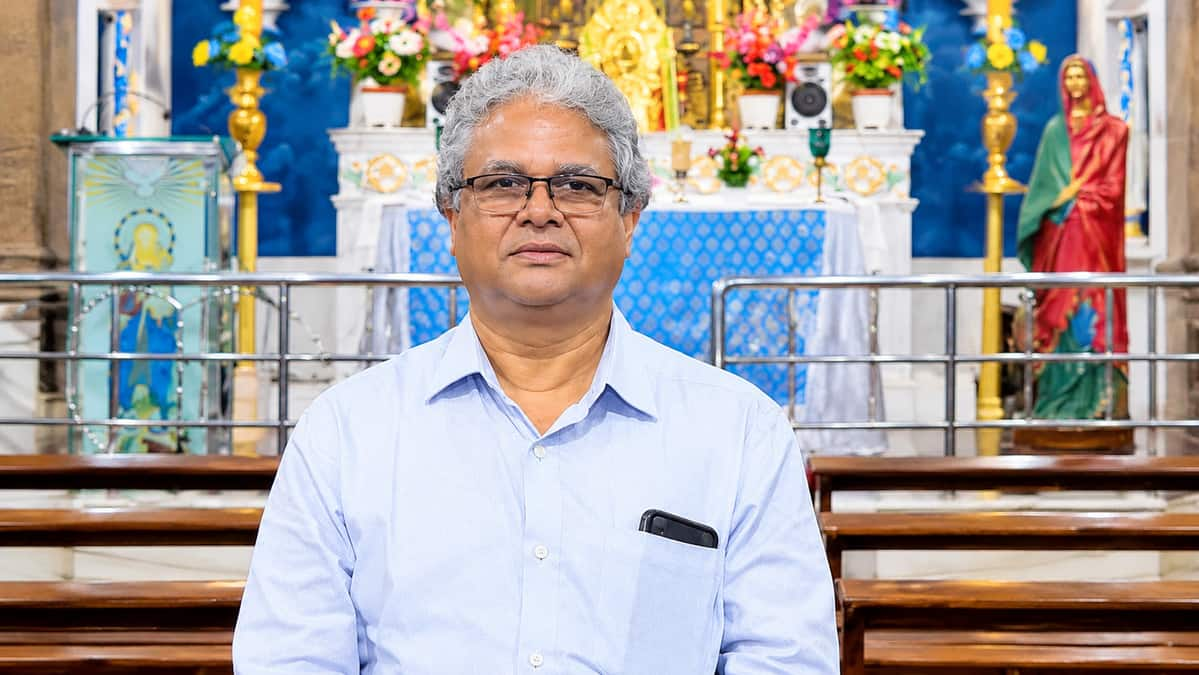
Allegations of religious conversion and restrictions on teachers wearing saffron-coloured clothing have brought Christian missionary schools in West Bengal under scrutiny, prompting the West Bengal Association of Christian Schools to question the claims and seek evidence. Father Moloy D'Costa, secretary of the association, said allegations against an individual institution should not be generalised to schools operating across the state. Speaking to Careers360, D'Costa spoke about the contribution of missionary schools to education, particularly in remote areas; the challenges in recruitment and staff approvals in government-aided institutions; and the need to prevent undue interference in the functioning of minority educational institutions. Edited excerpts:
How would you assess the present situation of missionary schools in West Bengal, particularly in view of the recent allegations against Christian educational institutions?
Some of the issues that have been raised recently are quite shocking for us. One allegation concerned a teacher wearing a saffron-coloured saree. Our response was that the person making the allegation should identify the school concerned. Schools have their own dress codes, but there is no colour code prescribing which colours teachers can or cannot wear. If there is an incident in a particular school, the institution should be identified and the matter examined. However, one cannot accuse the entire Christian community on the basis of an allegation concerning a single institution.
Similarly, allegations about a Pakistani flag being displayed in a school office should be accompanied by the name of the institution. These claims need to be substantiated.
Also read Critical Management Studies: New field challenging B-school ‘managerialism’ has an IIM Calcutta link
There have also been allegations of forced religious conversion in missionary schools.
Schools are occupied with a great deal of administrative and academic work. They do not have the time for such activities. Moreover, conversion is not simply a matter of reciting Christian prayers or possessing a Bible. It is a long process.
Just because someone possesses a Bible does not make that person a Christian. I have a copy of the Holy Quran with me, but that does not make me a Muslim. Similarly, possessing the Bhagavad Gita does not automatically make someone a Hindu.
These allegations are false narratives without any evidence. Many people from different communities have studied in missionary schools. Have all of them converted to Christianity? Have they been forced to become Christians? These claims have no basis.
Have you witnessed a change in the atmosphere surrounding missionary schools in West Bengal?
For us, this has been shocking because such allegations have started coming up only after May this year. We have been here for many years. We are people of this land; we are neither foreigners nor outsiders. It is therefore surprising that someone holding a position of stature is making such public allegations without any evidence or proper grounds.
How many Christian missionary schools are currently operating in West Bengal, and how many students do they cater to?
The West Bengal Association of Christian Schools comprises institutions from different Christian denominations, including the Church of North India (CNI), Methodists, Baptists, Assemblies of God, Catholics and other denominations. The different dioceses and Christian organisations are represented in the association.
Student strength varies from institution to institution. There are approximately 800 Christian schools in West Bengal teaching an estimated 12,00,000 students. These institutions are also present in remote parts of the state.
Also read Classes Without Textbooks: Delhi Govt school principals scramble for used volumes, photocopies
What has been the contribution of missionary schools to education in West Bengal, particularly in remote areas?
Missionaries reached areas where the government could not and established schools. Many students who studied in these missionary schools have gone on to build successful lives.
Several prominent leaders, academicians have studied in missionary institutions. Rabindranath Tagore, for example, studied at St Xavier’s school in Kolkata between 1874 and 1875. Former West Bengal chief minister Jyoti Basu also completed his schooling at St. Xavier’s. Renowned scientist Jagadish Chandra Bose, physicist Dipankar Banerjee and politician and author Shashi Tharoor are among many other distinguished personalities who studied in missionary institutions. Their contributions have reflected the important role these institutions played.
In higher education, we have St. Xavier's College and St Xavier’s University now; the Senate of Serampore College, Scottish Church College, St Paul’s Cathedral Mission College, Women’s Christian College and some more across the state – around 30 colleges. There are around six missionary ITIs .
What is the present status of teacher recruitment in Christian minority schools? Are there differences between aided and private institutions?
We have two categories of schools. In aided schools, the salaries of teaching and non-teaching staff are paid by the government. The other category comprises entirely private schools. Private schools have complete autonomy over their recruitment processes. However, aided schools face certain challenges, particularly regarding staff appointments and approvals.
The government has laid down recruitment rules for minority schools, both at the primary and high school levels. Following these rules and the prescribed recruitment procedures has made the process easier, and approvals are also being granted.
However, in some places, district inspectors (DIs) do not seem to understand the rules or are unwilling to accept them. As a result, applications remain pending while schools are repeatedly asked to provide different clarifications.
What are the major challenges faced by aided Christian schools at present?
Approval of appointments is the biggest challenge. This applies to both teaching and non-teaching staff, and the problem is particularly pronounced in primary schools. Another issue concerns new schools that have applied for no-objection certificates (NOCs). Some applications have been pending for around a year.
Are Christian schools facing difficulties in obtaining recognition or affiliation?
Schools that want to obtain affiliation from the Council for the Indian School Certificate Examinations (CISCE) have to first apply for an NOC from the state government and subsequently approach the council for affiliation.
Those seeking affiliation with the state board follow a separate procedure and apply directly to the board.
As of now, I am not aware of any major changes in these processes. However, we cannot say whether there might be changes in the future.
What are your major demands or recommendations to the West Bengal government regarding missionary schools?
Our main demand is that there should not be any undue interference in the functioning of minority educational institutions. Minority schools enjoy constitutional autonomy, and private schools also have considerable independence.
At the same time, we have no objection to the minimum regulatory requirements prescribed by the government, such as the age and educational qualifications of candidates and Indian citizenship requirements. These are reasonable conditions.
How do you see the future of missionary education in West Bengal, particularly under the present government?
We will have to wait and watch. It is difficult to predict what the future holds. However, missionary schools also need to align themselves with the requirements of the present generation. This is something every educational institution must do.
Also read Share teachers before school closure; mergers, student relocation must be last resort: EAC PM paper
Having witnessed different political regimes in West Bengal, how would you compare their approach towards Christian educational institutions?
During the CPI(M) government's tenure, there was a lack of cooperation from the government towards our educational institutions. At that time, we did not have proper recruitment rules for teaching and non-teaching staff, particularly in primary and high schools.
During the previous government, these rules were brought into place. This made the recruitment process easier because institutions knew how to proceed. Those rules are still in force.
We did not face major problems during the previous regime. As far as the present government is concerned, we will have to wait and watch.
 Add as a preferred source on google
Follow us for the latest education news on colleges and universities, admission, courses, exams, research, education policies, study abroad and more..
To get in touch, write to us at news@careers360.com.
Next Story
]Medical College Kolkata in turmoil as doctors’ protest, campus violence put spotlight on faculty, infra gaps
191-year-old MCK Kolkata faces a 25% faculty shortage. Its neurosurgery dept is without a neurosurgeon but it has essential medicines, equipment, say officials. The Durga Puja stampede has drawn attention to it
Pritha Roy ChoudhuryLatest Education News
]Related News
]Bihar Board Date Sheet 2027 LIVE: BSEB Class 10th, 12th time table soon; syllabus, pattern
Kerala CM rules out 1:25 teacher-student ratio; sets up panel to review PSC rank lists
Odisha JNV school principal booked for sexually harassing Class 12 girl


