
Critical Management Studies: New field challenging B-school ‘managerialism’ has an IIM Calcutta link
Musab Qazi | November 25, 2026 | 11:35 AM IST | 11 mins read
Mughal empire, Toni Morrison and Indian bazaars enter B-school curricula, as a small but growing group of academics put justice and equality at workplace ahead of efficiency and productivity
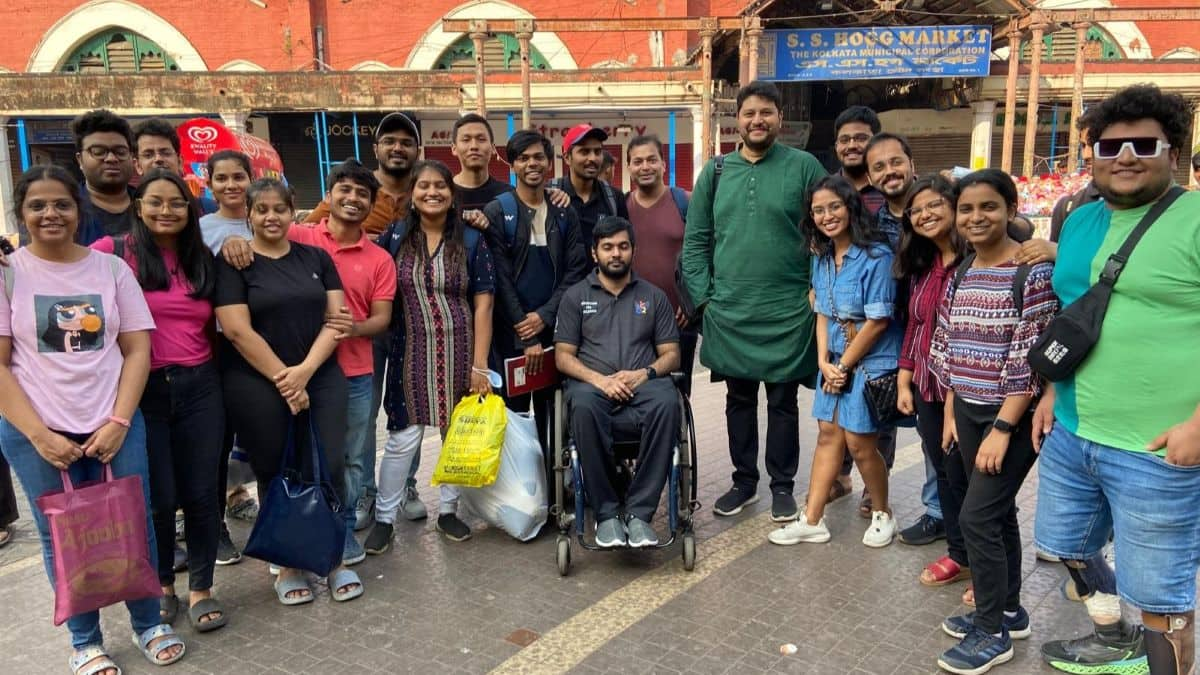
Abrar Ali Saiyed was finishing his engineering degree in 2002, when his hometown Ahmedabad, Gujarat, was ravaged by one of the worst anti-Muslim pogroms of the country. He was deeply influenced by the dispossession, marginalisation and religious discrimination he witnessed in the aftermath of the riots.
Even as he continued his higher education in management, earning a PhD in business policy from Indian Institute of Management Ahmedabad (IIMA), Saiyed worked on uplifting the violence-torn community through education and entrepreneurship. A culture and history aficionado, he also worked with Gujarat artisans, organising heritage walks around the city.
This also shaped his academic career, where he focuses on small and medium enterprises (SMEs). In 2023, research on three marginalised Gujarat entrepreneurs’ efforts to sell their products internationally was published in International Business Review, a top management journal, and won him accolades. A medical clinic he ran at a rehabilitation site for riot victims led to another paper on the working and living conditions of people in the locality.
Also read Ashok Choudhary’s leave from Patliputra University illegal; his absence impacts teaching: Bihar academics
Saiyed brought his unique perspective into classrooms, at CEPT University and Ahmedabad University. As part of a course called ‘Sociology of Bazaars’, he had management students visit the local markets to understand the socio-political dynamics shaping their business practices. It was so popular, the course was later replicated at IIMs Indore and Calcutta.
IIM Indore’s course on ‘Managing Non Profits’ requires learners to tour slums in the city and create an actual non-profit organisation to address their issues.
“When I take privileged students from top business schools to interact with people from different sections of the society – minorities, dalits, transgender persons – their assumptions about these people are broken. They find them to be kind and generous despite their financial condition,” said Saiyed, who now teaches at Adam Smith Business School at University of Glasgow, United Kingdom (UK).
Saiyed’s work and approach may seem unusual for management institutes but he’s not alone on this rather off-beat path. He is part of a small but growing academic movement quietly finding a foothold in business schools around the country. Going beyond the traditional goals of management education – maximising profit, enhancing efficiency, ensuring stability – this approach looks at underlying biases, inequalities and power politics in businesses and organisations.
There's a name for this approach: critical management studies (CMS).
Also read Beyond Warana, no takers: How Maharashtra’s cluster university policy floundered
Management Education: Emerging sub-discipline
CMS has emerged as a sub-discipline and alternative framework of management education globally over the last three decades. With its focus on exploitation and injustice, and questioning of organisational structures and normative practices, the critical perspective is often at odds with some of the established tenets of management scholarship and profession – derided as ‘managerialism’.
This approach draws from ‘critical theory’ – a philosophical perspective that extends the Marxist critique of economic inequality to other aspects of life, including society, culture, law and politics. Even though the critical approach has been part of mainstream education in social sciences for some time, its application in management is relatively new, first taking shape in the 1990s. The origin of CMS is contested, but its existence, in part, is owed to the influx of social scientists into UK’s business schools.
Its impact in India is limited. While there are a handful of scholars in top public management schools, especially older IIMs, an increasing number of young scholars are exploring the field.
“CMS has evolved in India in the last 10-15 years… There are at least five critical scholars in each of the old IIMs and there are 10 or 15 more who may not be doing critical research but understand its value and provide comradeship,” said Srinath Jagnnathan, an associate professor at IIM Indore.
Management education institutes have always had humanities faculty members teaching applied courses in economics, psychology and even politics. However, few had critical orientation. Premilla D’Cruz, a psychologist teaching organisational behaviour (OB) at IIM Ahmedabad for two decades, is one of them. An expert in workplace bullying and harassment, she observes a greater awareness about and involvement with critical perspectives among management research scholars these days.
“I've always researched issues linked to marginalisation and disenfranchisement, looking at ways of emancipation, equality and dignity. Interestingly, though business schools have generally been business-oriented and hence managerialist which is not surprising given their business focus, we now see research scholars in these schools getting more exposure to critical perspectives through their teachers, courses and academic conferences,” she said, “I see more people around doing [CMS-related work]. There’s more talk about it.”
While the country has produced significant literature on labour and working class issues, such scholarship has remained largely confined to humanities institutes. That is changing but incrementally.
“India has had a very fine tradition of labour economic studies. The Indian economic scene at one time was very left-oriented, so as a result of that, we got a lot of very good empirical analysis on the working class. But it used to be hidden in other departments and institutes, such as the Tata Institute of Social Sciences (TISS). Now, because of all these professors who are in different institutions, a little space is emerging for [CMS], said Raza Mir, a United States (US)-based Indian-origin academic, who is globally known for his pioneering work in CMS.
The IIM Calcutta link
Mir studied at IIM Calcutta in the 1980s and now teaches at William Paterson University. He was instrumental in setting up a CMS division at the Academy of Management (AoM), a prominent New York-headquartered association of management scholars. He has also served as the editor-in-chief of Organization, an academic journal dedicated to research in critical management and organisation studies. The division and journal brought more recognition to the discipline and paved the way for more critical work in management.
Mir said that the sorry situation of labourers prevalent in the country prompted him to look at management practices more critically. “After completing my MBA, I found that the idea of management was sort of repellent to me. It involved a lot of exploitation of workers and that part was not emphasised. Even before liberalisation, we were being conditioned to see all obstacles to management as being some kind of a resistance to change, which was not necessarily true, because the workers were being deprived,” he said.
Scholars have explored several CMS topics relevant to India, often deploying qualitative and narrative methods, as opposed to the quantitative approach more prevalent in business research. The condition of workers continues to be an area of concern as do the dynamics of class, gender, caste and disability. Some academics have trained their sights on management education and scholarship itself, using a decolonial lens to critique the Eurocentric practices.
Also read CAT 2026 on Nov 29: Working professionals vs full-time aspirants; expert shares tips to balance revision time
For instance, Harish Shetty, who recently joined XLRI – Xavier School of Management, Jamshedpur, as an assistant professor, studied the migration of construction workers to Bengaluru as part of his PhD at the University of Bath. Digvijay Singh, who teaches human resource management (HRM) to engineering students at the National Institute of Technology (NIT) Uttarakhand, and conducted research on gig work for his PhD at the Indian Institute of Technology (IIT) Roorkee.
In these studies, the critical approach serves as a crucial counter to the extant manager-centric research. “CMS helps us understand underlying assumptions – whom they favour and whom they don’t,” said Harish.
He, however, highlighted a key difference between the research objectives of social science and management. “A social science study could be more interested in trying to understand why people migrate and how they make sense of places in the city. But in a management school, you ask more focused questions, such as how can organisations make life better for these workers,” he said.
Critical Management Studies: Courses and curricula
These ideas are no longer just confined to academic journals and conferences, but are being introduced in the undergraduate (UG) and postgraduate (PG) curricula in some measure. While some scholars, like Saiyed, are introducing full-fledged programmes, others are carefully weaving the critical perspective into existing course material. All of them are conscious about doing so in a subtle, palatable fashion, in order to avoid offending the sensibilities of students and attracting undue attention.
As part of his ‘Leadership and Visioning’ course for IIM Indore’s Post Graduate Programme in Management for Working Executives (PGPMX), Jagannathan invokes Nobel Prize-winning African-American author Toni Morrsion, who is known for addressing racism and centering the experience of the Black community in her novels. An entire session is dedicated to understanding what insights business leaders can draw from her writings, and how businesses can be run differently.
For his ‘Leading and Managing Change’ course, Jagannathan uses the literary works of another Nobel laureate, Belarusian journalist Svetlana Alexievich, who, among other things, has penned an oral history of the Chernobyl nuclear disaster. Another course was dedicated to extracting leadership insights from the Mughal Empire in India. Canadian-American labour economist David Card is deployed for presenting an alternative to mainstream capitalist economics.
“Economics 101 says that if the minimum wage is increased, unemployment will increase. And therefore, employers will move away from one market to another market. Investment and manufacturing output will reduce. However, Card's work suggests that minimum wage policy and increasing minimum wages, when designed and implemented well, can lead to increase in employment and manufacturing output. And Card is a conventional economist, not a Marxist by any stretch of imagination,” explained Jagannathan.
Harish, on the other hand, plans to sensitise his students to how the intricacies of caste, religion and gender impact an organisation, challenging the entrenched notions of merit.
“My central question to myself is that can I make my students, who are becoming managers and business leaders, more sensible towards the social responsibility of the business. If I can bring that sensibility and awareness, it’s sufficient for me,” he said.
Singh wants to present alternatives to existing business models, such as cooperatives.
“People tend to avoid examples that are critical of their surroundings. When I am teaching diversity training, I catch up on gender and caste issues. HRM can benefit from sociology,” adds Singh.
Also read CAT 2026 Preparation: Can AI offer personalised learning, or does it just provide more practice material?
Besides serving the loftier objective of making businesses “a more enriched form of life” – as Jagannathan puts it – the CMS orientation also seeks to create better managers out of students, by apprising them of the realities of Indian society. “These students stay in a bubble. They need to be more aligned with the world they live in. I have students come to me and say the experience of visiting markets opened their minds,” said Saiyed.
Limited room for gender, caste discussions
Despite these efforts, CMS scholars are a long way from bringing any fundamental changes to management education. For one, there’s a limited space for critical perspectives in the current structure of the MBA.
“When you teach these PG management courses, you are teaching very mainstream stuff in an applied way – what are individuals and organisations; how can they work better together; how can one make organisation more effective. You may give students exposure to critical perspectives in electives, but only those who are interested take those subjects. Most students are more interested in finance, marketing and strategy,” said a senior professor at a leading management institute.
It’s not always indifference. A young academic teaching at another top business school, suggests that she has faced pushback to critical perspectives from her students on multiple occasions. “While conducting sessions on ‘Power and Individual’, if I list ‘gender’ as a source of power, the discussion can go in any direction. The management students come from a certain section of the society, with a diverse set of ideas. You have to have a balanced approach, and need to ensure that everyone gets a chance,” she said.
Another challenge is the management institutes' singular focus on placements, which discounts anything without tangible economic value. “If you link everything too much to placements, then what's required for consulting and marketing firms takes priority. There should be space for different programmes, conversations and perspectives,” said a researcher.
Also read ABV IIITM Gwalior sees MBA placement rates plummet after opening management programme to non-BTechs
Even in research, some topics are more welcome than others. “In India, there’s wider acceptability for post-colonial studies, gender and feminism. And to be frank, we do take up those kinds of things due to their acceptability. I don’t think management accepts caste; it’s still a hush-hush topic. There are people quietly doing research on caste, but they keep it to themselves and don’t highlight it much,” said the young researcher.
She said that it took some convincing while explaining the relevance of her research on ‘dirty work’ or stigmatised professions during a job recruitment seminar. Another scholar faced similar apprehension from a member of the hiring panel, who told them that their labour-focused work was more suited for universities abroad.
Despite better recognition for CMS, many in the management community continue to be skeptical, not just of the critical perspective, but the entire qualitative approach to research, which is dismissed as ‘unscientific’ or ‘journalism’. The critical management scholars often risk being labelled as ‘leftist’, ‘feminist’ and, worse, ‘anti-manager’ and ‘anti-business’.
“Not many people think much of me because I'm a qualitative researcher studying these things. They think such work is not scientific or rigorous enough. I'm not much respected or valued over here,” said the senior professor.
Seeking academic support
Some critical scholars are hoping for a better institutional support for the discipline – a tall ask, they concede and yet, they feel that B-schools are more accommodative than their humanities counterparts.
“I feel that if you manoeuvre in a certain interpersonal sense, your critical orientation will be overlooked. Your critique of the state, the police, the government and political economy can still be overlooked inside business schools. There are enough people who understand the necessity of academic freedom. So, in that sense, the institutional fabric of the management institution has not yet fully deteriorated like other universities… But then, you'll have to behave, be disciplined and fall in line in some places,” said a CMS academic.
“It should be a top-down approach. Leader-level decisions should allow these kinds of conversations,” adds another scholar.
 Add as a preferred source on google
Follow us for the latest education news on colleges and universities, admission, courses, exams, research, education policies, study abroad and more..
To get in touch, write to us at news@careers360.com.
Next Story
]SRFTI Kolkata repeats dialogue offer with students amid standoff over disciplinary action
SRFTI Kolkata has asked students to nominate three representatives, preferably from different batches and not facing ongoing disciplinary proceedings, to participate in the proposed discussions.
Press Trust of IndiaLatest Education News
]Related News
]IMT Ghaziabad PGDM admission 2027 application process closes on November 27
SRFTI Kolkata repeats dialogue offer with students amid standoff over disciplinary action
CAT 2026: IIM Lucknow MBA costs nearly Rs 21 lakh; cutoffs, admission criteria, and placement details


