
MUHS Nashik physiotherapy colleges find NCAHP’s land, staffing, seat norms ‘practically impossible’ to meet
Musab Qazi | November 19, 2026 | 06:00 AM IST | 6 mins read
MUHS has 120 physiotherapy colleges offering the BPT course and over 6,800 seats. NCAHP norms require more land, fewer senior teachers and allow only 2 batch sizes
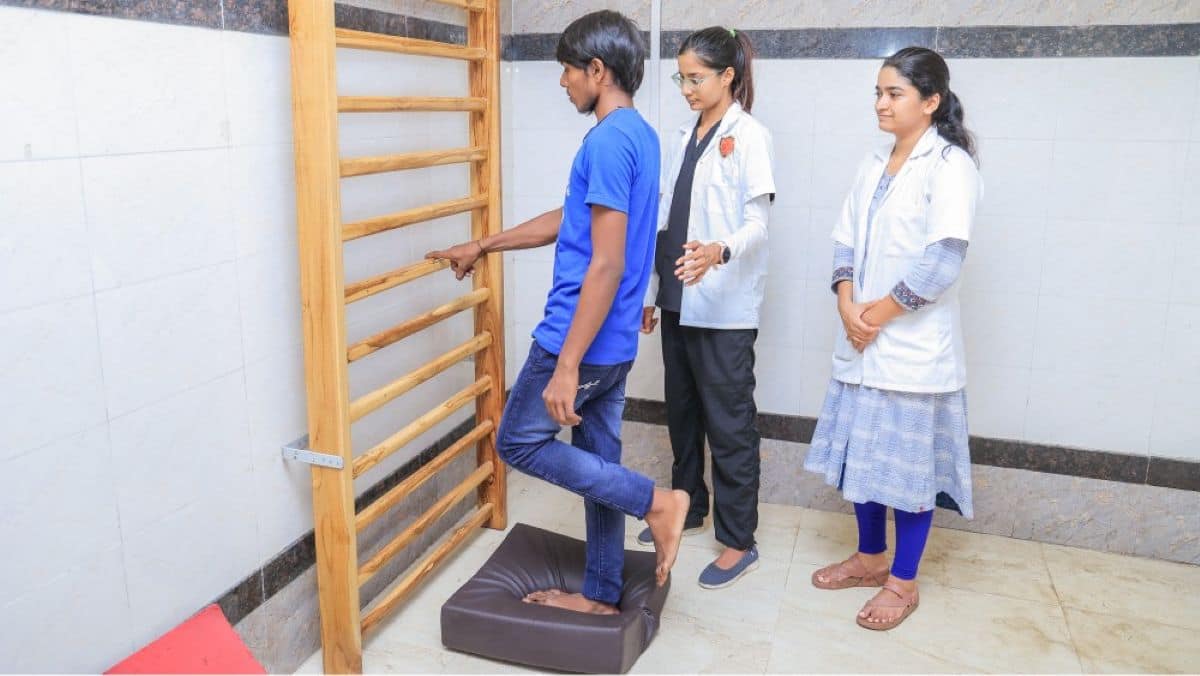
Physiotherapy colleges across Maharashtra have expressed their inability to meet the new land, infrastructure and intake standards set by the National Commission for Allied and Healthcare Professions (NCAHP), seeking more time and flexibility from the regulator in enforcing the norms.
The colleges have also expressed concerns about the impact of NCAHP bringing down the senior staff requirement, and having the physiotherapy colleges rely on less experienced ‘tutors’ or ‘demonstrators’ instead. They have sought the intervention of the State Allied and Healthcare Council (SAHC), demanding that the regulations be tailored to the ground realities of the state.
These issues came up at an online meeting convened by the Maharashtra University of Health Sciences (MUHS) Nashik, the state’s sole public health science university, on Tuesday to discuss the challenges facing the colleges in adopting the NCAHP rules at the commencement of the new academic year 2026-27. Earlier, a delegation from the university had also met the commission’s office bearers in Delhi to iron out the teething troubles in migrating to the new regulatory framework.
While, until now, physiotherapy and other allied health science education institutes in the state were following the curricula as well as the infrastructure, faculty and clinical norms set by MUHS, starting this academic year, they have been asked to follow the guidelines provided by NCAHP, the new apex body for all allied and healthcare professions (AHPs) under the central government.
While the legislation for setting up the commission was enacted in 2021, the body wasn’t fully formed until 2024. Since then, it has published common syllabi, course structure, admission criteria and administrative norms for a number of allied programmes, including undergraduate (UG) and postgraduate (PG) courses in physiotherapy – BPT and MPT. The commission has been pushing the universities and colleges around the country to follow these standards.
MUHS Nashik: 120 physiotherapy colleges
The physiotherapy institutes constitute the bulk of allied health science colleges affiliated to MUHS. As many as 120 colleges currently offer the BPT course, with a cumulative intake capacity strength of 6,890, while 34 institutes have 693 PG spots.
Many of these colleges have found some of the NCAHP norms to be unattainable.
The biggest issue is the minimum five-acre land requirement, which is more than double the two-acre prescribed under MUHS’ Minimum Standard Requirements (MSR) updated in 2025. The commission’s five-acre criterion is itself a recent revision of an earlier 10-acre requirement. MUHS, on the other hand, even allows colleges with no land, as long as they provide playground and indoor games’ facilities.
The colleges said the land criterion is unnecessary, as the college building is only required to have 35,000 sqft built-up area. They said that it’s practically impossible for colleges in the densely-populated urban areas to acquire such a large parcel of land.
“We have only two acres of land for two of our colleges. The five-acre mandate is not feasible. Only what's feasible should be enforced,” said a college official who participated in the MUHS meeting.
BPT Course: NCAHP and number of seats
Another issue is the intake capacity. While the Maharashtra colleges have a varied seat offerings, starting with merely 10 to 100, NCAHP prescribes only two batch sizes – 50 and 100.
This proved to be a major problem in the ongoing NEET UG 2026 counselling, with even some of the government-run colleges being omitted from the seat matrix. They were eventually included after the commission agreed to defer the enforcement of its intake standards.
The colleges found other infrastructure requirements, including laboratory and classroom, areas to be burdensome, too. While MUHS set standards according to the different intake sizes – 10, 30, 31-40, 41-50, 51-60 and 61-100 – NCAHP’s handbook only prescribes two sets of norms – for 50 and 51-100 seats. Fulfilling these norms is proving to be a major financial undertaking for colleges with fewer students.
“We got the permission for our institute in the last round of admission two years ago and, hence, could only admit eight or nine students. We do have the requisite land, but now we will have to construct additional buildings,” said another principal.
Staffing Norms: NCAHP more lenient than MUHS
One area where the NCAHP norms are less stringent than MUHS’ is the staffing pattern.
While the commission requires colleges to have a minimum of two professors, four associate professors, six professors and 10 demonstrators before commencing adding the fourth year of a 50-student BPT course, MUHS prescribes at least one senior teacher – professor or associate professor – for each of the subjects, irrespective of the batch size. There’s no provision for demonstrators – UG-qualified teaching assistants with two years of experience.
The colleges fear that reducing the number of senior faculty members will adversely affect the teaching standards, while making many of the teachers being marked as ‘surplus’, eventually costing them their jobs.
“The professors are the most essential staff for the institutes. We currently have seven or eight of them for 100 students. NCAHP has cut the requirement down to only four. They are asking for 20 demonstrators, which is neither possible nor useful. MUHS never asked us to hire them,” said a participant at the meeting.
Another principal at the event said that the commission’s guidelines for the bachelor of physiotherapy degree also lack details about department-wise faculty requirement, teaching hours for various topics and marks distribution for various forms of evaluation. “MUHS had a far better system of courses and admissions. Everything is very streamlined,” he said.
The colleges have also sought separate rules for institutes that are attached to hospitals and the stand-alone colleges.
Also read NEET PG Counselling: At private medical colleges, deemed-university tag brings up to 1,471% fee hike
State body will write to NCAHP
Following a demand from the colleges, SAHC is planning to write to NCAHP, requesting some measure of autonomy in deciding norms for the state, said a source.
“Every state is at a different level. Maharashtra prides itself for having an advanced [system of allied education]. I request the SAHC chairperson to request NCAHP for some flexibility and freedom, where we, for years, have conducted admissions in a streamlined fashion through NEET and we cannot be made to pay a price for our system. The state councils should have the flexibility and powers, as they know what works best for the state,” said a principal.
Some of the principals, however, stressed on the need to have new standards in place despite the initial hiccups. “The demand for physiotherapy is on the rise. It won’t be easy to follow all the rules and norms on day one. But as we go along, everybody will adopt these norms. It’s for the betterment of the profession,” said one of the principals.
A university official told Careers360 that they are engaged in a back-and-forth communication with the commission to resolve these issues. “We will inform you when something comes out of it,” he said.
Yagna Shukla, NCAHP chairperson, informed that she is unable to comment on these problems at the moment and offered to respond by the weekend. This story will be updated as and when her reply comes.
 Add as a preferred source on google
Follow us for the latest education news on colleges and universities, admission, courses, exams, research, education policies, study abroad and more..
To get in touch, write to us at news@careers360.com.
Next Story
]Karnataka's draft teacher transfer rules propose compulsory 9-year tenures in KPS, other flagship schools
Karnataka government draft proposes an amendment to existing rules that will also award additional points to teachers transferred to such ‘critical posts’. Here’s what’s changing
K. Nitika ShivaniLatest Education News
]Related News
]IIT Madras launches human brain atlas project; PM Modi unveils C-STROKE mapping over 1,000 brain sections
Maharashtra NEET Counselling 2026: 50 MBBS, BDS seats still vacant after three stray vacancy rounds
IIT Kharagpur study on Ganga pollution finds decline in Hooghly estuary metal contamination


