
BITS Pilani Hyderabad develops technology to recycle biopharma wastewater
Soumi Roy | July 31, 2026 | 04:00 PM IST | 1 min read
The technology offers a sustainable solution for treating biopharmaceutical wastewater while recovering reusable water and clean energy.
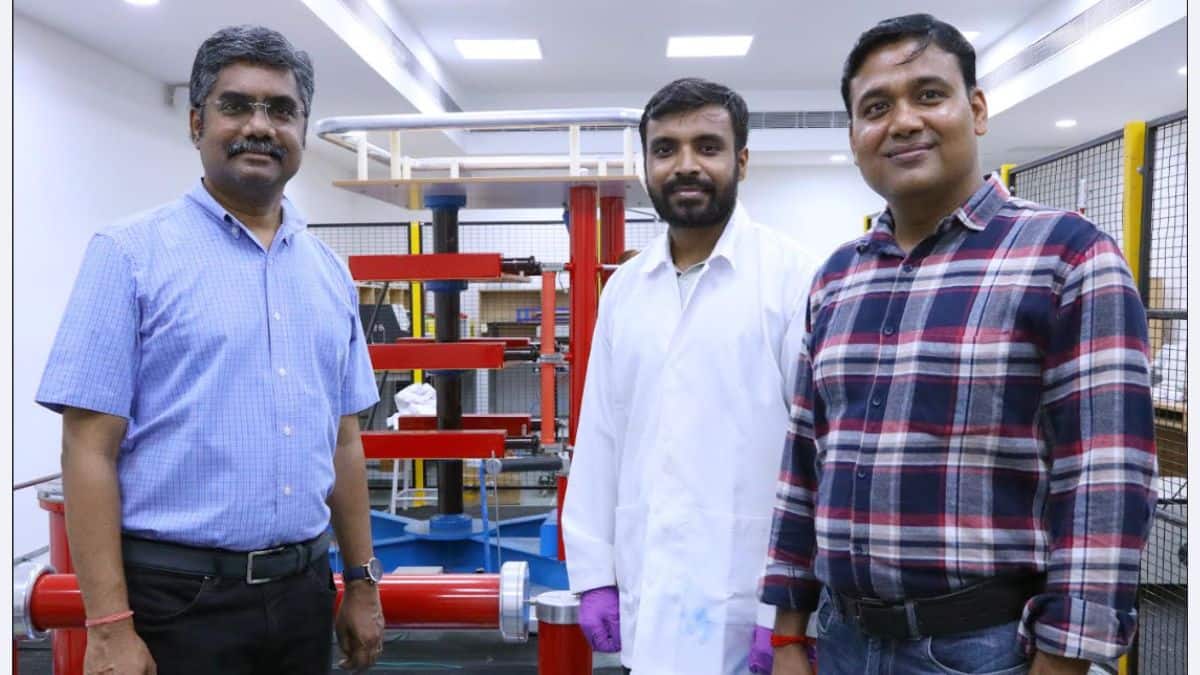
Researchers at the Birla Institute of Technology and Science (BITS) Pilani's Hyderabad campus have developed an integrated, low-energy technology to treat biopharmaceutical wastewater, enabling the recovery of reusable water and methane-rich biogas.
The project is supported by the Department of Science and Technology (DST) under the Water Technology Initiative. The research team has also filed an Indian patent for the disinfection technology and is working with Hyderabad-based vaccine manufacturer Biological E. Limited to scale up the system for industrial use.
Speaking about the research, Sankar Ganesh Palani, department of biological sciences, BITS Pilani, Hyderabad campus, said, "Conventional treatment of biopharmaceutical fermentation wastewater consumes significant quantities of chemicals and thermal energy. Our integrated approach demonstrates that it is possible to safely disinfect this complex wastewater using electrical pulses while simultaneously recovering valuable resources, including reusable water and clean energy. We hope this technology will support industries in reducing their environmental footprint while improving the sustainability of wastewater management”.
Also read BITS Pilani Hyderabad hosts 2026 convocation, over 1,500 graduates conferred degrees
Three-stage treatment system
The treatment process begins with PEF technology, which uses high-voltage electrical pulses to destroy bacteria without chemicals or heat. According to the researchers, laboratory tests achieved over 99.9999 per cent bacterial inactivation while reducing energy consumption compared to conventional sterilisation methods.
In the second stage, the disinfected wastewater undergoes biological treatment in a Sequencing Batch Reactor (SBR), removing more than 90 per cent of the organic pollutants. The treated water can then be filtered for reuse.
The final stage uses the patented Intelligently Stirred Thermophilic Anaerobic Reactor (iSTAR®) to convert residual sludge into methane-rich biogas, which can partially meet the energy needs of the treatment plant.
 Add as a preferred source on google
Follow us for the latest education news on colleges and universities, admission, courses, exams, research, education policies, study abroad and more..
To get in touch, write to us at news@careers360.com.
Next Story
]From IIT Madras to Kharagpur: Why top engineering colleges are now teaching biomedical sciences
IITs are introducing biomedical engineering, med tech and health tech courses in collaboration AIIMS and NIPERs to address the rising demand for indigenous medical devices and fill workforce gaps where medicine meets technology
Sheena Sachdeva


