
From IIT Madras to Kharagpur: Why top engineering colleges are now teaching biomedical sciences
Sheena Sachdeva | July 14, 2026 | 04:44 PM IST | 6 mins read
IITs are introducing biomedical engineering, med tech and health tech courses in collaboration AIIMS and NIPERs to address the rising demand for indigenous medical devices
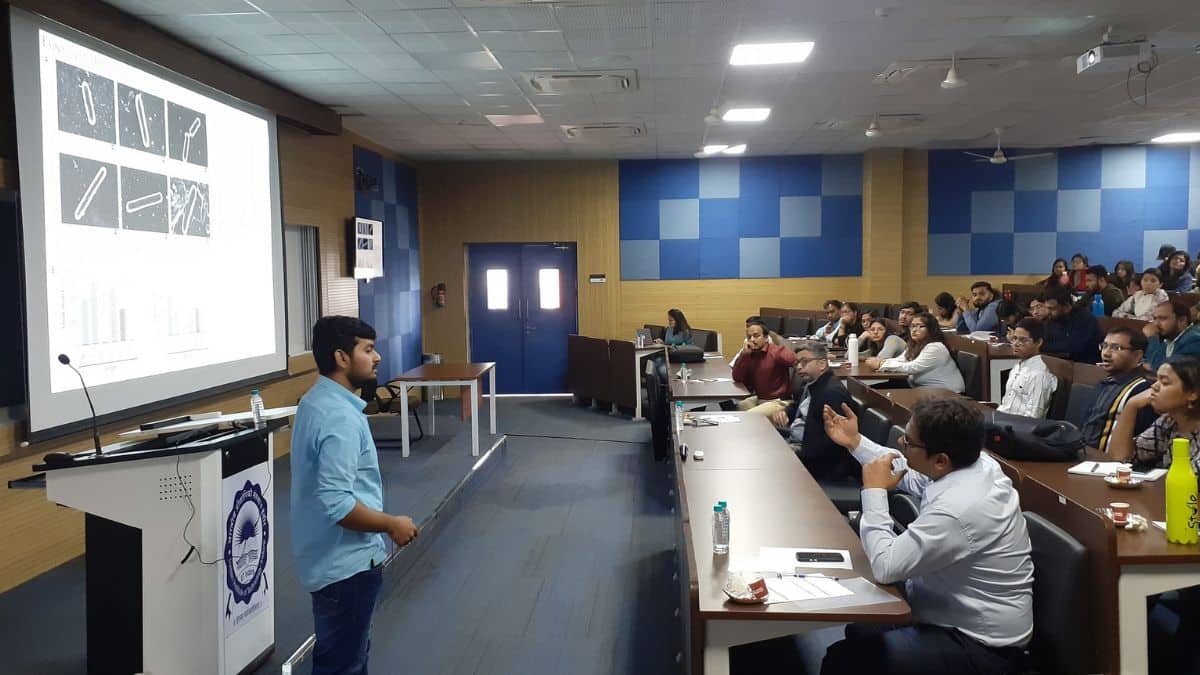
India’s premier engineering colleges are stepping in to fill a crucial gap in the healthcare system – medical technology. Biomedical engineering, healthcare technology and allied fields were part of postgraduate education for the most part. However, over the last few years, several Indian Institutes of Technology, often in collaboration with medical colleges, have launched undergraduate programmes in the fields.
“While India's healthcare and biomedical landscape is undergoing structural transformation, one challenge that we are currently facing is the lack of indigenous medical device innovation. India imports more than 65% of its medical devices. To develop our own indigenous medical technologies, we need engineers who understand electronic health data,” said Parimal Kar, associate professor and head, Mehta Family School of Biosciences and Biomedical Engineering, IIT Indore.
With rising demand, numerous interdisciplinary biomedical engineering and healthcare technology programmes have been launched. From the 2026-27 academic session, IIT Kharagpur is launching a BTech in biomedical engineering and IIT Indore, BTech in biomedical engineering and data science.
Last year, IIT Madras introduced BTech in instrumentation and biomedical engineering and IIT Guwahati a four-year BS in biomedical science and engineering for which, it collaborated with All India Institute of Medical Sciences (AIIMS) and National Institute of Pharmaceutical Education and Research (NIPER), both in Guwahati.
As institutions assess the growing demand for medical devices, digital health technologies, and AI-driven healthcare systems, the launch of these new programmes signals a rising need for trained professionals. Kar noted that government expenditure on healthcare has increased significantly in recent years, creating pressure for India to build its own medical technologies, healthcare software, and indigenous innovation ecosystem.
Med Tech, Health Tech: Why now
IIT Guwahati launched the Jyoti and Bhupat Mehta School of Health Sciences and Technology in 2021, laying the foundation for interdisciplinary healthcare education at the institute. However, the undergraduate programme was launched in 2025 and specifically to address challenges emerging in the med-tech industry.
USN Murty, director, NIPER Guwahati – one of the partners in the project – said, “The government is investing heavily in medical device technology because India needs its own innovation ecosystem and skilled manpower in this area. Institutes like NIPERs and IITs can help build that ecosystem. We require biomedical engineers and medical device professionals in large numbers, and it may take another decade to develop the necessary human resources.”
Sayan Gupta, head, department of applied mechanics and biomedical engineering at IIT Madras, said the institute launched the BTech programme in instrumentation and biomedical engineering to address the increasing demand for engineers who can work at the intersection of healthcare, medical devices, instrumentation, and digital technologies.
“The programme was conceived in response to emerging gaps in India’s healthcare technology ecosystem, particularly the demand for professionals capable of designing next-generation medical devices, artificial intelligence (AI)-enabled healthcare systems, and clinically relevant engineering solutions,” Gupta said.
Mahitosh Mandal, head of department, School of Medical Science and Technology , IIT Kharagpur, pointed out that biomedical engineering is becoming critical for identifying and addressing diseases such as cancer, diabetes, and several other medical conditions through technology. “To prepare the younger generation in this field, IIT Kharagpur has started a new four-year BTech programme in biomedical engineering from this academic year, with an intake of 30 students.”
IIT Kharagpur already had masters courses in biotechnology. “Our medical college will begin operations soon, and we already have a 400-bed multi-speciality hospital on campus. We have recruited medical faculty who will actively participate in the programme.”
IITs and AIIMS: Sharing expertise
Most of these med tech courses are also being developed in collaboration with nearby medical institutions. IIT Guwahati partnered with AIIMS Guwahati and NIPER Guwahati, while IIT Indore has collaborations with AIIMS Bhopal and MGM Medical College, Indore. Academics believe such partnerships are essential for interdisciplinary biomedical education.
Murty said, “In our case, this is a unique combination of engineering, medicine, and pharmaceuticals together. Curriculum and expertise related to artificial intelligence and healthcare are addressed by IIT and AIIMS, while medical devices and pharmaceutical aspects are handled by NIPER.”
Institutes say such collaborations are not only helping strengthen curricula but are also encouraging the exchange of technical and clinical expertise. “Artificial intelligence can be used in predicting diseases. Medical device manufacturing, biomedical engineering, biosensors, and related industries are all expanding rapidly and require trained professionals. Without medical equipment, there can be no proper healthcare delivery. Biomedical engineering is directly connected to India’s public healthcare needs,” Murty added.
Biomedical Science: Interdisciplinary curriculum
Institutes point out that the new programmes are being designed to combine engineering, medicine, data science, and healthcare technologies, and are not conventional biotechnology or engineering degrees.
The newly-launched BS in biomedical science and engineering is structured as a four-year programme. Murty stated, “After the first two years, students will have the flexibility to move into specialised streams depending on their interests and career goals. The curriculum includes advanced subjects like biomedical devices, pharmacology, informatics and AI in medicine, bioinstrumentation, sensors and wearable devices.”
The IIT Madras course has a deeply-interdisciplinary curriculum, combining biomedical engineering with strong foundations in electrical engineering, instrumentation, Internet of Things (IoT), artificial intelligence (AI), and web-enabled healthcare technologies. Gupta stated that its curriculum has been designed keeping engineering students in mind, with biomedical concepts taught in an application-oriented manner. “Students will learn how to apply engineering precision to healthcare problems. This will help them develop wearable technologies, AI-enabled medical solutions, rehabilitation technologies, and diagnostic systems,” Gupta said. He added that the programme also places strong emphasis on clinically-regulated and ethically-sensitive healthcare technologies.
“The programme draws on expertise from faculty across multiple engineering and biomedical domains while encouraging collaboration with hospitals, medical schools, healthcare industries, and innovation ecosystems to solve real-world diagnostic and therapeutic challenges,” Gupta said.
At IIT Kharagpur, students will study subjects such as physiology, biochemistry, and pathology, which will be taught by doctors and medical experts. The curriculum will also include components of AI, machine learning, coursework, and laboratory training, stated Mandal.
Biomedical Degree Courses: Skills and jobs
Faculty members say the programmes are also responding to emerging workforce gaps in healthcare technologies, health data sciences, and regulatory systems.
Kar said graduates from these programmes could work as health data scientists, health informaticians, medical device engineers, regulatory affairs specialists, product managers, and quality assurance analysts. “Industry currently faces a shortage of trained regulatory affairs specialists and interdisciplinary biomedical professionals,” he said.
Mandal added biomedical engineers can contribute across several domains, especially in areas involving coding and medical technologies. “Graduates can also work with top pharmaceutical companies,” he said.
Graduates will also design next-generation diagnostic and therapeutic devices and contribute to bio-AI, computational healthcare, or telemedicine. “These graduates will shape policy and regulatory frameworks for med-tech in India, pioneering research in imaging, biomechanics, biomaterials, or informatics,” said Gupta.
Med Tech: The future
Academics believe the growing number of biomedical engineering programmes reflects a larger transformation in how healthcare innovation may evolve in India over the coming decade.
Kar said, “In the coming years, the next-generation healthcare ecosystem may not be built only in hospitals or medical colleges. Increasingly, it may emerge from engineering campuses such as IITs because these institutions already bring together biologists, engineers, and data scientists.”
He pointed out that IIT Madras has established its own medical school, while IIT Kharagpur is also developing its medical college alongside new biomedical engineering programmes. “There is now a major push across IITs towards biomedical engineering and healthcare technologies. Different institutes are focusing on different aspects. IIT Madras and IIT Kharagpur are focusing more on medical devices, while IIT Indore is focusing more on data science and embedded AI systems,” Kar added. “Over the next decade, many more such interdisciplinary programmes are likely to emerge in India.”
 Add as a preferred source on google
Follow us for the latest education news on colleges and universities, admission, courses, exams, research, education policies, study abroad and more..
To get in touch, write to us at news@careers360.com.
Next Story
]Latest Education News
]Related News
]NEET PG Counselling 2026 LIVE: MCC round 1 seat allotment results out; MD, MS cutoffs
Delhi University announces Erasmus Mobility selection process for students, PhD scholars, faculty
MCC NEET PG counselling 2026 round 1 allotment result out; 28,728 candidates allotted MD, MS seats


