
Technology that succeeds in India can succeed anywhere in world: BITS Pilani VC
Press Trust of India | July 19, 2026 | 04:21 PM IST | 4 mins read
During an interview, BITS Group Vice Chancellor Ramgopal Rao, a renowned academician, said India cannot become a global innovation hub merely by building more companies around technologies developed elsewhere
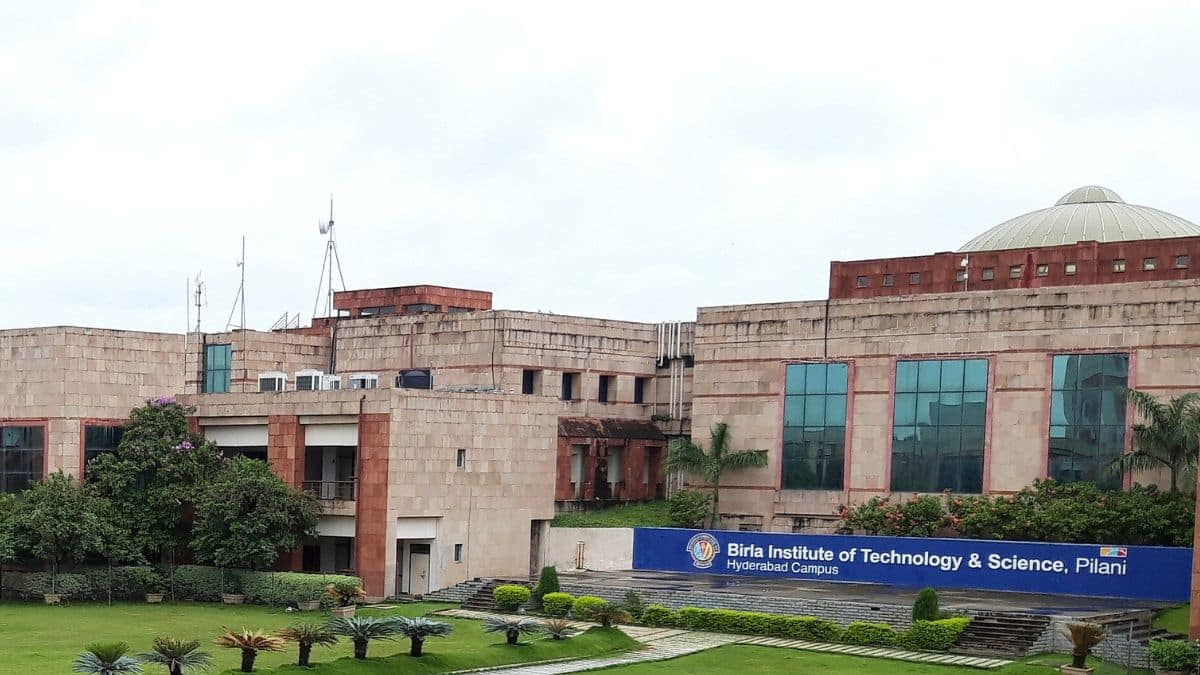
NEW DELHI: Technology that succeeds under Indian conditions can often succeed anywhere in the world, but the challenge is that deep technology does not run on normal startup timelines, according to BITS Group Vice Chancellor Ramgopal Rao. In an interview with PTI, the renowned academician said India cannot become a global innovation hub merely by building more companies around technologies developed elsewhere.
"We must build companies around science and intellectual property created in our own universities. India has two enormous advantages: talent and problems at scale. Both can become the basis for globally important companies," Rao said.
He said India needs homegrown solutions in semiconductors, healthcare, agriculture, space, energy, water, advanced materials, artificial intelligence, defence and manufacturing. "A technology that succeeds under Indian conditions can often succeed anywhere in the world. The difficulty is that deep technology does not run on normal startup timelines," he told PTI.
Also read From IIT Madras to Kharagpur: Why top engineering colleges are now teaching biomedical sciences
BITS VC on technology
Rao explained that while a software product can be developed or improved in weeks, a medical device, semiconductor technology or new material may require years of research, repeated testing, certification and substantial capital before the first customer arrives.
"The weak link is often not the idea or even the prototype. It is the long middle between a laboratory result and a dependable product. Industry and government must be willing to provide test beds and become early customers. For a deep technology startup, the first serious customer is often more valuable than the first investor," he said.
Also read BITS Pilani VC: BTech today is about preparing students to face problems that don’t yet exist
BITS Pilani
Birla Institute of Technology and Science (BITS), Pilani, has emerged as the leading undergraduate institution represented in the Avendus Wealth-Hurun India U30 List 2026, with 11 alumni founders getting featured this year. Rao, a former director of the Indian Institute of Technology (IIT), Delhi, said the entrepreneurship culture at BITS-Pilani is built over several decades, which is now producing visible results among people who are not even 30.
"We are strengthening this further in a variety of ways. Students have considerable academic flexibility and the space to pursue ideas outside the classroom. The New Venture Creation course then provides a more structured path," he said.
He said the course is designed around doing rather than merely discussing entrepreneurship. "Student teams begin with an idea, speak to potential customers, study the competition, test whether the technology is viable, develop a minimum viable product and understand finance, legal compliance and fundraising. Each team also works with an experienced entrepreneur as a mentor," he said.
Rao stressed that Indian universities must build the entire pipeline from research to impact.
Also read IISER Pune plans BS-MS student exchange with other IISERs, more courses for professionals: Director
Research paper creates knowledge: BITS VC
"A research paper creates knowledge. A patent gives ownership over that knowledge. It is only when the knowledge becomes a useful product or process that it begins to create wealth for society. "By wealth, I do not mean only the valuation of a startup. I mean new industries, high-quality employment, manufacturing capacity, exports, strategic independence and solutions to problems affecting millions of people," he said.
"Indian universities must build the complete pipeline from research to impact. That means choosing important problems, funding early-stage research, protecting intellectual property, building prototypes, supporting testing and certification, and connecting researchers with industry and patient capital," he said.
Also read BITS Pilani, RMIT University launch dual-degree Bachelor of Computer Science programme from 2026
BITS Pilani's integrated courses
Noting that entrepreneurship needs unlike minds, Rao said the academic structure at BITS makes it possible for such minds and disciplines to meet. "To the best of my knowledge, BITS Pilani is the only institution in the country where a student can graduate with as distinct programmes as a Bachelor of Engineering in Computer Science and a Master of Science in Chemistry in about five years. There are many students who are actually doing this. A student may study algorithms in one class and molecular chemistry in another," he said.
Similar combinations are possible with physics, mathematics, biological sciences and economics. The second degree is allotted after the first year based on the student's academic performance. This is not flexibility for its own sake. Many important innovations today lie at the intersection of disciplines.
Rao said drug discovery needs biology, chemistry and computing, while climate technology needs engineering, economics and public policy. When students are exposed to more than one way of thinking, they are more likely to see possibilities that a narrowly trained person may miss, he said.
 Add as a preferred source on google
Follow us for the latest education news on colleges and universities, admission, courses, exams, research, education policies, study abroad and more..
To get in touch, write to us at news@careers360.com.
Next Story
]Latest Education News
]AMU agrees to student demands; announces student-union election, replaces proctor
Related News
]AMU agrees to student demands; announces student-union election, replaces proctor
Karunya University earns World Book of Records UK recognition as 7,000 students pay tribute to teachers


