
CBSE revises NSP scholarship framework for 2026-27; check key changes
Vishnukumar V | September 23, 2026 | 02:49 PM IST | 3 mins read
Revised National Scholarship Portal (NSP) framework introduces changes in application submission, verification and handling of multiple scholarship applications
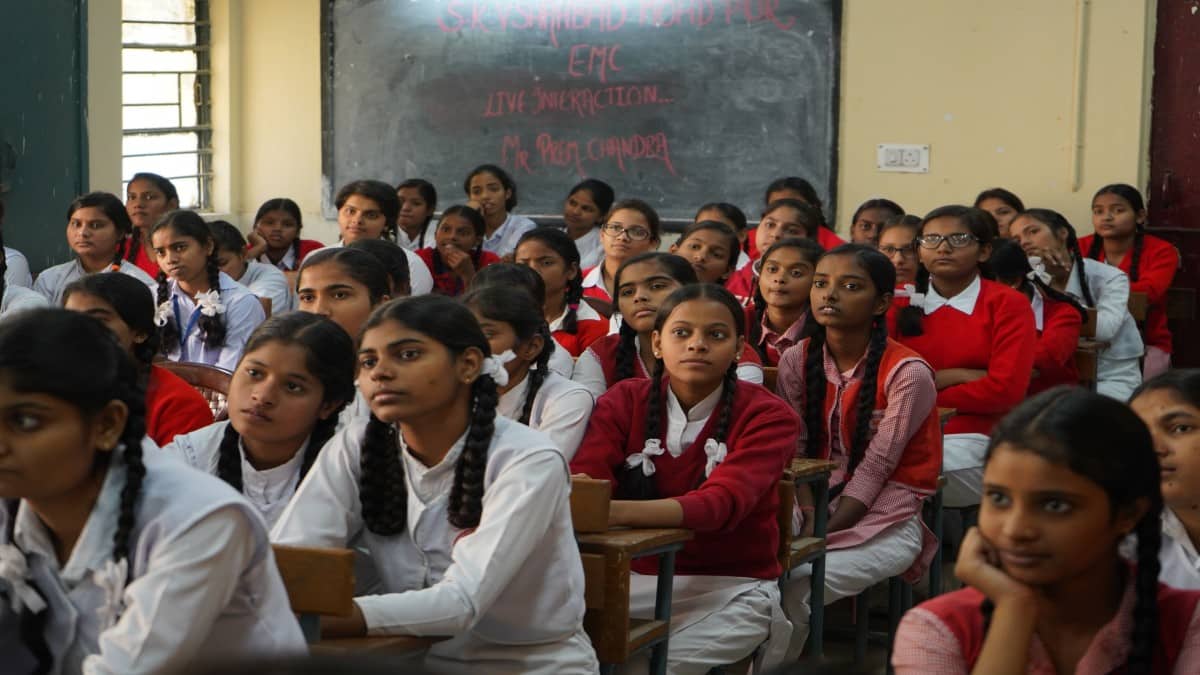
The Central Board of Secondary Education (CBSE) has informed its affiliated schools about the revised National Scholarship Portal (NSP) framework for the academic year 2026-27. The revised framework changes the process for submitting, editing and verifying scholarship applications and will apply from the 2026-27 academic year.
The CBSE has asked heads of all affiliated schools to disseminate the revised NSP scholarship framework among eligible students, parents and other stakeholders for wider awareness.
Under the revised framework, information provided by a student during the initial scholarship application will be retained and reused for subsequent applications. Students applying for additional scholarships will only need to submit scheme-specific details and upload the required documents.
NSP Scholarship Applications: What changes
The revised workflow introduces changes at different stages of the NSP application and verification process.
- Application submission: Details provided in the first application will be retained for subsequent applications.
- Subsequent applications: Students will only need to provide scheme-specific information and relevant documents.
- Defective applications: Students can edit only scheme-specific details if an application is marked defective. To change general, academic, institute or course details, all submitted applications will first have to be withdrawn.
NSP Scholarship: L1 verification process
At the L1 verification stage, tuition fees, admission fees and other non-refundable fee components updated during verification of the first application will be automatically populated in subsequent applications.
The Institute Nodal Officer (INO) will also be able to view all applications submitted by an applicant along with their respective status during L1 verification.
The revised workflow further requires deficiencies in defective applications to be classified into two categories:
- Deficiencies related to scheme-specific details
- Deficiencies related to general or academic details.
NSP Scholarship 2026: L2 verification
At the L2 verification stage, all applications submitted by a student, along with their status, will be visible to all concerned L2 Nodal Officers. The change is intended to ensure consistency in decision-making when the same student applies for scholarships under different categories.
For instance, if a student submits one application under a welfare-based scholarship and another under a merit-based scholarship, the L2 Nodal Officers for both schemes will be able to view the other application and its status.
If deficiencies are related to general or academic details, all other applications submitted by the student will automatically be flagged under the "Red Flag" category.
NSP Scholarship 2026: Merit-based and welfare-based
The Cabinet Secretariat memorandum dated November 12, 2025, classifies government scholarship schemes into merit-based and welfare-based categories.
Merit-based scholarships are awarded based on academic performance, ranking or achievements in competitive or qualifying examinations. The memorandum cites the National Means-cum-Merit Scholarship Scheme (NMMSS), Central Sector Scheme of Scholarships for College and University Students and INSPIRE as examples.
Welfare-based scholarships provide financial support to students from identified communities, categories or socio-economic groups to reduce financial hardship and promote equity. Pre-Matric and Post-Matric Scholarship Schemes for SC, ST, OBC and minority students are cited as examples.
The memorandum also states that a student receiving a welfare scholarship will not be denied a merit scholarship if the student subsequently becomes eligible for it, and the same principle will apply in the reverse situation.
The CBSE has directed the heads of its affiliated schools to circulate the revised NSP scholarship framework among eligible students, parents and other stakeholders. The revised framework is intended to provide a common approach to scholarship classification and the de-duplication of applications across different scholarship schemes.
 Add as a preferred source on google
Follow us for the latest education news on colleges and universities, admission, courses, exams, research, education policies, study abroad and more..
To get in touch, write to us at news@careers360.com.
Next Story
]Latest Education News
]Related News
]CBSE Date Sheet 2027 LIVE: 10th, 12th time table soon on cbse.gov.in; sample papers, grading system
Board Exam Timetable 2027 LIVE: UP, TN 10th, 12th exam dates out; BIEAP, Maharashtra examination schedule soon
AP Inter Time Table 2027 LIVE: BIEAP 1st, 2nd year exam schedule soon at bie.ap.gov.in; marking scheme, rules


