
Post-Matric Scholarship: Government plans to impose fee cap, raise income limit to Rs 4.5 lakh next year
Shradha Chettri | March 16, 2026 | 02:49 PM IST | 7 mins read
Offered by the MSJE, the PMS Scholarship for SC has been missing the target for beneficiary count, the parliament panel has noted. It also reviewed the National Overseas Scholarship
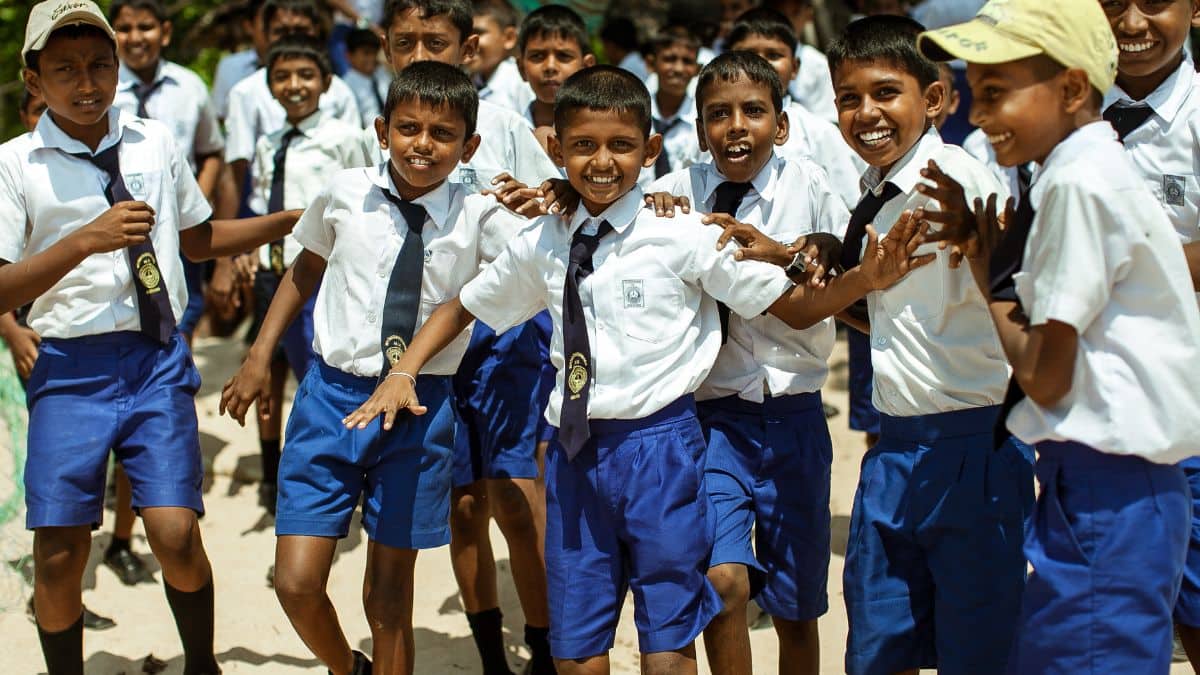
Post-Matric Scholarship Reforms: The government plans to raise the income eligibility criteria for the Post-Matric Scholarship (PMS) for Schedule Caste (SC) students to Rs 4.5 lakh from the existing Rs 2.5 lakh beginning next year. It also plans to introduce a cap on the tuition and course fees the PMS scholarship will cover and revise funding patterns for states and union territories. While the Post-Matric Scholarship is under reform, its count of beneficiaries has missed the target.
The ministry of social justice and empowerment informed the parliamentary standing committee on social justice and empowerment, headed by BJP MP PC Mohan, of its plans for the scholarship – one of the largest financial aid schemes in the country. The reports were laid in the parliament on Wednesday.
Reviewing the demand of grants, the panel expressed grave concern over the ministry surrendering nearly 20% to 25% of the budget allocated for education for SCs and schemes for OBCs, Economically Backward Classes (EBC) and Denotified Tribes (DNT).
The panel also questioned the department's need to increase the number of overseas scholarships to 250, when it has not been able to give even 125 students every year.
Post Matric Scholarship: Income eligibility change
The Post-Matric Scholarship Scheme for Scheduled Caste (SC) students is a centrally-sponsored scheme implemented by the department of social justice and empowerment (DoSJE) through state governments and union territory administrations. The objective is to provide financial assistance to SC students and to increase their enrolment in higher education.
In its existing form, the scholarship covers course or tuition fees, academic allowance and maintenance allowance for students whose family income is Rs 2.5 lakh or less. The scholarship is disbursed through the National Scholarship Portal (NSP) and State Scholarship Portals (SSP).
The new proposed guidelines for the scheme includes:
Enhancement of income eligibility to Rs.4.5 lakh
Increase in disability allowance
Revision of funding pattern for states/UTs
Introduction of cap on tuition/course fees
Introduction of IEC (information, education and communication) and awareness expenses separately for post-matric scholarship
The government told the panel: “Earlier there was no budget kept for IEC …because of which awareness (about the scheme) is not as much as we would have liked. …So, we are now giving 1% of the budget for awareness creation. This is a change. Under disability allowance, it was 10% per annum. Now we have increased it to Rs 10,000. It is a fixed amount per annum.”
As the panel questioned the reasons for restricting the benefits of the scheme only to those within the Rs 4.5 lakh-income limit, the government said, “People from these castes have been facing exploitation. The economically weaker section can exist within any caste. There can be EWS within SC, STs, because of which …we don’t limit it.” The income limit for OBC and EWS quotas, however, is Rs 8 lakh.
The panel also inquired about the steps taken by the department to address the delay in funds disbursal.
Blaming states, the government said, “In the past four years the state governments have not been able to fulfill the timeline. The state government scholarship portal opens in June-July and closes in late November or mid-December. After December, they take a month or two for verification and certification. Therefore, most data starts coming in February and March. Now we are revising the scheme guidelines and trying to make payments within the first four to five months.”
PMS Scholarship: Increase in number of beneficiaries
As per the panel, the department spent Rs 5,476.22 crore in 2023-24, Rs 5,581.52 crore in 2024-25 and Rs 4,934.67 crore in 2025-26 by March 24, 2026. Similarly, the number of students provided scholarships was 47.38 lakh in 2023-24, 48.04 lakh in 2024-25 and 36.07 lakh in 2025-26, till March.
“The committee is not able to understand how the department is going to enhance the GER of SC students in higher education when the actual expenditure and the number of beneficiaries have actually decreased in 2025-26. In fact, the achievement (36.07 lakh) vis-à-vis the target (76.55 lakh) is very poor. The committee feels that the objective …can only be achieved when there is a substantial increase in the number of beneficiaries and actual expenditure,” the panel noted.
It has asked the department to publicise the scheme and obtain feedback from students.
Enhance PMS Scholarship budget
“The committee notes that no target will be fixed from 2026-27 onwards and scholarships will be provided to all eligible SC students but subject to the availability of budget. The committee feels that non-fixing of targets becomes meaningless if the budget is not appropriately enhanced as the budget available for 2026- 2027 is Rs 120 crore whereas actual expenditure incurred in 2024-2025 was Rs 103.26 crore,” the committee noted.
The panel also stated that the income ceiling of Rs 8 lakh is acting as constraints for students to avail scholarship under the scheme to be able to pursue higher studies after class 12.
“The committee is sure that the department will understand and take substantive measures to enhance the income ceiling and annual budget to extend the benefits of the scheme to the maximum number of needy candidates securing admission into premier selected Institutions.
PMS Reform: New income limit for free coaching scheme
The major changes proposed for the Post Matric Scholarship scheme in 2026-27 include:
Doubling the number of slots from 3,500 to 7,000 students.
3,000 for central universities, 2,000 for state universities and 2,000 for student-centric mode.
Not only central universities are being empowered, the students can now opt for coaching institutes as per their choice.
Stipend has also doubled from Rs 4,000 to Rs 8,000 per month
The panel has expressed concern on the need to increase the slots, even as the department is not being able to fill the existing ones.
It recommends, “The committee desires that the family income ceiling should be re-examined so that a large number of candidates can avail the facility and the scheme becomes more effective.” At present the income cap is at Rs 8 lakh.
Post Matric Scholarships: Increase in fellowships
The government also informed the panel that it had undertaken evaluation of the PMS scholarship scheme for SC students, including the National Fellowship Scheme in 2025-26.
It stated, “No specific recommendation for enhancement of fellowship numbers has emerged from such studies.”
To which the panel stated: “The committee does not find any justification for not increasing the target for more than 20 years and thereby restricting students from availing the benefits of the scheme to undertake advanced studies and research leading to PhD degrees. Even after several evaluations of the scheme conducted over the year, the committee is surprised that no recommendation for enhancement of fellowship numbers has been made till date.”
The panel has recommended that the department should analyse the number of applications received under the scheme in the last three years.
“If the number of applications received each year is increasing then it justifies the need to increase the number of fellowships so that a larger number of applicants get an opportunity to avail the fellowship.”
Only 125 National Overseas Scholarship
The panel also wanted to know why the number of National Overseas Scholarships has been raised to 250 in 2026-27 when the department was not able to grant even 125 scholarships every year. The scheme provides financial assistance to students pursuing education abroad.
The ministry stated, “The proposal to enhance the number of slots to 250 is based on the recommendation of the Parliamentary Standing Committee on Social Justice and Empowerment in March, 2025, evaluation study conducted in 2025-26 and the number of applications under the scheme increasing yearly.”
The panel which also reviewed the same scheme meant for ST students by the ministry of tribal affairs noted that the number of annual slots have been proposed to be enhanced from 20 to 50 and the annual maintenance allowance from USD 15,400 to USD 19,250.
“The committee cannot but underscore a long pending desire from ST communities to increase the eligibility criterion with regard to annual family income not exceeding Rs 6 lakh applicable in scholarship under the scheme,” the panel stated.
 Add as a preferred source on google
Follow us for the latest education news on colleges and universities, admission, courses, exams, research, education policies, study abroad and more..
To get in touch, write to us at news@careers360.com.
Next Story
]Protest as ‘law and order issue’: Students note pattern of universities filing FIRs to tackle ‘disagreements’
In just 2026, UoH, APU, Lucknow University filed police cases against own students over WhatsApp posts, campus discussions, protests, turning ‘disagreements into law-and-order issues’, say AISA, SFI activists
Azib AhmedLatest Education News
]Related News
]J-K doubles MBBS, BDS interns' and FMGs' monthly stipend amid agitation
Medical interns in J-K restart agitation over stipend hike; allege government failed to honour assurance
'Spare India from anarchy': Indian-origin students, academicians condemn anti-EC protests


