
Revamp Samagra Shiksha Abhiyan, serve breakfast under PM POSHAN, regulate foreign university campuses: Panel
Shradha Chettri | March 18, 2026 | 07:34 PM IST | 4 mins read
Digvijaya Singh-led panel recommends ‘strict oversight’ of 18 foreign university campuses, third-party audit of PM-USHA, filling of over 60% vacancies in AICTE, UGC
“There is a need for robust regulatory oversight” in regard to foreign universities setting up campuses in India, the parliamentary standing committee on education has said while it tabled recommendations spanning education reform, Samagra Shiksha Abhiyan (SSA) and PM-POSHAN – the central government’s mid-day meal scheme. The panel also wants the education ministry to conduct a third-party evaluation of the PM-USHA scheme and a separate research fund for state universities.
On school education, the committee wants the government to revamp Samagra Shiksha Abhiyan to achieve near-saturation of the Right To Education (RTE) requirements, introduce breakfast under PM-POSHAN and revise the rates of material cost per child per day.
The parliamentary standing committee on education, women, children, youth and sports is headed by Congress MP Digvijaya Singh.
Foreign universities: Balance in curriculum
There are 18 foreign universities coming up in different parts of the country.
“While recognising the potential benefits in terms of global exposure and academic collaboration, the committee underscores the need for robust regulatory oversight. It recommends that clear safeguards be instituted to ensure that such institutions reinvest a reasonable portion of their surplus within India,” the panel recommended.
It also wants the government to ensure that there is a balance in the course curricula between global standards and Indian academic, cultural, and developmental contexts.
“Therefore, periodic performance reviews, including assessment of academic quality, research output, fee structures, student diversity, and compliance with national regulations, should be made mandatory. A transparent monitoring mechanism must be established to ensure accountability and alignment with national higher education priorities,” it added.
Also read Fix PMKVY, hold PM-SETU until foolproof; set up national skill board to rationalise schemes: Panel
Separate research fund for state universities, PM-USHA
The other recommendations for the department of higher education under MOE includes:
A formal third-party evaluation of PM-USHA (Phase 3) outcomes to be conducted by an independent institution by December 2026, covering access, quality, equity, and governance improvements. PM-USHA is a centrally sponsored scheme.
PM-USHA's Phase 3 should prioritise laboratory modernisation and equipment grants for STEM disciplines, with a minimum of Rs. 50 lakh per institution for science lab upgradation and Rs 1 crore for engineering workshops, covering at least 10% of HEIs.
State universities – which account for over 80% of enrolled students – have negligible research capacity. The committee recommends that a dedicated 'State University Research Enhancement Fund' under PM-USHA with an annual outlay of at least Rs 500 crore to develop research and innovation clusters should be established at state universities, with matching contributions from state governments.
UGC should take necessary steps mandating all affiliated colleges to allow students to earn at least 20% of their total academic credits through SWAYAM courses. Non-compliance should be flagged during National Assessment and Accreditation Council assessment.
Immediate upward revision of all scholarship and fellowship amounts. The Central Sector Scholarship Scheme (CSSS) provides Rs 12,000 per annum for the first three years.
Introduction of a dedicated post-doctoral fellowship scheme for researchers at accredited state universities and government colleges, with at least 2,000 fellowships per year at an enhanced stipend of Rs 75,000-Rs 85,000 per month.
Study in India should be continued beyond its sunset date of March 31, 2026, in light of the positive third-party evaluation by IPE Global.
Curriculum integration of Indian Knowledge System – particularly through the IKS Minor Programme – be extended from IITs and central institutions to all affiliated colleges through UGC guidelines.
A comprehensive performance review of all designated IoEs should be undertaken and establish clearly defined, time-bound outcome benchmarks.
With over 60% vacancy in AICTE and UGC, the committee recommends filling it in priority.
SSA, PM POSHAN, audit of private schools
As part of the review of the demand of grants for the various schemes under the department of school education, the parliamentary panel makes several important recommendations.
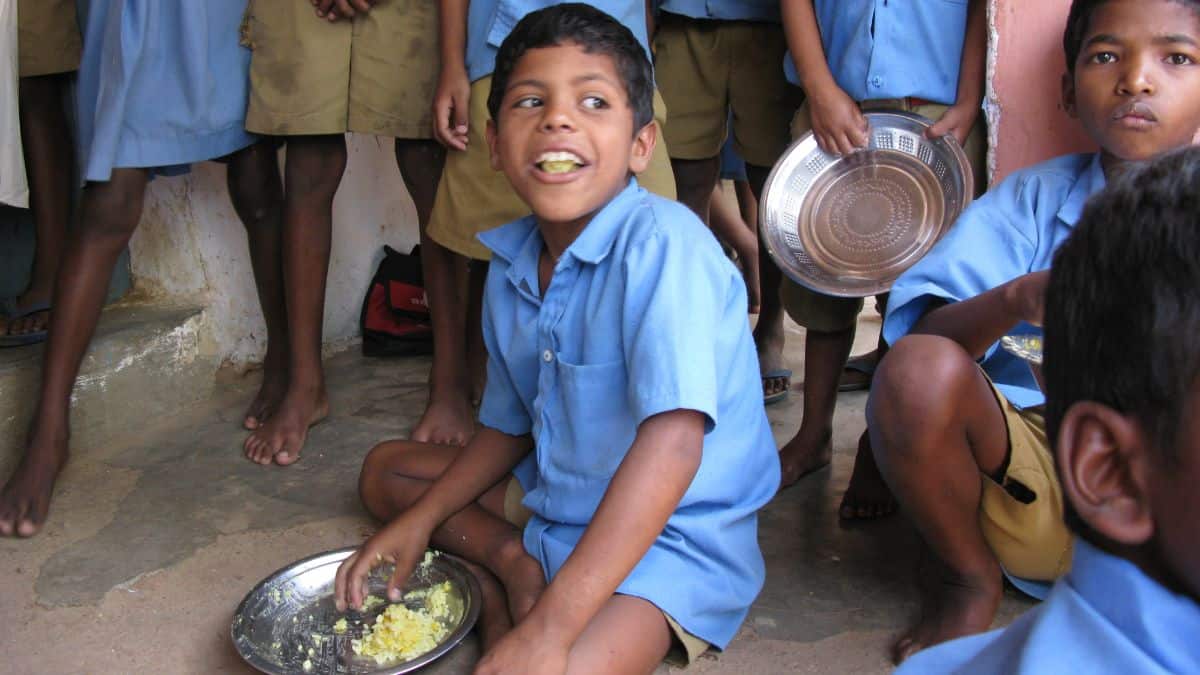
The department should introduce at least light breakfast in particular in the morning shift schools.
The committee notes that the funds due to Tamil Nadu, West Bengal, and Kerala have been duly approved by the Project Approval Board (PAB) of the Samagra Shiksha Abhiyan. The committee recommends that the funds that have been approved may be released.
The department should increase the scope and coverage of the providing nutritional meal scheme to all the students up to Class 10 then take it to Class 12 in the next five years.
The central and the state governments should gradually increase their share so that scope is created for providing an additional light meal along with the regular meal to all the students under PM-POSHAN.
Expressing concern over nil utilisation of funds in 2024-25 under DHRUV guidelines, the department should also review the adequacy of allocations based on pilot outcomes.
CBSE should shift from an advisory-based approach to a monitoring-driven, transparent and accountable regulatory regime.
The 1,10,971 single teacher schools in the country should be converted into at least two teachers in a time-bound manner.
The 22,298 unrecognised schools should be closed down immediately.
 Add as a preferred source on google
Follow us for the latest education news on colleges and universities, admission, courses, exams, research, education policies, study abroad and more..
To get in touch, write to us at news@careers360.com.
Next Story
]Degrees Without Jobs: 40% of graduates in India can’t find work, fewer get salaried employment, finds report
State of Working India 2026 report finds more women enrolling in higher education but face stagnant salaries; rising MBBS, BTech fees, poor vocational training and deteriorating ITI quality deepen crisis
Shradha ChettriLatest Education News
]Related News
]Nobel Peace Prize 2026: Indian-origin Navi Pillay honoured for work on peace, international law
Anne Carson wins Nobel Prize in Literature 2026 for ‘her bold, inventive oeuvre’
NMC tightens medical advertising norms; bans AI-generated testimonials, unverified claims


