
IIT Mandi research shows zinc supplementation suppresses fat deposition in the liver
Team Careers360 | May 8, 2019 | 05:41 PM IST | 2 mins read
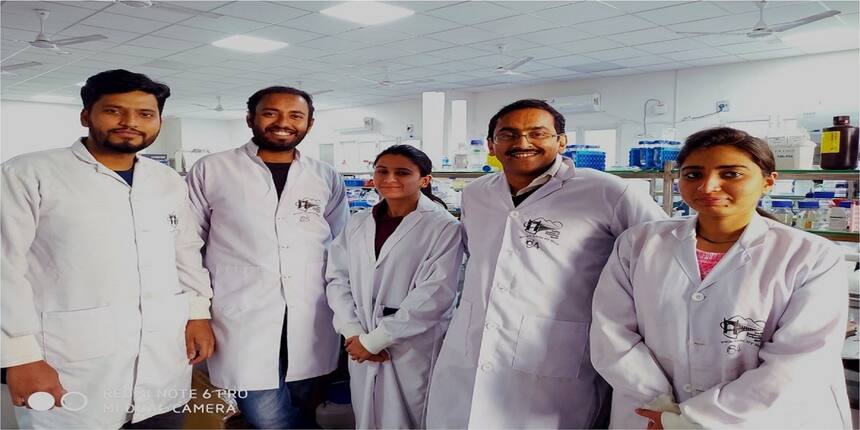
NEW DELHI, MAY 08: A research team led by Dr. Prosenjit Mondal, Assistant Professor, School of Basic Sciences, Indian Institute of Technology Mandi, and Dr. Debabrata Ghosh from CSIR-Indian Institute of Toxicology Research (CSIR-IITR), Lucknow, has recently shown that zinc oxide nanoparticles can prevent fat accumulation in the liver and thereby prevent Non-Alcoholic Fatty Liver Disease (NAFLD).
Their work has been recently published in the journal, Nanomedicine: Nanotechnology, Biology and Medicine.
Liver, the largest internal human organ, secretes bile, stores glucose in the form of glycogen, and converts vitamins, minerals and amino acids into their biologically absorbable forms. While hepatitis viral infections and alcohol-induced liver malfunctions used to be the leading cause of liver diseases in the past, today it is seen that Non-Alcoholic Fatty Liver Disease or NAFLD has taken over due to a dramatic shift towards sedentary lifestyles and unhealthy food habits.
“NAFLD is a condition in which the body creates too much fat that gets stored in the liver cells, called steatosis, which could lead to scarring or cirrhosis, and eventual liver failure”, says Dr. Prosenjit Mondal.
WHO reports that the number of deaths due to liver diseases in India was 259,749 in 2017. Nearly 120 million Indians are estimated to suffer from NAFLD, with a higher incidence rate amongst obese and diabetic people.
The research team has shown using cell and mice models that zinc supplementations either in the form of nanoparticles or salts are effective in reducing fat accumulation in the liver and inducing peripheral insulin sensitivity. The researchers first treated human hepatocellular carcinoma cells with zinc oxide nanoparticles and tested the lipid accumulation in the cells in comparison to untreated cells. They also injected the nanoparticles into the bodies of mice fed with fatty diet and monitored cell signalling, gene expression and also assessed the cellular energy levels. The mice were also subjected to glucose tolerance tests to assess insulin function and compared with mice fed with a healthy diet and fat-fed mice not treated with the nanoparticles.
In the cell tests, the researchers found that the presence of zinc oxide nanoparticles prevented the accumulation of fat in them.
The above observations of the team may help in formulating therapeutic strategies to improve insulin sensitivity and ameliorate liver steatosis associated with type 2 diabetes. “ZnO nanoparticles can improve the physiological homeostasis during obesity and its associated metabolic abnormalities”, says research scholar, Surbhi Dogra, co-investigator, IIT Mandi on the potential outcomes of further research along these lines.
 Add as a preferred source on google
Follow us for the latest education news on colleges and universities, admission, courses, exams, research, education policies, study abroad and more..
To get in touch, write to us at news@careers360.com.
Latest Education News
]


