
Hostel Life: Bad food, dirty toilets, sky-high fees – the truth about higher education’s crumbling backbone
K. Nitika Shivani | April 13, 2026 | 04:49 PM IST | 8 mins read
For lakhs of students, hostels are the only viable choice; but deteriorating food quality, poor hygiene, patchy security, and rising fees are making that choice harder
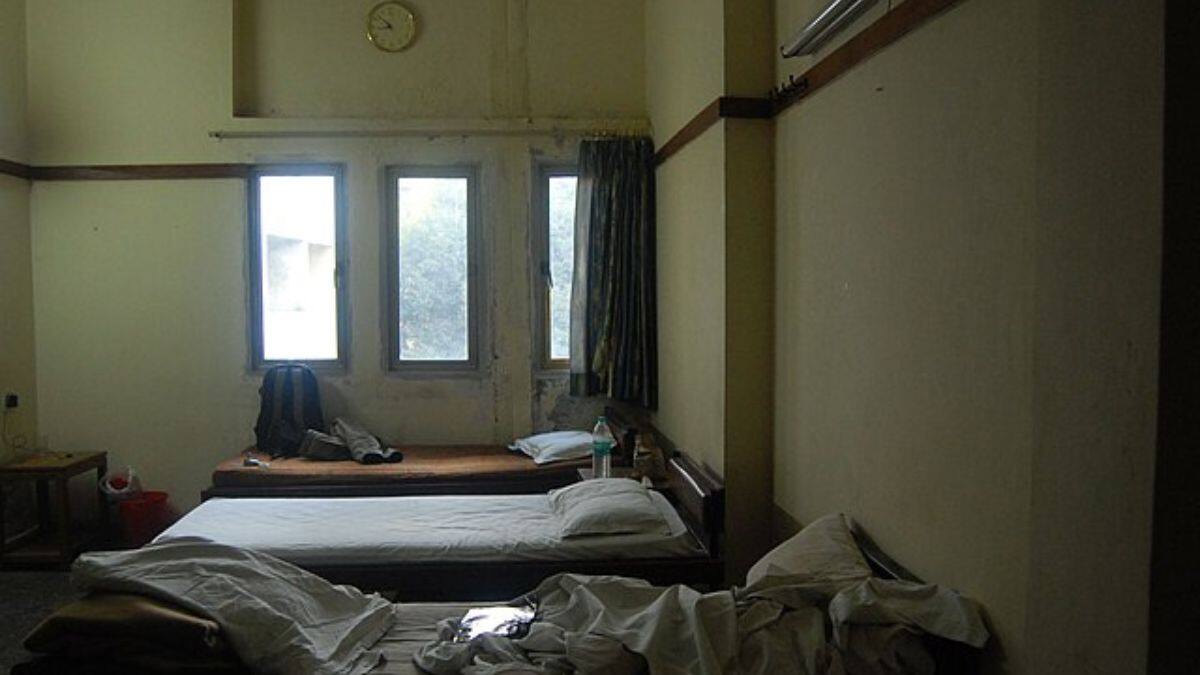
On most evenings, the line outside the hostel mess in a women’s postgraduate residence in Bengaluru moves slowly. Stainless steel plates clatter as students shuffle forward after a long day of classes and assignments. The menu rarely surprises anyone – rice, a curry, perhaps sambar, sometimes something fried. “It fills you up, but you don’t really look forward to it,” said Ananya R (name changed), a postgraduate biotechnology student who moved to the city from Hyderabad last year.
Some evenings she eats with friends at the long mess tables. On other days she quietly skips the meal. A few months ago, one of her hostel mates stopped eating regularly at the mess because she found the food difficult to tolerate.
“She started skipping meals and surviving on biscuits or instant noodles,” Ananya recalled. “Eventually she became very weak and had to be hospitalised. The doctor told her she wasn’t getting proper nutrition.”
Across India’s campuses, hostel mess halls like this one are a daily ritual for thousands of students. For many young people studying far from home, hostels provide the only affordable and practical place to stay. But conversations with students across Bengaluru, Chennai, Pune, Delhi, Mumbai and the Nilgiris suggest that the experience of hostel life often comes with a long list of compromises.
Hostels: A roof far from home
For many students who leave their hometowns to study in cities, college hostels remain the most practical and often the only affordable housing option. For families sending daughters to unfamiliar cities, hostels are seen as a safer alternative to private rentals because they offer campus proximity and supervision. “When you move to a new city, the hostel is the safest bet,” said Ananya R. “Your parents know you’re inside the campus and that gives them peace of mind.”
Students say the sense of community is one of the few consistently positive aspects of hostel life. Meghana Prakash, a postgraduate student from Coimbatore studying in Bengaluru, said living with students from across the country creates a support network.
“You share rooms, study together and go through the same stress before exams,” she said. “Those friendships become very important when you’re living away from home.” But she added that the daily realities of hostel living are often more complicated than what universities promise.
Mess Food: Mass production, health concerns
Food quality remains one of the most common complaints among hostel residents. Meals are typically prepared in bulk to serve hundreds of students, which many say leads to repetitive menus and cost cutting on ingredients. “The food is not terrible, but it’s not something you can eat happily every single day,” said Ananya R. “After a few months you get tired of the same taste and the same dishes repeating.”
In Mumbai, management student Riya Shah described the meals as functional but far from satisfying. “Sometimes the food tastes bland or overly oily, and there are days when the cleanliness itself becomes a concern,” she said. She said students occasionally notice issues such as poorly-washed utensils or food that appears to have been sitting out for long periods. “When food is cooked in such large quantities, it’s obvious the priority is cutting costs rather than maintaining quality or hygiene,” she said.
Despite paying substantial hostel and mess fees, many students feel the standards do not match the amount charged. “We pay a lot for the hostel and the mess, so naturally people start wondering where that money is actually going,” she said. As a result, ordering food online or stepping out for meals has become routine for many students on campus.
In Chennai, Arjun (name changed), a doctoral scholar at Indian Institute of Technology (IIT) Madras, said the monotony of hostel meals often pushes students to look for alternatives. “Some days the food is good, but there are weeks when the menu repeats a lot,” he said.
“You might see similar curries or the same kind of sambar several times.” According to him, many students end up going outside regularly. “Every weekend a lot of us go out just to eat something different. People assume hostel life helps you save money, but if you keep eating outside because the mess food gets boring, you’re not saving much.”
Hostels: Infrastructure, hygiene, everyday struggles
Food is only part of the challenge. Students say infrastructure and sanitation issues remain a constant concern in many hostels. In Pune, Sakshi Kulkarni, a second-year engineering student, said the building itself has persistent problems. “The mess food is actually okay compared to what I’ve heard elsewhere,” she said. “But the hostel infrastructure is not great. Water supply is inconsistent and sometimes the bathrooms don’t have water for hours.”
Such interruptions can disrupt daily routines. “If you have an early class or lab and suddenly there’s no water to bathe or even wash your face, your entire morning becomes stressful,” she said.
In Delhi, Aditi Verma, a student at a central university, said sanitation in shared washrooms is another recurring concern. “When hundreds of students use the same bathrooms every day, cleaning has to be very regular,” she said. “But sometimes it isn’t. There are days when the bathrooms are not cleaned properly or the floors are constantly wet.”
Several female students across campuses said poor hygiene in shared facilities has led to health concerns. “A few of my friends have had recurring urinary infections,” said Sneha Reddy, studying in Hyderabad. “Doctors tell us to maintain hygiene but when the bathrooms are not cleaned well or water supply is irregular, it becomes difficult.”
Maintenance delays are even more noticeable in small, hill-town campuses. Priyanka (name changed), who studies at a college in the Nilgiris near Ooty, said repairs often take time. “If something breaks, like a tap or a flush, it can take weeks before it gets repaired,” she said. “We keep reminding the administration again and again.”
Private University Hostels: High fees and frustration
Another concern is the rising cost of hostel accommodation. In many universities, particularly private institutions, hostel and mess fees have increased steadily in recent years, sometimes running into tens of thousands of rupees each term.
Diya Pillai, a student in Bengaluru who moved from Chengalpattu, said the expenses often feel disproportionate to what students receive in return. “Every few months we pay a huge amount for the hostel and the mess,” she said. “When you add everything together, it becomes a very big expense for students and their families.”
But she said the facilities rarely reflect the price being charged. “The rooms are basic, the bathrooms are shared by many students, and the mess food is something many people struggle to eat every day,” she said. “After a point you start wondering where the money is actually going.”
The same problems continue for months. “If we are paying so much, at least the basic things should be taken care of — clean bathrooms, decent food and proper maintenance,” she said. “When those things don’t improve, students feel like they are paying a lot but receiving very little in return.”
Women’s Safety: Strict rules, uneven measures
Safety remains one of the most sensitive concerns in women’s hostels. While many universities enforce strict curfews and entry rules for female students in the name of protection, these restrictions do not always translate into a genuine sense of safety.
For Shreya Narayanan (name changed), a postgraduate student from Coimbatore studying in Chennai, the issue became more personal after she had an unsettling experience near her hostel during her first year. One evening, while returning from the library, she noticed a man lingering near the dimly-lit road leading to the hostel gate.
“At first I thought he was just standing there,” she said. “But as I walked closer, I realised he had been watching me for some time and then started walking in the same direction behind me.”
The road was quiet and poorly-lit. Narayanan said she could hear footsteps behind her and instinctively quickened her pace while calling a friend on the phone. “You suddenly become very aware of everything around you,” she said. “I kept looking over my shoulder until I reached the hostel gate.”
The man eventually walked past without speaking, but the incident left her shaken. When the Anna University rape case made headlines, they brought back that memory.
“It made me realise how vulnerable women can feel even within campus spaces,” she said. “After that experience, I stopped walking alone at night. Even now, I’m always looking over my shoulder.”
Students say such incidents highlight the gap between strict rules imposed on women and the safety infrastructure that should accompany them. “Curfews alone don’t make us feel safe,” Narayanan said. “Better lighting, visible security and female wardens would make a much bigger difference.”
Hostels: Still the backbone of campus life
Despite the challenges, hostels remain an essential part of India’s higher education system. For students arriving from distant states or smaller towns, they offer something difficult to find elsewhere in large cities with a stable and relatively secure place to live.
Also read JNU’s Hostel Mess: Students face water shortage, broken ceilings, crowding, fee hike
Tsering Dolma, a student from Ladakh studying in Chennai, said hostel accommodation made her education possible. “Without the hostel, I wouldn’t have been able to study here,” she said. “Finding a safe and affordable place in a big city as a student is extremely difficult.”
She said hostel life also builds strong friendships that help students cope with academic pressure. “You share everything like late night study sessions, exam stress and homesickness,” she said. “Those friendships become your support system.”
But students across campuses say improvements are long overdue. “Hostels should make student life easier, not harder,” she said. “If universities are charging so much, the least they can do is ensure decent food, clean facilities and proper safety.”
 Add as a preferred source on google
Follow us for the latest education news on colleges and universities, admission, courses, exams, research, education policies, study abroad and more..
To get in touch, write to us at news@careers360.com.
Next Story
]Teacher Training: Deemed university on paper, NITTTRs lose ground as AICTE, MMTTCs muscle in on domain
4 deemed universities, crores spent, yet only 88,000 teachers trained; NITTTR Chandigarh carries load alone; NITTTR Bhopal, despite highest budget, trains just 6,122; Kolkata cash-starved even with new courses
Shradha ChettriLatest Education News
]Related News
]ISRO communication and media scholar India’s sole representative from field in world top 2% scientists list
Mizoram minister urges students to shun drugs, expresses concern over cannabis use


