
Jamia forms high-level committee to interact with protesting students, restore normalcy on campus
Suviral Shukla | October 19, 2026 | 07:51 AM IST | 3 mins read
The JMI's five-member committee comprises deans and faculty members from various departments, including humanities and languages, life sciences, social sciences, student welfare and academic affairs.
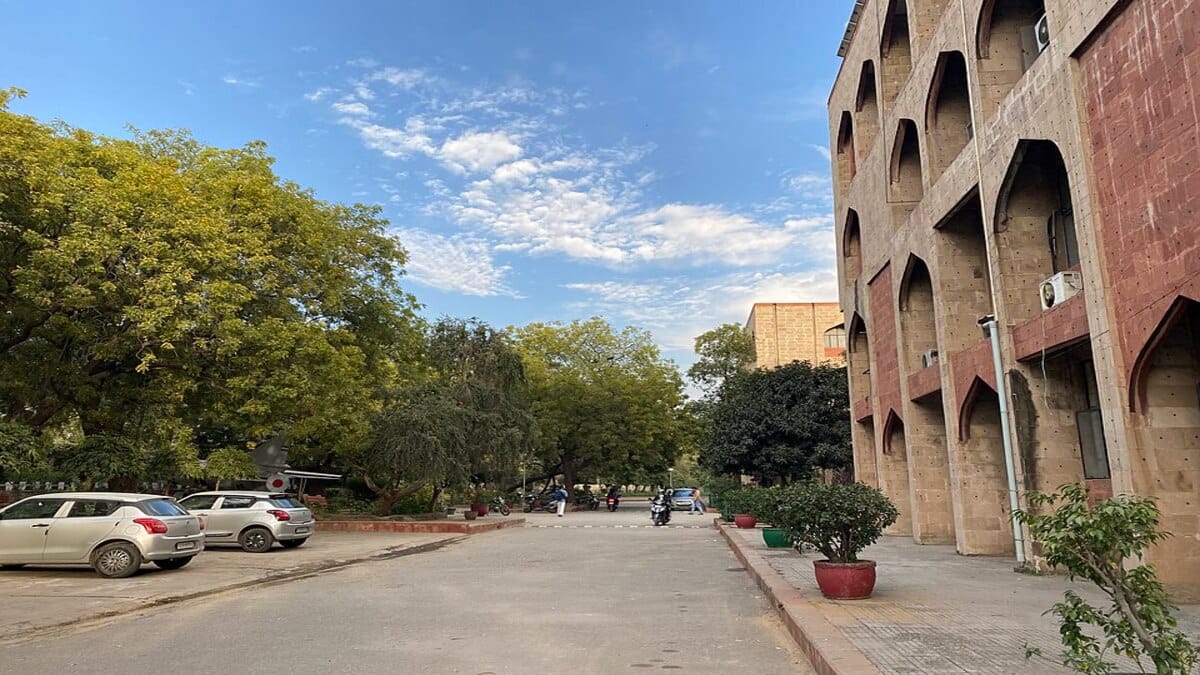
Days after the student protests at Jamia Millia Islamia (JMI) started over the alleged assault of students by the security guards and demands for the restoration of the students’ union, the JMI administration has formed a seven-member committee to interact with students.
The high-level committee will hear their grievances and help restore normalcy on campus, according to an official order issued by the JMI registrar.
The committee comprises deans and faculty members from various departments, including humanities and languages, life sciences, social sciences, student welfare and academic affairs.
A meeting of senior university functionaries, vice chancellor, Jamia Millia Islamia (JMI), Mazhar Asif, registrar, JMI; Md Mahtab Alam Rizvi; controller of examinations, Ahteshamul Haque; deans of faculties, dean of students' welfare, dean, academic affairs; chief proctor; provosts of all hostels; chief public relations officer and other officials of JMI, was held last evening to deliberate on the demands raised by students who have been sitting on a hunger strike and staging protests.
JMI's secret ballot for students' union elections
JMI has instituted a robust and democratic system of subject association elections in each of its departments and centres. Under this system, students vote by secret ballot to elect three office-bearers, namely, the vice-President, General Secretary, and Joint Secretary in their respective departments and centres. This system has served the students very well through these past years, the university said.
“The Dean, Students Welfare, JMI, shall convene the meeting of the above Committee and submit its report to the Hon'ble Vice-Chancellor, JMI, at the earliest,” the official order read.
"The University administration remains committed to resolving the matter through constructive dialogue and deliberation, grounded in mutual trust and understanding. It seeks the same spirit of cooperation from the protesting students and other stakeholders. It is worth noting that union elections were dissolved in JMI in 2006, following recurrent incidents of violent clashes, attacks on teachers, and the occasional disruption of classes during that period," the university said.
In 2022, the Delhi High Court accepted the argument and submission of the Standing Counsel, JMI, and disposed of the matter, giving no directions to the university to conduct elections of Students' Union, in light of the rampant history of violent clashes on campus in and after 2006, it added.
"Nonetheless, the present administration, which assumed office in October 2024, remains committed to finding an amicable resolution to the two-decade-old impasse," it said.
On October 13, three JMI students began a hunger strike, demanding the restoration of the JMI Students’ Union (JMISU) and student representation in campus decision-making.
Later, in a few days time, the agitation intensified, following unrest at the campus. The students’ group alleged that the university admin has used force against them and demanded action against the university officials.
The All India Students’ Association (AISA) also alleged that students participating in the hunger strike had been removed from the campus and the protesters were suspended.
The AISA demanded the withdrawal of disciplinary action against the students and the restoration of students’ union elections.
In addition, JMI has not held students’ union elections since 2006. The protest at the university comes just days after the Aligarh Muslim University (AMU) administration agreed to hold students’ union elections, which will be held nearly after eight years.
 Add as a preferred source on google
Follow us for the latest education news on colleges and universities, admission, courses, exams, research, education policies, study abroad and more..
To get in touch, write to us at news@careers360.com.
Next Story
]Latest Education News
]Related News
]JMI to resume offline classes on November 10 after 18 days of protests over students’ union constitution
Democracy Returns to JMI: Administration, students celebrate historic resolution ending 20-year union impasse
From Hunger Strike to Victory March: Jamia students celebrate breakthrough after 18-day protest


