
JNU Hunger Strike: MP John Brittas urges President Murmu to step in as students’ health worsens
Vaishnavi Shukla | October 19, 2026 | 04:29 PM IST | 3 mins read
Rajya Sabha MP has written to the President seeking revocation of the rustication of JNUSU members, withdrawal of objectionable provisions of CPO manual, and resolution of students' grievances
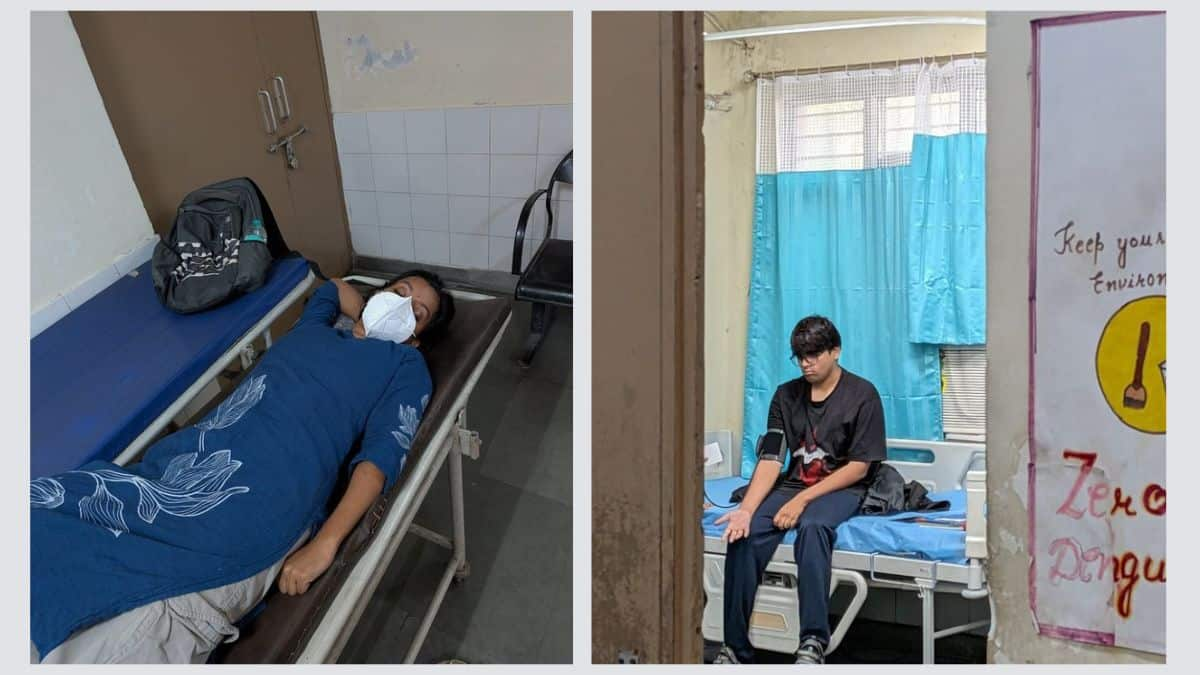
Member of Parliament (MP) John Brittas has written to the President of India, Droupadi Murmu, seeking urgent intervention over the indefinite hunger strike of Jawaharlal Nehru University Students’ Union (JNUSU) representatives and other students.
MP has called for immediate action to revoke the rustication of elected JNUSU representatives, withdraw the objectionable provisions of the Chief Proctor’s Office (CPO) Manual, and resolve students’ outstanding grievances.
JNUSU and other students have entered the 16th day of their peaceful protest. Aditi Mishra, JNUSU vice president, Gopika, along with other 11 students, are sitting on a hunger strike that began on October 3.
As per media reports, JNUSU joint secretary Danish Ali, a PhD scholar at the Centre for Historical Studies, and former president Nitish, were rusticated for protesting the installation of a facial recognition technology (FRT) surveillance system in the Central Library.
Also read Removing deprivation points from admissions will change JNU’s character, make it elitist: Professor
Brittas has further pointed out in the letter that JNU’s failure to address the concerns of students has led to this continuing protest. The strike contributed to the deteriorating health of the participating students, raising alarms over the situation and calling for intervention, the letter added.
What JNU students' demands?
According to the MP’s statement, the rustication of elected students' union representatives, including the former JNUSU president, for nearly eight months has raised concerns. The exclusion of representatives also affects the functioning and mechanism through which students articulate their grievances.
Similarly, JNU also continues to follow the CPO Manual, which imposes heavy fines and punishment for protests and gatherings. This raises concerns that students are losing the freedom to express their opinions democratically within the university, the letter adds.
Media reports suggest that JNU students have raised 13 demands, including rolling back the CPO manual, revoking the rustication of JNUSU office bearers, reinstating the Gender Sensitisation Committee Against Sexual Harassment (GSCASH), and the JNU entrance exam JNUEE, among others.
Concerns over restriction
Brittas further raised concerns over the expulsion of students at JNU while recalling his own experiences as a student. He emphasised the importance of sustaining an environment where students could freely express views and question decisions.
“It is, therefore, deeply concerning that such disproportionate disciplinary measures could diminish this space, discouraging students from raising legitimate grievances for fear of punitive action. Such an atmosphere has implications extending well beyond those directly affected, particularly when concerns relating to gender justice, equal opportunity, admissions and basic campus facilities remain unresolved.”
“The prolonged impasse has now assumed serious proportions, particularly in view of the risks posed to the health and well-being of the hunger strike participating students,” the letter added
Brittas also highlighted the founding principles of JNU under the Jawaharlal Nehru University Act, 1966, enacted by Parliament. He reiterated that the President of India is the Visitor of the university, and that she has the power under the Act to review how the university is run and give it directions.
Recently, JNU VC Santishree Dhulipudi Pandit acknowledged the ongoing hunger strike for the first time but refused to speak to rusticated students when she visited the protest site.
JNUSU later accused the university administration of making public statements to create an ‘impression of concern’ while failing to engage with the protesting students and allegedly delaying the process.
 Add as a preferred source on google
Follow us for the latest education news on colleges and universities, admission, courses, exams, research, education policies, study abroad and more..
To get in touch, write to us at news@careers360.com.
Next Story
]Jamia forms high-level committee to interact with protesting students, restore normalcy on campus
The JMI's five-member committee comprises deans and faculty members from various departments, including humanities and languages, life sciences, social sciences, student welfare and academic affairs.
Suviral ShuklaLatest Education News
]Related News
]JNU VC acknowledged hunger strike for first time, but refused to speak to rusticated students: JNUSU
JNU Sexual Harassment Row: Bimol Akoijam to challenge dismissal, file case in 1-2 days
BJP MPs seek Ethics Committee probe into JNU’s sacked professor Bimol Akoijam


