
MUHS Nashik plans 865 new colleges: 51 for MBBS, most in small towns; big push for allied health sciences
Musab Qazi | October 28, 2026 | 12:05 PM IST | 5 mins read
MUHS Perspective Plan 2027-32 aims at nearly doubling the count of colleges – MBBS in small towns; 60 new dental colleges; over 100 for occupational therapy, ASLP, prosthetics
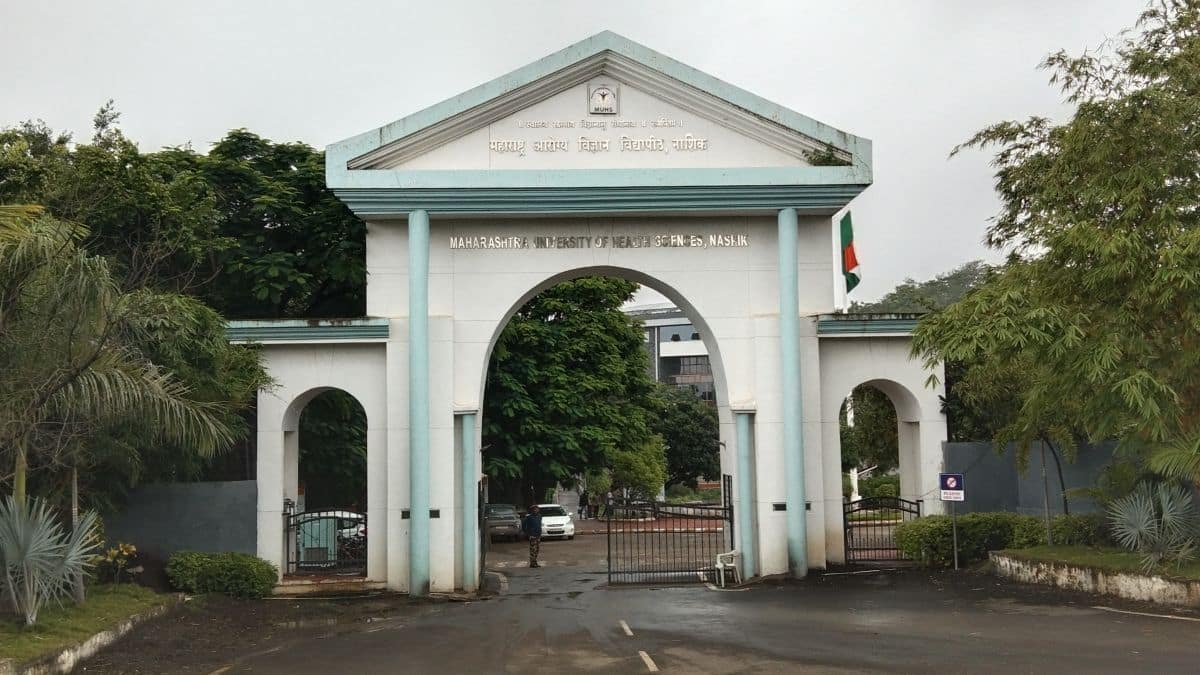
Maharashtra University of Health Sciences (MUHS) Nashik, is looking to add 51 new medical colleges in the state, most of them in small towns and rural areas. The university, which is the sole public affiliating institute for health science programmes, is also seeking an exponential rise in training facilities for allied healthcare disciplines, while slowing down the expansion in ayurveda, physiotherapy and nursing colleges.
The MUHS Nashik senate, the university’s top governing body, last week approved its new five-year “perspective plan” for 2027-32, which charts out the growth of its affiliated colleges in this period. It has already invited applications from healthcare organisations to apply for setting up new institutions for the next academic year 2027-28 under the new plan.
Besides providing slots for new affiliated institutions, Maharashtra health university has also introduced a few procedural changes. These include the “one point one recommendation” policy, where the university will propose only the best candidate among all applicants for a particular slot to the state government. It has, however, persisted with its policy of allowing minority organisations to start new colleges irrespective of availability of vacant slots.
While the university’s consultation process for the new MUHS perspective plan began in January, it was finalised after the new-vice chancellor (VC) Venkat Gite took charge in August, 2026. The plan, drawn by a 16-member panel, went through various varsity authorities, including its academic council, management council and planning board, and was also shown to the state government before being finalised.
MUHS Nashik: 1:15 lakh population ratio for medical colleges
In the new perspective plan, the university has considerably brought down the population-based training requirement for all healthcare fields, except for allied health sciences. The earlier plan for 2022-27 had provided for one college each for modern medicine, homeopathy and dentistry for 10 lakh people, while the ratios for ayurveda, nursing, physiotherapy and other allied healthcare colleges was 1:7.5 lakh, 1:1.5 lakh, 1:25 lakh and 1:20 lakh, respectively.
A copy of the new plan, shared with senate members and seen by Careers360, offers a uniform 1:15 lakh ratio for all the colleges except dentistry and unani, where it’s fixed at 1:20 lakh and 1:30 lakh, respectively.
Based on these parameters and existing facilities, the university has created 865 slots for new institutes offering undergraduate programmes (UG), distributed in 61 zones across 36 districts of Maharashtra. This would almost double the varsity’s current affiliation count of 952 UG colleges.
Of these, 51 slots are meant for medical colleges, adding to health university Nashik’s existing tally of 69 institutes offering MBBS programmes. The vast majority – 40, to be precise – of these institutes are to come up outside the municipal corporation areas or the large cities. The state, in recent years, has seen rapid addition of newer medical colleges, with 10 government-run institutes created in the 2025-26 academic year alone. This growth tracks with the exponential growth in the medical education avenues nationally, thanks to enabling policies of the central government.
The university’s plan also envisages tripling the number of dentistry institutes by adding 60 over 29 existing ones.
MUHS Nashik Perspective Plan: MBBS, dentistry, ayurveda and others, existing & planned
Courses | UG Colleges in 2026 | New Colleges Planned |
Medicine | 69 | 51 |
Dentistry | 29 | 60 |
Ayurveda | 149 | 25 |
Unani | 8 | 69 |
Homoeopathy | 64 | 60 |
Nursing | 401 | 35 |
Naturopathy and Yogic Sciences | 3
| 113 |
Physiotherapy | 120 | 21 |
Occupational Therapy | 4 | 114 |
Audiology and Speech-Language Pathology (ASLP) | 2 | 158 |
Prosthetics and Orthotics | 1 | 159 |
Modern Pharmacology | 34 | - |
B.Sc. (Optometry) | 15 | - |
Diploma (Optometry) | 9 | - |
B.Sc. (PMT) | 21 | - |
D.M.L.T. | 22 | - |
Paramedical Diploma | 1 | - |
Total | 952 | 865 |
However, it’s in some of the allied health sciences and Indian system of medicine that Maharashtra University of Health Sciences is aiming for the most dramatic expansion.
Also read NEET PG Counselling: At private medical colleges, deemed-university tag brings up to 1,471% fee hike
The university has offered over 100 slots each for occupational therapy; audiology and speech-language pathology (ASLP); prosthetics and orthotics; and naturopathy and yogic sciences, and 69 for unani colleges. The existing count of colleges currently offering these programmes is in single digits.
MUHS: Allied health sciences push minus physiotherapy
This approach aligns with the national push for strengthening allied healthcare training facilities. “National allied health workforce development is a relevant policy opportunity. The [Central] Government's 31 July 2026 update records a Budget 2026 initiative for an additional 1,00,000 allied healthcare professionals over five years and an allocation of Rs. 1,000 crore for that year's scheme,” reads the plan presented at the senate.
However, one exception to this approach is physiotherapy, which already has 120 colleges in the state. The MUHS Nashik perspective plan has only 20 new slots for additional colleges. It similarly provides for a limited number of nursing and ayurveda institutes, whose current count currently stands at 401 and 149, respectively.
While the perspective plan presented in the senate had proposed a two-year pause on new nursing and physiotherapy colleges, a university official said that the policy was altered to allow for setting up institutes in select places that lack these facilities. “The slots are decided based on the factors such as the state population, regional balance and equity. Only the districts that don’t have nursing and physiotherapy colleges will get them,” said the official.
MUHS Perspective Plan 2027-32: Healthcare, medical college slots & locations
Zones | MBBS Colleges | All Colleges |
Jalgaon - NMCA | 3 | 31 |
Nashik - NMCA | 3 | 26 |
Kolhapur - NMCA | 3 | 18 |
Mumbai - MCA | 2 | 85 |
Palghar - NMCA | 2 | 27 |
Solapur - NMCA | 2 | 23 |
Yavatmal - NMCA | 2 | 23 |
Ahilyanagar - NMCA | 2 | 21 |
Buldhana - NMCA | 2 | 21 |
Beed - NMCA | 2 | 20 |
(MCA - Municipal Corporation Area; NMCA - Non-Municipal Corporation Area)
The official said that the university’s online system will allow applicants for new colleges only in the available slots. The applicants failing to meet the various infrastructure and faculty norms won’t be allowed to complete the application process, let alone have their applications be scrutinised or considered for approval, said the varsity official.
MUHS: New medical college approval process
In a departure from the past, where MUHS would forward all the eligible applications for a particular slot to the state government for its approval, the varsity will now filter through all the candidates and select the only best suited. “The ‘one point one recommendation’ policy will ensure that the rejected candidates don’t feel slighted,” said the official.
Also read FMGE October 2026 admit card out at natboard.edu.in; exam on October 31
The official, however, added that the MUHS Act gives the state government discretion to approve the colleges not recommended by the university, and even for a slot not provided in the MUHS perspective plan. The minority-run organisations, too, would be able to seek establishment of new institutes irrespective of the availability of slots.
In another reform, MUHS will charge the full application fees only to the institutes figuring in the final recommendation list. The sponsoring bodies have until the end of the month to apply. “While this plan is for the next five years, it will be revised annually to account for population growth and opening and closure of institutes,” said the official.
 Add as a preferred source on google
Follow us for the latest education news on colleges and universities, admission, courses, exams, research, education policies, study abroad and more..
To get in touch, write to us at news@careers360.com.
Next Story
]NSO Survey: Nearly 50% of children travelling at least 1 km to school walk, more so in rural areas
With Right to Education norms seeking a primary school within 1 km of every habitation, NSO travel survey shows 47% children aged 6-14 walk; urban families spend Rs 617 on commuting against Rs 361 in rural areas
K. Nitika ShivaniLatest Education News
]Related News
]NEET PG Counselling 2026 LIVE: MCC round 1 college reporting from October 26; MD, MS cutoffs
Jamia Millia Islamia students continue stir for 17th day; university alleges damage to property
Ahmedabad University launches MSc Health Data Science programme, first batch from July 2027


