
NCAHP push for uniform allied healthcare education slowed by missing state councils, implementation gaps
Musab Qazi | July 13, 2026 | 12:08 PM IST | 11 mins read
Uncooperative states, doctors, funding doubts, even degree and diploma course names complicate NCAHP’s efforts to standardise allied and healthcare programmes
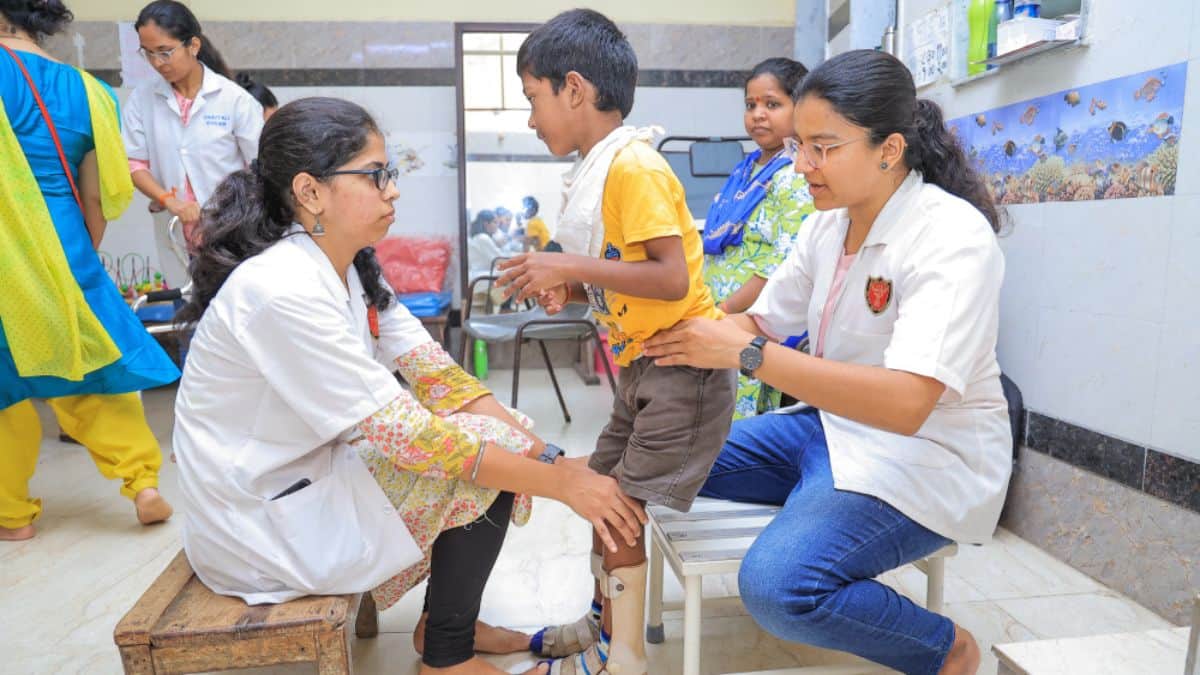
The efforts to standardise training in the allied and healthcare professions – popularly known as paramedical courses – are off to a rough start. While the new regulatory authority, the National Council for Allied and Healthcare Professions (NCAHP), had sought to enforce common curricular and academic norms across the country from the upcoming academic year 2026-27, state response has been uneven and practical hurdles plentiful. Some states and UTs are yet to take the first step – establishing the state allied and healthcare councils (SAHCs), which are tasked with enforcing common standards.
Among states that did set up SAHCs, many did so without following the provisions of the NCAHP Act, severely affecting their functioning. But even for states faithfully implementing NCHAP’s directives, the road is far from smooth, even as they claim progress. They must navigate through the multiplicity of existing course nomenclatures and structures, confusion about funding, and suspicions related to the political compulsions behind this effort to bring order to the allied health science landscape.
Both the NCAHP and the law that brought it into being are very new. The Indian parliament passed the National Commission for Allied and Healthcare Professions (NCAHP) Act in 2021, paving the way for regulating and standardising the education and practice of a host of healthcare-related professions, including physiotherapy, optometry, dietetics, psychology and diagnostics.
NCAHP registration, paramedical courses syllabi
It was a long-awaited intervention in the sector, which, despite its scale and critical position within the broader healthcare space, has been plagued by fraud and shoddiness. It’s also one of the most daunting tasks undertaken by the central government and the ministry of health and family welfare (MoHFW), considering the sheer variety of disciplines – 57 of them – involved.
While it took the centre almost three years to form the NCAHP, the new body promptly got down to work, putting in place standards for academic institutes and programmes, as well as a governance framework.
It has so far prescribed uniform curricula, admission criteria, as well as the infrastructure and clinical requirements, for 17 major programmes and has proposed regulations related to registration of AHPs, ethics code for professionals and the autonomous boards, which are responsible for undergraduate (UG) and postgraduate (PG) education; assessment and rating of the institutions
NMC model for allied health sciences
The new regulatory framework for AHPs is, to some extent, modelled on the governance system in place for medicine, with a national commission and state councils. There are also 10 professional councils, one each for a recognised broad allied and healthcare category, such as medical laboratory and life sciences or ophthalmic sciences professional, at the national level.
However, unlike medical education, where the National Medical Commission (NMC) enjoys broad powers to not only enforce academic standards but also to grant recognition to colleges, the NCAHP Act envisages a more shared role for NCAHP and the state councils in matters ranging from curricula development to granting permission to new institutes.
In fact, while in medical education, the four autonomous boards exist only at the central level, the NCAHP Act provides for the creation of these boards in all the states and union territories (UTs).
NCAHP: State councils formed against norms
Despite repeated reminders from NCAHP, only 27 out of 36 states and UTs have so far set up SAHCs, with most UTs failing to comply. Haryana, Jharkhand and Uttarakhand are without state councils, according to information on the NCAHP website. As many as nine states and UTs have been flagged for not following norms in setting up councils. At least half the states, including Tamil Nadu, Rajasthan and West Bengal, formed councils without first notifying the rules, rendering them without any legal basis.
Take Odisha, which had come up with a nine-member SAHC as early as 2022. However, the council mostly remained inactive as the state didn’t notify the rules until a few months ago. Pradeep Kumar Hota, the head of faculty at Acharya Harihar PG-Institute of Cancer, Cuttack, who was designated chairperson of the Odisha council, said that his appointment remained “only on paper”.
“The states can define the eligibility criteria for the chairperson and other members of their respective SAHCs and form the council as per the availability of the candidates. Odisha did the wrong thing by forming the council even as there were no rules in place,” he said.
Telangana, too, formed a four-member skeletal council in 2022 and did nothing else. “Telangana is not moving towards the establishment of the council. It did appoint a council on paper, but no initiative was taken. There has been no representation from the state in any of NCAHP’s meetings,” said Siramdas Srinivasulu, principal of NIMS College of Allied Health Sciences, Hyderabad, and president of the National Council for Medical Radiology Imaging and Therapeutic Technology Professionals..
Srinivasulu, who is also an NCAHP member, recently led a delegation of allied and healthcare professionals to A Narendra Kumar, the state director of medical education and B Prem Kumar, secretary, Telangana Para Medical Board (TGPMB), pressing for the formation of a full-fledged SAHC.
NCAHP: Slow states, doctors dominate AHP sector
According to Hota, one of the reasons for the states dragging their feet in forming proper councils is the current prevalence of doctors, instead of paramedical professionals, in regulating the AHP sector. Once a state forms an SAHC, it’s expected to supersede all the previous regulatory bodies and structures.
Hota points out that the physiotherapy and occupational therapy councils as well as the MLT board were led by the Director of Medical Education (MDE). “The doctors, who are in the administration, don't want to leave their powers. DMEs kept asking NCAHP why they were not being allowed to handle these courses,” he said.
An NCAHP member, speaking on the condition of anonymity, suggested that the states ruled by the opposition parties could be reluctant to accede to centre’s powers. It was asserted that the states would be doing so at their own detriment, as they would lose revenue generated from the institute affiliation fees and registration fees to be paid by the professionals.
“While NMC is a powerful body, NHACP has delegated some of the functions to the state councils, including implementation of curricula and registration of professionals. NCAHP isn’t a politically important body; it’s not clear why Telangana isn’t forming it. The state will lose revenue if there’s no state council, as NCAHP has formed a central autonomous board to take care of the states without functioning councils," said the member.
That said, updates on the NCAHP website indicate no discernible pattern of non-compliance by opposition-ruled states. Tamil Nadu, Karnataka and Kerala, all opposition-ruled states, have fully functioning and active SAHCs, while Bihar, Haryana and Odisha, governed by the ruling BJP and its allies, are lagging behind.
According to NCAHP chairperson Yagna Shukla, one of the reasons for the states, and especially UTs, putting off the council formation, is the paucity of qualified candidates to fill the posts. “Some states don’t have training for all ten specialisations. But there’s no restriction on hiring from outside the state. We have also suggested that the state governments start offering the courses they don’t have,” she said.
Issue goes to SC
In 2023, the Joint Forum of Medical Technologists of India (JFMTI), an advocacy group for medical technologists, had filed a public interest litigation (PIL) in the Supreme Court (SC) alleging non-compliance of NCAHP Act’s provisions by the centre, states and UTs.
Expressing concern over the growing number of unregulated institutes in the healthcare sector, the apex court, in 2024, directed the union and state governments to implement the NCAHP Act within months. However, with the slow progress in execution, SC, in February held the centre and state governments in contempt.
Manoj Yadav, president of the Joint Forum of Medical Lab Technologists (JFMLT), another advocacy group, said that the court’s intervention and NCAHP’s efforts have borne some results. “The colleges and education institutes have slowly started adopting the norms. The quality will improve,” he said.
State Councils for AHP: Uttar Pradesh push
Among the states pushing hard for their institutes to adopt NCAHP guidelines is Uttar Pradesh (UP). Its SAHC has been actively apprising the colleges and universities of the new norms. “The Atal Bihari Vajpayee Medical University (ABVMU) Lucknow, the state university which affiliates most of the allied and health science colleges, is aligning its curriculum to the NCAHP’s guidelines,” said Kamal Pant, chairperson of UPSAHC.
Nehal Shah, who heads Gujarat’s SAHC, also reports that most of the universities in the state are ready to follow the new curricula, though they will get a “grace period” to fulfill the infrastructure requirements. “In November last year, we had convened a meeting of 450 institutes, who were told to implement the new curriculum,” he said.
Also read Sowa Rigpa: India’s Tibetan medicine students must know the language before they treat patients
And in Jammu and Kashmir (J&K), the state council is helping institutes and their boards of studies transition. These efforts have helped bring uniformity and distance education programmes offered by some institutes have now been shut.
“We didn’t have a physiotherapy council in J&K despite working for a long time. There were a lot of discrepancies in the nomenclature, curriculum and even course duration in physiotherapy programmes in the state. There was a perception that the professionals trained in the state were inferior compared to those from outside,” said Masarat Shafi, consultant physiotherapist at Kidney Urological and Research Centre, Srinagar and a member of J&K SAHC.
NEET UG 2026 reality-check
While rolling out the new academic and institutional standards, the centre and the states have also identified some of the pain points. NCAHP got a reality check early this year, when it sought to make the National Eligibility cum Entrance Test (NEET) mandatory for admission to two courses – bachelor of physiotherapy (BPT) and bachelor of occupational therapy (BOT).
The commission was forced to withdraw the directive in less than a month, after the National Testing Agency and MoHFW told it that NEET 2026 was in an advanced stage of planning and that including BPT and BOT may lead to an unexpected increase in the number of candidates, leading to logistical challenges.
The regulators have also realised that while getting institutes to commit to the new syllabi was easier, making them adhere to the faculty, infrastructure and clinical norms is a tougher ask. The uniform curricula handbooks prescribe that the institutes offering healthcare programmes be attached to a hospital in the vicinity, ideally co-located with them. “I belive that the older institutes, which have been running the allied and healthcare programmes for a while, should be given some time to mitigate the shortfall,” said Pant.
Also read CMC Vellore MBBS admissions handpicked doctors who’d serve in India; NEET paper leak renews debate
Paramedical Colleges: Fee hike, diplomas, salaries
The colleges are concerned about finding the funds for meeting the more stringent norms set by the commission. A private J&K college principal, requesting anonymity, points out that the norms are silent about fee fixation.
“We can't hire good faculty and do all these things without hiking the fees. The state fee fixation committee is supposed to revise the fee structure every three years, but our fees haven't changed in the last decade. Being a self-financed institution, we don't get any aid from the government,” said the principal.
While NCAHP, for the first time, has been allocated Rs 1,000 crore for strengthening existing AHP institutes and creating new ones in the union budget 2026-27, it's yet to decide how to spend the money.
To make matters more challenging for institutes, NCAHP is planning to phase out diploma programmes across the disciplines, replacing them with degree courses. However, the regulator is amenable to retaining the short-term courses if they're proven to be useful. “The commission wants to shut down diploma programmes but it will happen gradually over in three or four years. As the eligibility criteria for diploma and degree courses is the same (10+2), the employers will only hire diploma holders on lower salaries,” said Srinivasulu.
DMLT, biomedical engineering question
NCAHP and the state councils also need to iron out the variations in nomenclature and the admission norms of some of the programmes.
For instance, the nutrition programme run by home science colleges in Gujarat accepts students from all the streams, even as the NCAHP norms prescribes its nutrition and dietetics course only for science students. The fate of some of the other programmes is uncertain, including the diploma in MLT (DMLT) and biomedical engineering, as they are currently under the ambit of the All India Council for Technical Education (AICTE).
In Maharashtra, the SNDT Women’s University, which also offers multiple dietetics and home science programmes, remains non-committal about bringing those courses under NCAHP’s purview. “We have received a letter from the commission [about aligning the programmes along NCAHP’s norms], but we are still deliberating on it. I think it’s not compulsory,” said Ujwala Chakradeo, vice-chancellor of the university.
Despite the odds, Shukla is optimistic about the states and the institutes falling in line in the due course of time. “Sooner or later, they'll have to have the councils, especially when the Act has given them so much power and they'll also be getting money. Once registrations start, it will have more momentum,” she said.
 Add as a preferred source on google
Follow us for the latest education news on colleges and universities, admission, courses, exams, research, education policies, study abroad and more..
To get in touch, write to us at news@careers360.com.
Next Story
]Three years on, BUHS has left 2 lakh paramedical students with no exams or results and a bleak future
Exam and result delays, steep fee hikes, no permanent VC and no proper academic calendar add to woes of understaffed Bihar University of Health Sciences managing 126 exams for 56 health science courses
Musab QaziLatest Education News
]Related News
]Maharashtra MBBS interns demand Rs 30,000 monthly stipend, warn of strike from November 2
J-K doubles MBBS, BDS interns' and FMGs' monthly stipend amid agitation
Medical interns in J-K restart agitation over stipend hike; allege government failed to honour assurance


