
NITs to revamp curriculum, roll out industry-oriented PG, PhD reforms: Dharmendra Pradhan
Vikas Kumar Pandit | January 13, 2026 | 07:53 PM IST | 2 mins read
IISERs will focus on campus-specific specializations and set up Section 8 companies for startups. NITs to expand research parks, incubation centres, and peer reviews.
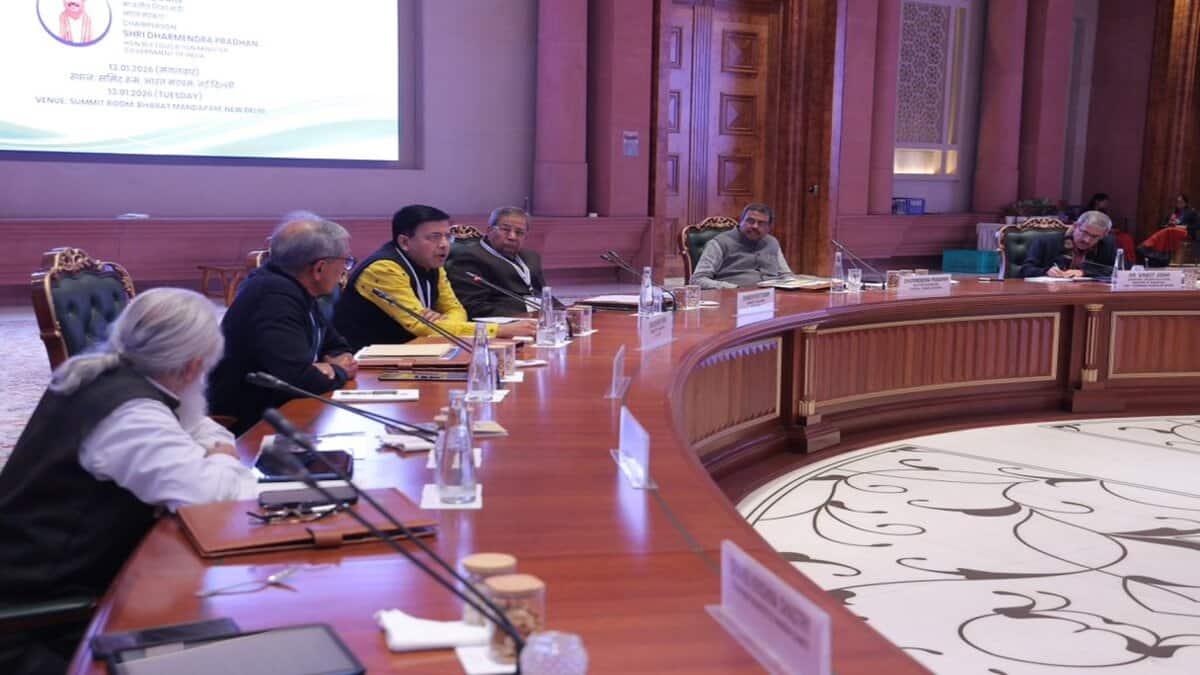
The National Institutes of Technology (NITs) will realign courses to emerging technologies and introduce industry-centric Doctor of Philosophy (PhD) programmes, union education minister Dharmendra Pradhan announced on January 13, 2026. He also said the Indian Institutes of Science Education and Research (IISERs) will receive campus-specific research priorities and strengthened startup ecosystems.
The announcements were made during the 13th meeting of the Council of the National Institutes of Technology, Science and Engineering Research (NITSER) and the 3rd Standing Committee of the Indian Institutes of Science Education and Research (IISERs).
Chairing the meeting, Pradhan said, “Our curriculum must be aligned to national priorities. Our PhD programmes must be industry-centric.” He proposed creating an industry-led curriculum committee to develop programmes based on emerging job roles and 21st-century requirements.
The council discussed aligning curricula, academic programmes, assessments, and research with technologies such as Industry 4.0, green hydrogen, artificial intelligence, data analytics, cybersecurity, quantum technologies, semiconductors, and manufacturing.
NITs to launch PG, MTech
Pradhan said NITs will launch specialised postgraduate (PG) and Master of Technology (MTech) programmes, while the PhD framework will focus on problem-solving, product-based, and industry-oriented research. Research parks and incubation centres will expand at NITs to support startups, and annual peer reviews will be made public for institutional self-assessment.
Innovation initiatives include establishing incubation centres in 13 NITs that do not currently have them and creating research parks in at least 10 NITs. A pitching conclave for start-ups incubated in NITs is scheduled for July 2026, involving investors and industry stakeholders.
Also readJEE Main 2026: IIT Bombay Aerospace Engineering closing ranks fall steadily; course-wise seat matrix
IISER campuses to focus on specializations
Pradhan further said that, on IISERs, each of the seven campuses will focus on specific specializations: Pune on advanced computing and quantum technologies, Kolkata on biotechnology, Mohali on healthcare and medical technologies, Bhopal on advanced materials and manufacturing, Thiruvananthapuram on energy, sustainability, and climate, Tirupati on agriculture and food technology, and Berhampur on rare earth and critical minerals. Section 8 companies will be set up at each IISER to promote startup ecosystems and Indian language-based education.
According to the official press release, the council agreed to complete external peer reviews within one year and emphasised active participation in the National Accreditation Framework (NAAC). The use of ‘Bharatiya Bhashas’ and AI-based multilingual learning was highlighted to support inclusivity for learners from diverse linguistic backgrounds.
 Add as a preferred source on google
Follow us for the latest education news on colleges and universities, admission, courses, exams, research, education policies, study abroad and more..
To get in touch, write to us at news@careers360.com.
Next Story
]JEE Main 2026: NIT Tiruchirappalli, Surathkal, Warangal retain highest BTech cut-offs among NITs
JEE Main 75% passing criterion is applicable for NIT admissions. Candidates in the top 20 percentile of their respective boards will also be eligible for admissions through JoSAA counselling.
Anu ParthibanLatest Education News
]Related News
]JNU Protest: ABVP demands action against Angomcha Bimol Akoijam over sexual harassment allegations
Delhi: Ambedkar University suspends 10 students after Kashmere Gate campus protest
Ranchi: BTech student found dead in rented room, no suicide note recovered


