
Supreme Court questions reservation benefits for children of affluent backward class families
Press Trust of India | May 22, 2026 | 06:56 PM IST | 2 mins read
Supreme Court of India says children of economically empowered parents may not need continued reservation benefits
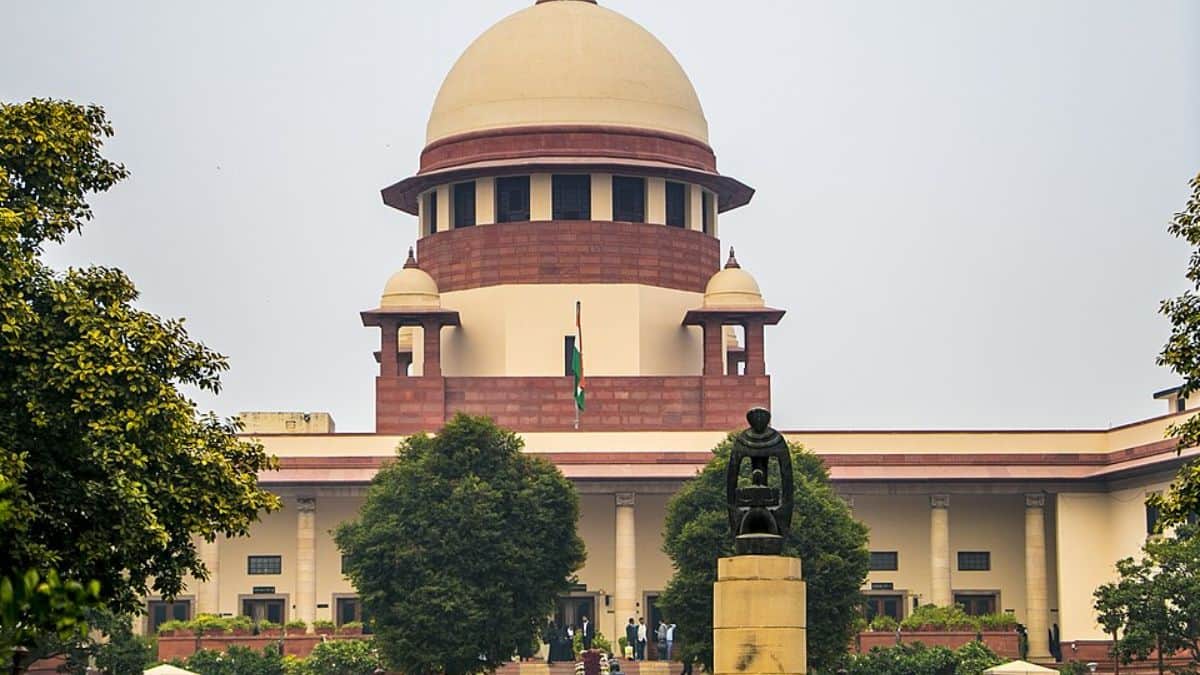
New Delhi: Observing that with educational and economic empowerment there is social mobility, the Supreme Court on Friday questioned the continued grant of reservation benefits to children of economically and educationally advanced families within backward classes. A bench of Justices B V Nagarathna and Ujjal Bhuyan was hearing a plea challenging a Karnataka High Court judgment which upheld the exclusion of the petitioner, whose parents are both state government employees, from reservation.
"If both parents are IAS officers, why should they have reservations? With educational and economic empowerment, there is social mobility. "So then again, to seek reservation for the children, we will never get out of it," the bench observed while issuing notice in the matter. The top court remarked that if the parents of students are in good jobs with handsome incomes, then the children should get out of reservation. The apex court said several orders passed by the government already provide for the exclusion of such affluent sections from reservation benefits, but they are being challenged now.
"For the Economically Weaker Section and Disadvantaged Group, there is no social backwardness but only economic backwardness. There has to be some balance. Socially and educationally backward, yes, but once the parents have attained a level because of taking advantage of reservation," the bench said. The petitioner was selected for appointment as an assistant engineer (electrical) in the Karnataka Power Transmission Corporation Limited under the reserved category. The District Caste and Income Verification Committee, however, denied him a caste validity certificate after concluding that he fell within the creamy layer.
Also read Fake DigiLocker, CISCE marksheet portal flagged; users warned against sharing details
The authorities noted that both parents were government employees and that their combined income exceeded the prescribed creamy layer threshold. The classification of the petitioner as belonging to the creamy layer was based on the income of his parents, who are salaried employees and whose combined income allegedly exceeded Rs 8,00,000. Consequently, the caste certificate issued to the petitioner, certifying him as belonging to the Kuruba community, was revoked.
Earlier in January 2025, the top court in a separate case had refused to entertain a plea seeking the exclusion of children of Indian Administrative Service (IAS) and Indian Police Service (IPS) officers from Scheduled Castes (SC) and Scheduled Tribes (ST) reservation benefits in Madhya Pradesh. It said the reference to the exclusion of the creamy layer from SC and ST quotas in a seven-judge Constitution bench's August 2024 ruling in the State of Punjab versus the Davinder Singh case was only a view and the legislature has to decide in this regard.
 Add as a preferred source on google
Follow us for the latest education news on colleges and universities, admission, courses, exams, research, education policies, study abroad and more..
To get in touch, write to us at news@careers360.com.
Next Story
]Karnataka government retains 6,086 guest lecturers to address teacher shortage in PU colleges
Karnataka’s announcement comes after education department highlighted that shortage of teachers is affecting students’ academic growth; Allocation of Rs 85.20 crore has been approved for 2026-27
Vaishnavi ShuklaLatest Education News
]Related News
]Board Exam Timetable 2027 LIVE: UP, TN 10th, 12th exam dates out; BIEAP, CBSE, Maharashtra exam schedule
AP Inter Time Table 2027 LIVE: BIEAP 1st, 2nd year schedule soon at bie.ap.gov.in; marking scheme, rules
CBSE Date Sheet 2027 LIVE: 10th, 12th board exam schedule soon; simple papers, passing marks


