
ANRF PAIR Programme gives Rs 100 crore to just 7 hub-spoke networks, rest get Rs 2 crore grants
Shradha Chettri | May 11, 2026 | 10:01 AM IST | 9 mins read
Anusandhan National Research Foundation’s PAIR Program has 18 hubs and 155 spokes. The Rs 2-crore group includes DU, IIT Guwahati, IIT Delhi, IISER Pune
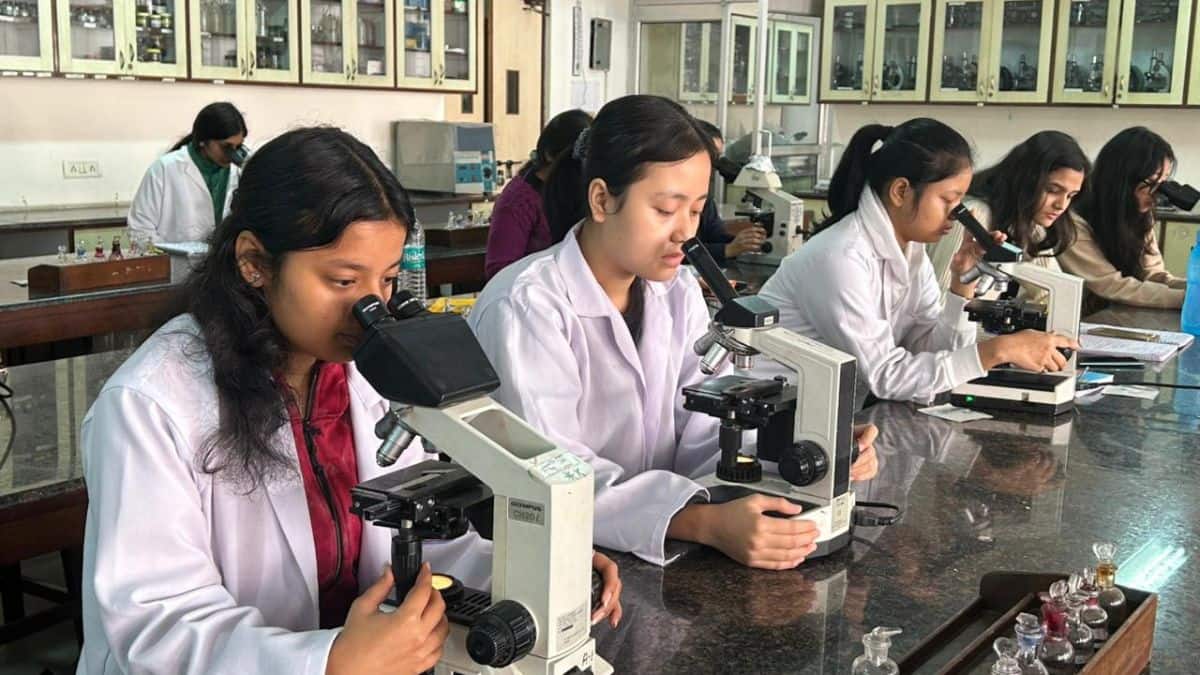
Sustainable adsorbents for water treatment, water purification prototypes for rural and industrial applications, AI-ML tools to augment disease management protocols, energy‑efficient devices, bio‑inspired materials are some of the research projects institutions have undertaken under the Anusandhan National Research Foundation’s (ANRF) Partnerships for Accelerated Innovation and Research (PAIR) Programme, specifically in the “medical, energy, environment” segment.
The PAIR programme, launched to encourage research, runs on a hub-and-spoke model with a major university operating as the hub to work together with other institutions, within the state and without, as spokes. The projects are anchored by hubs and faculties across disciplines travel to them for co-ordination and to use their equipment.
But all hub-and-spoke networks are not equal. Of the 18 such arrangements set up so far, just seven – with 42 ‘spoke’ institutions between them – have got around Rs 100 crore in funds each, for five-year projects. The much larger section – 11 hubs with 62 spokes – have received a paltry Rs 2 crore each.
Two years into being selected – as hub or spoke – for the Rs 100 crore grants, those among the seven institutions Careers360 spoke to said the projects will go beyond research papers and instead provide “policy-ready datasets”, “deployable prototypes” and “ensure entrepreneurship”.
But the larger section within the project, spokes can barely do much with their Rs 2 crore grants. Unlike the other set of seven, these small grants are for the hubs only and, at least at some hubs, most of it is being spent on travel and logistics for those coming in from spoke institutions. As per ANRF, the amount is a “one-year bridge support” to deepen collaborative engagement.
The hubs were selected based on research proposals they submitted.
ANRF PAIR Scheme: Well-funded hubs
The PAIR Project has a budget of Rs 1,500 crore over five years, with each selected PAIR network eligible for funding up to Rs 100 crore. Of this, 30% of the funds is for the hub and 70% for its spokes.
Seven hub institutions were selected based on their proposals.
These are:
- Indian Institute of Science, Bengaluru (IISc Bangalore)
- University of Hyderabad (UoH)
- Indian Institute of Technology (IIT) Ropar
- Jawaharlal Nehru University (JNU)
- Indian Institute of Technology (IIT) Indore
- Indian Institute of Technology (IIT) Bombay
- National Institute of Technology (NIT) Rourkela
“Securing ANRF PAIR funding has helped UoH strengthen its infrastructure, lead collaborative research networks, attract talent, increase research output, and enhance its national research leadership,” said professor in bio-chemistry, Bramanandam Manavathi, who is also director, office of international affairs, UoH.
Hub institutions coordinate with all spokes through interactions that are online and offline. Academics involved in the projects travel to the hub.
“Continuous communication and periodic reviews help ensure alignment and effective implementation of the programme. However, there have been some challenges for recruitment of qualified research scholars who will assist in implementation of the projects,” said SK Pratihar, professor and project director, ANRF-PAIR, NIT Rourkela.
At IIT Ropar, faculty members visit the hub every six-eight weeks, depending on the project's stage and requirements.
“During intensive experimental or deployment phases, the frequency of visits increases. Between physical visits, we maintain strong engagement through fortnightly virtual meetings, shared dashboards, and collaborative workspaces,” said Rajeev Ahuja, director, IIT Ropar.
ANRF PAIR Grants: The Rs 2-crore club
At the other 11 hubs and their 62 spokes, the experience of the PAIR Programme has been radically different.
IIT Guwahati is a hub institute in this group. “We didn’t receive full PAIR funding,” said Rohit Sinha, professor and dean of research and development, IIT Guwahati. “Rather, IITG along with seven other hubs were given a token grant of Rs 2 crore to continue the networking among our formed network and bid again in future.”
Delhi University is another institution in this network. It has four spoke institutions, all out of state and some set as far away as Bilaspur, Chhattisgarh (over 1,000 km away) and Palampur, Himachal Pradesh (over 480 km). DU’s spokes are Chaudhary Charan Singh University, Meerut, Guru Jambeshwar University, Hisar, Surajmal University, Palampur, Himachal Pradesh and Guru Ghasidas Vishwavidyalya, Bilaspur, Chattisgarh.
Raj Kishore, dean research and project director, DU said, “We are working on the areas of health and medical technologies, environment sustainability and energy technologies. We wanted to undertake projects where a large number of our department faculty would be involved. We conducted a hands-on workshop and invited participants from the spokes. The fund allocated is for a year to the hubs and through this we are giving them accommodation, travel, consumables, chemicals and everything.”
Also read Govt school to Glasgow: NIT Agartala civil engineer wins Marie Curie Postdoctoral Fellowship
Indian Institute of Science Education and Research (IISER) Pune is another hub with six spokes. Their spokes are spread all across the country and include Savitribai Phule Pune University, Kavayitri Bahinabai Chaudhari North Maharashtra University (Jalgaon), Mohanlal Sukhadia University (Udaipur, Rajasthan), University of Kashmir (Srinagar), Islamic University of Science and Technology (Awantipora, Jammu and Kashmir) and Manipur University (Imphal).
“As part of this ANRF-PAIR programme, two workshops cum symposia (at Pune and Imphal) were conducted and two more are planned. So far, 28 students interned at IISER Pune in various labs conducting research. Research publications have begun to emerge from spokes covering the research carried out at the hub,” said Sunil Bhagwatan, director at the institute.
Delhi Technological University (DTU) is one of the spokes attached to IIT Delhi as part of this set. With both institutions in the same city, the logistical aspect of research has been less time and funds-consuming.
“DTU has been working closely with IIT Delhi on areas such as advanced materials, photonics, energy technologies and environment. The faculty-student teams can travel as frequently as needed to use the concerned facilities, interact with collaborators, or to attend the required training programmes, workshops or seminars at the hub.The fund is sanctioned to the hub. As per ANRF guidelines, the sanctioned amount is to be utilised on collaborative activities to build upon the preliminary ideas of the projects to take them forward in the next phases,” said an official from the research and development office of DTU.
ANRF PAIR Project: The spokes
ANRF had laid down rules for selection of spokes and divided potential contenders into categories.
Category I includes central and state public universities within the top 200 of the National Institutional Ranking Framework’s overall list and in the top 100 among state public universities, excluding those eligible to be hubs. Category II is for NITs and Indian Institutes of Information Technology (IIIT) and Category III is for central or state universities that are ineligible.
It was mandatory to have a minimum of two state public universities and one outside the state for each hub institution.
After the final selection, there are 117 Category I spokes and 38 Category II. But of these 155, just 42 are in the Rs 100 crore club; another 62 are in the networks with Rs 2 crore grants and the rest are not part of PAIR at all.
The parliamentary standing committee on science and technology, headed by BJP MP Bhubaneswar Kalita, had pushed for expanding the network of spokes to “truly democratise science”. The committee recommended expanding the network to “include at least one state university or college from every aspirational district” to “ensure that the mentor-mentee relationship transcends elite institutions and reaches the grass-roots level of the national education system”.
ANRF PAIR Programme: Research strength
While ANRF framed the overall guidelines, spokes were identified by the hubs.
NIT Rourkela has selected seven, including IIIT Bhubaneshwar and Odisha University of Agriculture and Technology (OUAT). The one outside the state is Guru Angad Dev Veterinary and Animal Sciences University, Ludhiana, Punjab.
“Institutions were identified based on their demonstrated research strengths and their potential to significantly enhance research outcomes through structured mentorship and access to high end experimental facilities. The selection process emphasised alignment with the approved thematic areas of the project and the prospective capacity of the institutions,” said Pratihar.
While for IIT Ropar there were two guiding principles – complementarity and student accessibility. It has seven spokes, largely central and state universities. Apart from Panjab University, the others are in different states, such as Central University of Himachal Pradesh, Shri Mata Vaishno Devi University, Katra; and Kurukshetra University, Haryana.
“One important consideration, therefore, was ensuring that students could easily travel between the hub and the spokes….Accordingly, the spokes have been chosen strategically, not only for their strengths but also for their proximity and accessibility…. We wanted spokes that bring something distinct to the network — whether it is domain expertise, specialised laboratories, field-level access, or strong innovation ecosystems,” said Ahuja.
UoH has six spokes under it. Apart from Osmania University, Sri Venkateswara University and Yogi Vemana University, the rest are in Kerala and Karnataka.
Also read With CSE surge, these specialised BTech courses are vanishing from engineering colleges Also read
ANRF Grant: Hub-spoke fund split
NIT Rourkela received Rs 90.5 crore, of which Rs. 29.5 crore was for the hub and Rs.61 crore allotted to spoke institutions. The fund release order contains the distribution pattern and share of each partner. The hub assigns the fund limits for the spoke.
IIT Ropar has got Rs 104 crore and follows a “milestone‑based distribution model”. It said in response to a query: “Funds are allocated based on the scope of each spoke’s research, equipment and lab requirements, field deployment needs, deliverables and timelines. This ensures that resources flow where they create the most impact.”
However, some officials from Spoke institutions pointed out that the funds allocated to them are not always sufficient. One said on condition of anonymity, “The system of allocation is transparent, but those which are located farther from the hub actually need larger allocation to cover the travelling costs. Institutions which have fewer spokes would automatically receive more funds.”
Research areas
Hyderabad University is looking at innovations in health and medical technologies, advanced therapeutics for certain conditions, disease surveillance mechanisms and social well-being platforms for metabolic, infectious and cancers (MICS).
Manavathi, explained, “Besides basic innovations and research in the field of medicine and health, there are important deliverables and outcomes of the projects such as development of cost-effective, robust, and sensitive diagnostic methods, accurate and dynamic mapping of disease surveillance in the country, AI-ML tools to augment disease management protocols, discovering and scaling up smart materials that are relevant for medical technology development, low-cost and novel disease-therapeutics and producing well-trained human resources at scale for healthcare management in India.”
While IIT Ropar has grown into a hub for next‑generation materials research and is bringing together physicists, chemists, engineers, and biologists to design materials that solve real‑world problems. Through a multidisciplinary approach it is working on lightweight composites for drones, smart materials for sensors, quantum materials for next generation technologies or sustainable materials for energy storage.
Also read Number of student suicides rises 80% in 10 years, 8.5% of total: NCRB report
“The institute works at the frontier of quantum materials, energy‑efficient devices, nanomaterials, soft matter, and bio‑inspired materials, with state‑of‑the‑art facilities enabling everything from atomic‑scale imaging to advanced fabrication. Our goal is not just academic output, but also prototype development, technology translation, and addressing critical challenges in India’s defense and technological sectors,” said Ahuja.
NIT Rourkela is working on products such as sustainable adsorbents for water treatment, water purification prototypes for rural and industrial applications, water lubricated bearings for watercraft, IoT based devices for monitoring and control of air pollutants, biodegradable cutlery from millet processing by-products, biomaterials for enhanced bone healing, wearable devices for health monitoring of cattle, AI powered intrusion detection system, and new-generation cathode and anode materials.
 Add as a preferred source on google
Follow us for the latest education news on colleges and universities, admission, courses, exams, research, education policies, study abroad and more..
To get in touch, write to us at news@careers360.com.
Next Story
]UGC allows state colleges to seek deemed-university status, become off-campus centres of other institutions
University Grants Commission amendment mandates NAAC grades for status, adds section on philanthropic organisations. Government-aided deemed-universities need not renew MoA if they generate 50% of funds
Shradha Chettri


