
CBSE Three Language Policy: SC lets Class 6 keep foreign language, grants exemption from board exams
Vaishnavi Shukla | August 20, 2026 | 04:55 PM IST | 4 mins read
Supreme Court has flagged issues in CBSE’s three-language policy and asked the board to revisit it, as per reports
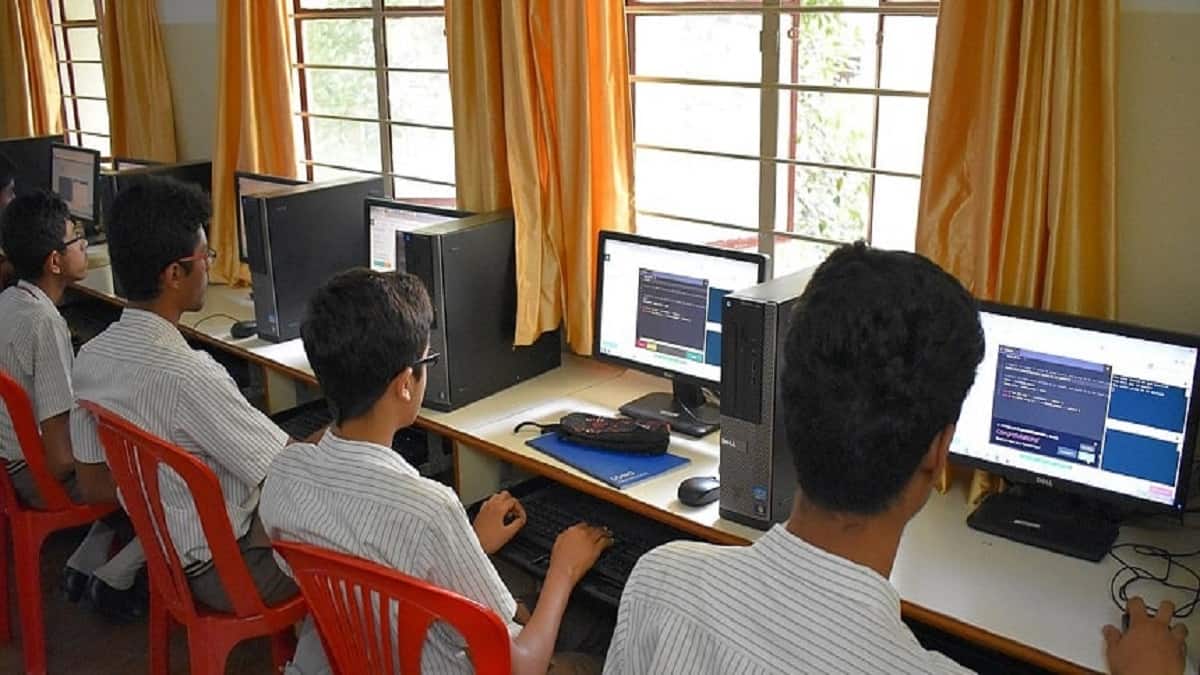
During the Supreme Court hearing today, the SC bench has allowed CBSE Class 6 students to keep the foreign language and granted an exception that the board exams will not be held for the R3 subject till the current batch of Class 6. SC has flagged several issues in CBSE’s 3-language rule and has asked the board to revisit the policy, reports suggest.
Earlier in April, CBSE directed all schools to introduce the CBSE R3 structure for Class 6 and asked schools to start teaching the 3rd language using study material available locally.
Moreover, a Parliamentary Panel pointed out major flaws in the introduction of a third language from Class 6 onwards, highlighting that schools have not been given enough time to prepare study materials and recruit teachers.
A bench comprising Chief Justice of India Surya Kant, Justice Joymalya Bagchi and Justice V Mohana also raised concerns over the implementation of the R3 policy and school preparedness in today's hearing.
Also read CBSE third language policy throws French, Spanish, German teachers across schools into crisis
“Some of these problems, you may revisit. There is no doubt that sooner or later, it has to be introduced. There is nothing wrong with that. But how it is to be streamlined so that whatever impediments or blockades are coming up, you may find a solution to those," the bench told additional solicitor general Aishwarya Bhati.
Don't want children under pressure: CJI on policy
The bench further added and said: "If you have chosen Class 6 as the starting point, you may consider giving a reprieve to Class 6 students of this year. You can introduce it from next year."
"Another thing that needs to be looked into is where you draw the line. Whether it is Class 6, Class 4, or Class 3. You can take a call depending on the curriculum and where the choice between two and three languages is first introduced," the bench said.
The SC bench further raised concerns about whether we consider English a native language or a foreign language.
"As the Union of India, you will also have to see that other than the CBSE, what is happening in other boards," the bench told Bhati, adding that the roll-out of the policy is undertaken.
The solicitor said they will take suggestions and get back to the court. "We don't want the children to come under any pressure," the CJI said.
Concern for Class 6 students
A senior advocate, Anand Grover, told the bench they were concerned with Class 6. He said that for Classes 6 to 8, the CBSE has no authority to frame the curriculum, as this has to be done by the NCERT. Grover noted that there have to be qualified teachers for this. The bench observed that the board has given options for 23 languages.
"If they are introducing a language, they will also have plan for teachers. It is their obligation," the bench observed, adding, it will take the schools to task if they are erring.
"Let us not have any impression of an inferiority complex with respect to regional languages. We should respect all these languages as much as any other language....We can constitute an expert committee ourselves or ask the government to constitute an expert committee so that as and when the difficulties arise, they can make recommendations and find solutions," it said.
Bhati added that thousands of experts were consulted in the process.
"The CBSE is one of the boards in the country. There are 33,000 odd schools out of a total of 7.5 lakh schools. Around 4.45% of schools are CBSE schools in India, and 99.19 schools are already compliant with the two native languages," she said, adding, "Language is a vehicle of a culture".
CBSE three-language policy for Class 6
The panel's observations were part of the Tenth Report of the Committee on Estimates (2026-27) on "Budget and Policy aspects for providing Affordable and Quality Education in the Country including Review of Central Board of Secondary Education" presented in the Lok Sabha.
CBSE introduced a third language option for Class 6 students alongside the existing languages from the academic year 2026-27 onwards, as per the recommendations of the National Education Policy (NEP) 2020 and the National Curriculum Framework for School Education (NCFSE) 2023.
Notably, for Class 6 students, English would be considered a “foreign” language. As per NEP, two of the three languages should be “native to India”; however, if a different foreign language, for instance, French or German, is introduced as R3 in Class 6, students must study two Indian languages in addition to it.
 Add as a preferred source on google
Follow us for the latest education news on colleges and universities, admission, courses, exams, research, education policies, study abroad and more..
To get in touch, write to us at news@careers360.com.
Next Story
]Latest Education News
]Related News
]Board Exam 10th, 12th Time Table 2027 LIVE: Maharashtra, ICSE ISC date sheet soon; official links
CBSE Date Sheet 2027: Class 10, 12 timetable expected soon; check LOC dates, passing marks


