
IIM Rohtak raised MBA fees without preparing budget; income grew 299%, too high for non-profit: CAG report
Azib Ahmed | August 13, 2026 | 06:27 PM IST | 9 mins read
CAG also flags IIM Rohtak’s ‘open-ended’ incentive policy that paid Rs 3.2 cr to director, and Rs 7.49 cr, iPhones, iPads and treadmills, to teachers. Meanwhile, fees rose 35%
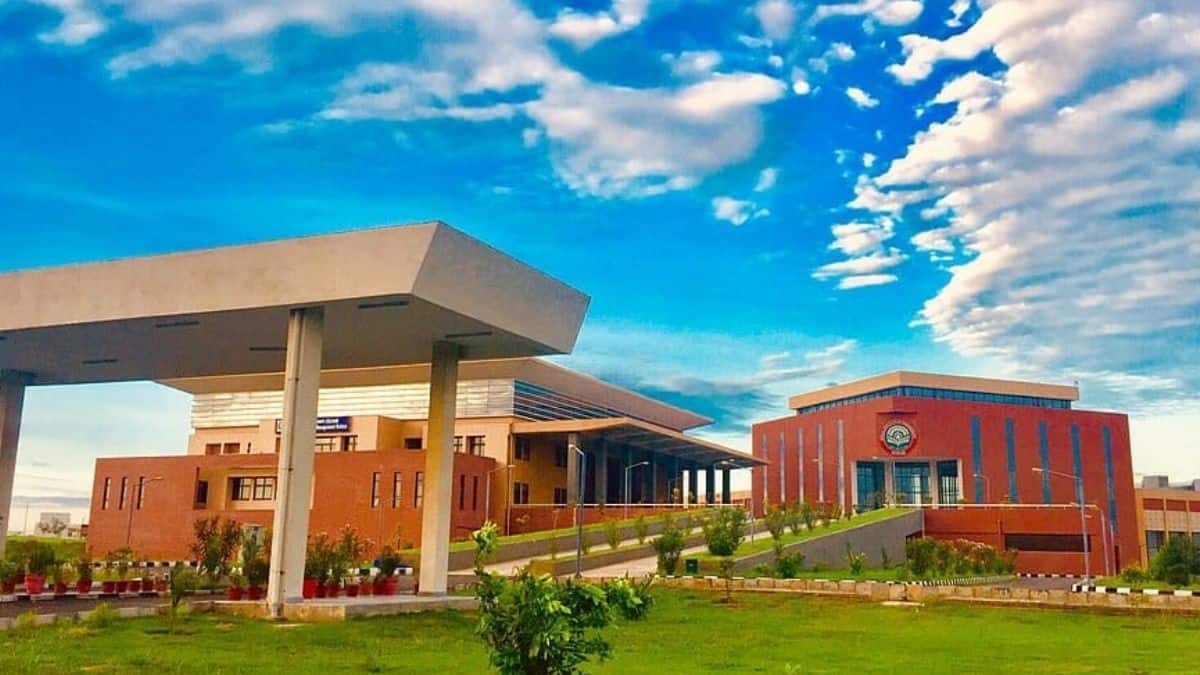
Indian Institute of Management (IIM) Rohtak increased its average annual student fee by 35% over the five years between 2018-19 and 2023-24 although it had not prepared annual budgets to estimate its receipts and expenditures, an audit of its functioning by the Comptroller and Auditor General (CAG) has revealed. The CAG report was released on August 12.
The audit flags numerous lapses across IIM Rohtak’s functioning and financial management, including several irregularities involving faculty payments, recruitment records, incentives and recovery of dues.
The CAG has flagged the Rs 3.2 crore variable pay for the director, Dheeraj Sharma, besides, the business school’s deviations from rules governing the board of governors and academic council.
Also read IIM Calcutta proposes AI-first online MBA; to accept CAT, GMAT or GRE scores
Admission to IIM Rohtak is via the Common Admission for all IIMs. The CAT 2026 is scheduled for November 29.
IIM Rohtak: Fees rise, receipts grow 300%
According to the CAG, the average annual fee per student at IIM Rohtak increased from Rs 6.40 lakh in 2018-19 to Rs 8.64 lakh in 2023-24. During the same period, academic receipts from the institute's main MBA courses, the Post Graduate Programme (PGP) in Management, Integrated Programme in Management (IPM) and Integrated Programme in Law (IPL) rose from Rs 31.57 crore to Rs 125.91 crore – a 299 % increase.
The audit found that the institute did not prepare annual budgets to estimate its receipts and expenditure, which the CAG described as a key financial planning tool.
“Without preparing a budget to assess actual financial needs and aligning revenues accordingly, the fee structure seems to have [been] set high by the institute. This is contrary to the institution's mandate to make education more affordable,” the CAG stated, adding that a similar concern had been raised in the Audit Inspection Report for 2019-21.
In its response, IIM Rohtak said it has been fully self-financed since 2019, had financial autonomy and maintained fees among the lowest across IIMs. It also said its surpluses needed to be viewed in the context of capital expenditure being funded from internal resources and that around 15 per cent of students received merit-based scholarships.
The CAG, however, said the consistently high surpluses raised concerns over affordability and compliance with the IIM Act's not-for-profit mandate. It also flagged the absence of a structured financial plan and fee-setting framework.
The CAG recommended that “the ministry may ensure that IIM Rohtak prepares a long-term financial and academic vision document to guide strategic planning and rationalise fees in line with its not-for-profit and affordable education mandate.”
Also read IIM Kozhikode launches 2-year EPGP programme for working professionals; admissions via EMAT 2026
In April this year, the ministry of education sought the vision document from the institute.
IIM Rohtak: Rs 7.49 cr to staff as incentives; rules kept vague
The audit also raised concerns about payments of salary to faculty members, recruitment records, teaching norms and faculty incentives.
The CAG found that over the same audit period, IIM Rohtak paid Rs 7.49 crore to faculty as incentives and honorarium. Of this, Rs 4.11 crore was paid as incentives for teaching beyond the minimum workload, executive education and consultancy projects, while Rs 3.38 crore was paid as honorarium for activities including admissions, question-paper setting and evaluation. In six cases, such payments exceeded 100 per cent of the faculty member's regular salary.
The audit said the institute's regulations permitted honorarium and incentives but did not define their nature, scope or financial limits. “The absence of clear criteria leaves scope for open-ended approvals by the board and enables unrestricted financial benefits in cash and kind,” the report states.
The CAG also examined teaching requirements used for calculating additional teaching incentives. As per the report the minimum teaching norms required 99 sessions annually equivalent to 7,425 minutes of teaching in a year.
After adjusting for holidays, leave and vacations, this translates into 34.38 minutes of teaching per working day. Faculty could take additional sessions for payments ranging from Rs 3,750 to Rs 30,000 per session depending on the programme.
The CAG report states, “Incentives and honoraria rates, as well as minimum workload norms, are decided in faculty meetings, creating a conflict of interest as beneficiaries participate directly in decisions governing their own entitlements.”
IIM Rohtak teachers given iPhones, iPads, treadmills
It also noted that the General Financial Rules restricts honorarium to occasional, intermittent or special-merit work and does not permit it for routine duties.
Faculty members were also provided high-value items as honorarium or gifts including iPhones, iPads, laptops, treadmills, fitness bikes and smartwatches costing Rs 58.32 lakh in 2020-21 and 2021-22.
The report said some electronic devices were capitalised but could be retained after three years, while fitness equipment was treated as faculty perks.
IIM Rohtak told the audit that its faculty incentive and honorarium policy aligned with other IIMs and that the payments were approved by the board. It also said the devices issued during Covid-19 were for official use and that the value of the items was included in taxable income with TDS.
The CAG said, “the institute did not provide any ministry of education norms authorising such payments or the distribution of high-value items.”
The ministry, in its response, said the “board may assess and provide revised norms for faculty and wherein payment of honorarium exceeds 100 per cent of salary, may be recovered from the concerned faculty.”
SC, ST, OBC faculty underrepresented: CAG
The CAG also flagged the absence of social-category-wise data in faculty recruitment.
After reviewing records of 82 faculty members who served IIM Rohtak between March 2016 and March 2024, the audit found that the institute did not maintain a social-category-wise data covering SC, ST, OBC, EWS and General categories for recruitment of faculties.
Also read 21 IIMs have less than 200 SC, ST, OBC teachers against 1,880 sanctioned posts despite quota law
As a result, the institute could not earmark posts for reserved categories while issuing faculty recruitment advertisements, the audit said. Records of 27 faculty members were also not provided to audit.
IIM Rohtak said it had conducted special recruitment drives, placed reservation-related matters before the board and undertaken outreach to attract candidates from reserved categories.
The CAG said the institute did not provide documents to substantiate these claims and said persistent under-representation indicated that backlog vacancies remained largely unfilled.
Also read With few Dalit, Adivasi teachers, IITs, IIMs lack ‘environment of empathy’: AIOBCSA president
IIM Rohtak stopped annual budgets
The CAG also found that IIM Rohtak stopped presenting annual budgets to the Board of Governors after 2017-18. The Indian Institute of Management (IIM) Act was enacted in 2017.
The institute told the auditors that it did not prepare budgets from 2018-19 because it had become self-sustaining and was no longer receiving grants from the Ministry. The CAG rejected this reasoning, saying the IIM Act requires budgeting irrespective of the source of funding.
The audit noted that the institute received Rs 25.45 crore in plan grants even during 2018-19.
The CAG also found that IIM Rohtak had not provided evidence that its development plan had been approved by the board. Although the institute indicated planned expenditure of Rs 410 crore in future years, “documentation identifying financial sources or timelines for implementation was also not provided,” CAG stated in its report.
The IIM Rules, 2018 also require every IIM to prepare a three-year action plan, five-year strategic plan and 15-year vision plan and submit them to the government. The CAG said no evidence was provided that IIM Rohtak had formally prepared, approved or submitted these plans.
The audit further found that the institute did not provide a performance review report for 2021-24 and no evidence was provided that such a report had been placed in the public domain. The Ministry agreed with the observation.
IIM Rohtak Board: Constitution and governance
The CAG found several lapses in the constitution of IIM Rohtak’s Board of Governors (BoG), the institute’s main decision-making body. The institute did not document the process used to select alumni members and continued with the chief secretary of Haryana as board chairperson instead of appointing a new chairperson as directed by the ministry. The institute also expanded the Board without notifying the required regulations.
Faculty representatives continued on the board beyond their prescribed two-year term, while an assistant professor was appointed as a faculty representative in 2024 despite the rules requiring a professor or associate professor with at least 15 years of experience.
The audit also found that the Board had no SC or ST representative for more than four years, from December 2018 to March 2023, despite this being a statutory requirement. The institute said it had sought nominations but did not provide supporting records. The Board also did not have the required number of women members for several years.
Also read Maharashtra hostels for SC, ST students run without wardens, overcrowded; some ‘bogus’: CAG report
28 changes in regulations cleared by govt
The CAG found that IIM Rohtak made 28 changes to regulations that had already been cleared by the education ministry and law ministry. The institute did not provide records showing that these changes were shared with or approved by the ministry before they were notified.
Some changes removed provisions approved by the ministry, while others gave the director wider powers, including over appointments, incentives and capital expenditure.
The ministry in its reply agreed with the audit and said action should be taken against those responsible. It also said the regulations should be brought back in line with the version approved by the ministries.
Academic Council: Zero external oversight
The CAG also discovered flaws in the constitution of IIM Rohtak's academic council. It found that the institute's regulations did not provide for the nomination of external experts as required under the IIM Act and did not prescribe the mandatory two-year term for nominated members.
No action was taken by the director or the board from 2017 to 2024 to nominate external experts, the CAG said. This, according to the audit, weakened academic governance and denied the council the benefit of independent oversight.
The issue became more significant because the council revised its own incentives for executive education between October 2017 and December 2018. The CAG said the AC did not have the statutory authority to revise such incentives at that time.
Also read Assam’s State Higher Education Council: Facilitator or another bureaucratic layer, ask academics
The audit described this as a conflict of interest because the council consisted only of internal faculty members and lacked the external members required under law.
IIM Rohtak: Estimate for ACs, maintenance raised for a bidder
The CAG audit also found that IIM Rohtak increased the cost estimate for a project after the tender process to award the contract to a single bidder.
The original estimate was Rs 91.52 lakh, while the bidder quoted Rs 99.84 lakh. After negotiation, the bid was reduced to Rs 97.77 lakh, but it was still 6.8% higher than the original estimate.
“Instead of assessing the reasonableness of the quoted price against market rates, the Tender Committee recommended upward revision of the original estimate for AC units and AMC charges to narrow the gap between estimated rates and quoted prices of the bidder. No supporting market survey, calculation sheets, or justification for this revision were available in the records,” the report said.
 Add as a preferred source on google
Follow us for the latest education news on colleges and universities, admission, courses, exams, research, education policies, study abroad and more..
To get in touch, write to us at news@careers360.com.
Next Story
]Why Maharashtra’s BATU University makes engineering, pharmacy graduates wait years for marksheets
Acute staff shortage, policy delays have crippled Dr Babasaheb Ambedkar Technological University, leaving BTech, pharma students waiting to graduate. Despite that, say teachers, research continues
Team Careers360Latest Education News
]Related News
]IIM Lucknow records 100% placements; 2026-28 batch secures over 600 jobs offers
IIT BHU forms panel to conduct urine-based drug tests for newly-admitted students
IIIT Ranchi Suicide: Students' protest enters 3rd day, demand director’s resignation


