
IIT Madras calls for 2 million XR jobs by 2030, urges shift from services to innovation
Sakshi Gupta | June 1, 2026 | 02:40 PM IST | 2 mins read
A new IIT Madras report says India must focus on XR research, manufacturing and IP creation to become a global leader in immersive technologies

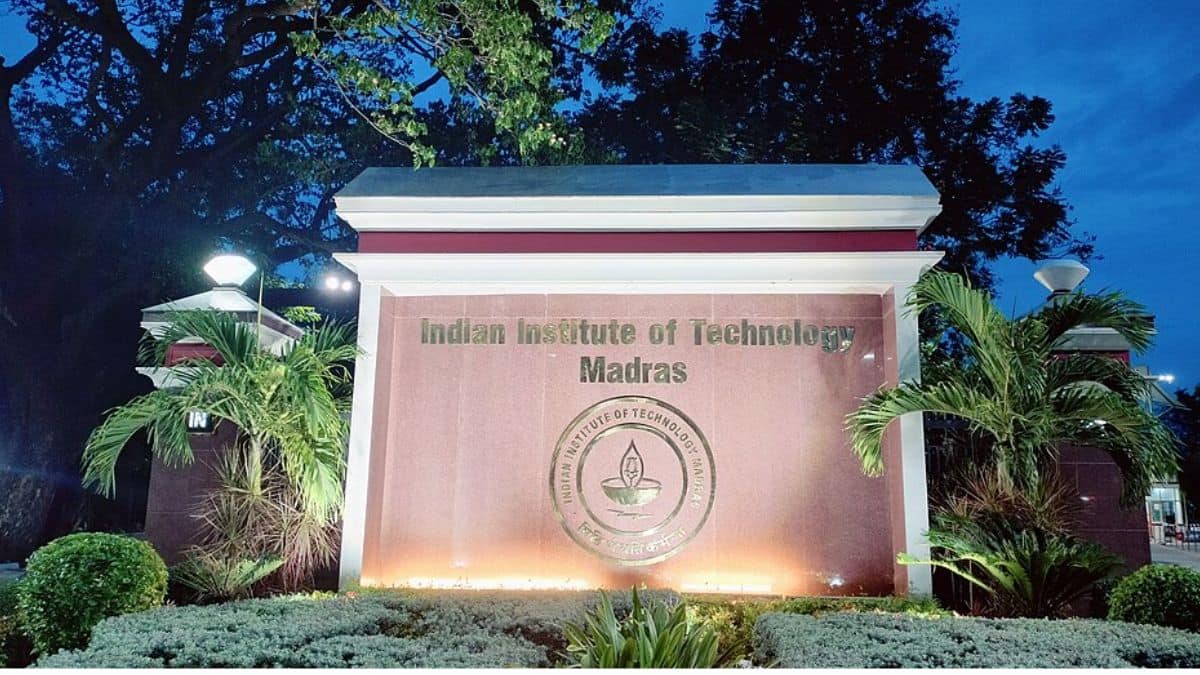
Indian Institute of Technology (IIT) Madras has called for a major shift in India's extended reality (XR) strategy, urging policymakers to focus on innovation, research and manufacturing to create up to 2 million high-value jobs by 2030. In a new report analysing Tamil Nadu's AVGC-XR Policy 2026, researchers said India must move beyond its current service-led approach if it wants to become a global leader in immersive technologies.
The study, titled "Bolstering India's XR startup and innovation ecosystem: A case study of the TN AVGC-XR Policy 2026," argues that the country should prioritise original intellectual property creation, advanced research and indigenous hardware development. XR encompasses virtual reality (VR), augmented reality (AR) and mixed reality (MR), sectors that are witnessing rapid growth across India.
According to the report, India already has more than 1,000 XR startups and 1,000 SMEs. While it welcomed Tamil Nadu's ambition to capture 20% of the country's XR market and generate 200,000 jobs, the researchers cautioned that a service-provider model alone may not deliver long-term economic value or global competitiveness.
Also read IIT Madras develops injectable hydrogel for fibrosis; treatment cost may drop to Rs 300
IIT Madras focus on XR jobs
A key recommendation of the report is that at least half of the projected 2 million XR jobs by 2030 should be concentrated in high-value areas such as intellectual property creation, game engine development, AI-driven immersive technologies and advanced research.
The researchers have also proposed treating XR hardware manufacturing as a strategic sector. They believe Tamil Nadu's established electronics manufacturing ecosystem can help India build domestic capabilities in producing head-mounted displays, trackers and haptic devices, reducing dependence on imports.
M. Manivannan, faculty head of XTIC at IIT Madras, suggested creating a state-level "TN-XR Cloud" to provide subsidised access to high-end computing resources for startups, researchers and academic institutions working in AI and XR.
Also read IISc launches Wadhwani Innovation Centre to boost quantum, deep-tech startups
IIT Madras calls for reforms
The report also points to a shortage of specialised talent in the sector and recommends introducing an XR curriculum framework along with a dedicated fellowship programme for postgraduate and doctoral researchers.
Calling XR the next major technology wave after artificial intelligence, Manivannan said academia should serve as the anchor of the country's XR innovation ecosystem. The report also identifies policy gaps related to AI-generated XR content, metaverse governance and child safety standards, while highlighting opportunities in healthcare, defence, manufacturing and education.
 Add as a preferred source on google
Follow us for the latest education news on colleges and universities, admission, courses, exams, research, education policies, study abroad and more..
To get in touch, write to us at news@careers360.com.
Next Story
]Latest Education News
]Related News
]IIT Madras faculty joins global study on electrically controlled molecular rotation
IIT Madras launches finishing school ‘UDYOG’ to equip BTech biotechnology students with industry-ready skills
IIT Madras’ WSAI to host AI Governance Conclave on October 22; focus on AI safety, measurement


