
IMI CEO on revamped PGDM: ‘Future manager must be AI-fluent, distinctly human in approach’
Pritha Roy Choudhury | November 26, 2026 | 03:21 PM IST | 8 mins read
IMI Delhi, Kolkata, Bhubaneswar campuses are moving to career-focused MBA courses in consulting, finance, analytics and product management; want to make students AI-ready
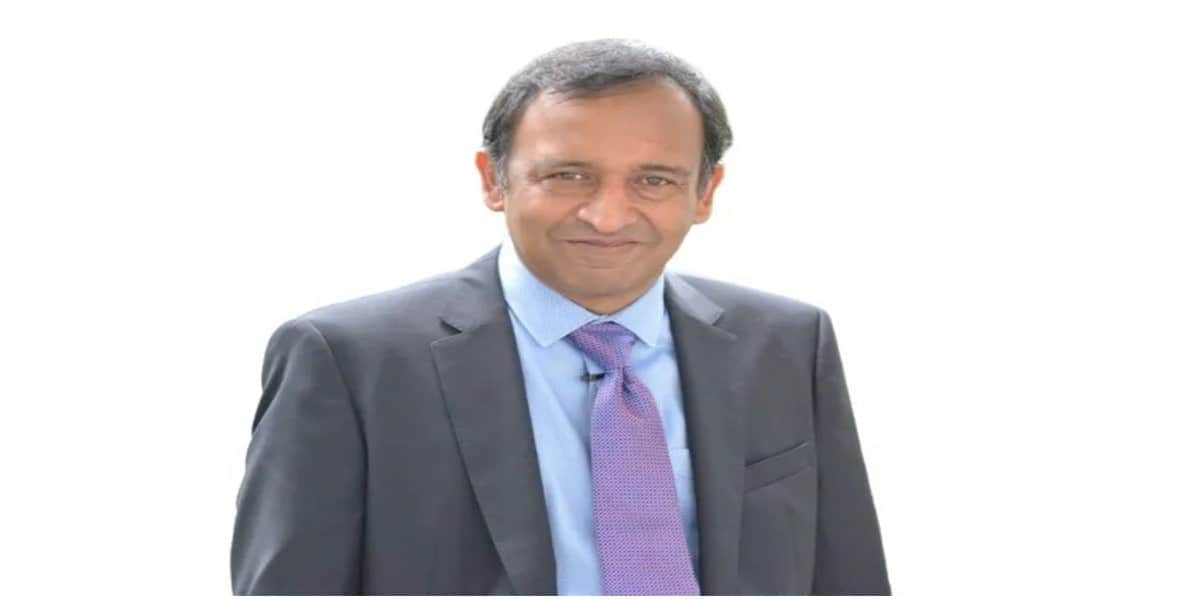
What skills should business schools help build that artificial intelligence cannot replace? International Management Institute (IMI) CEO Suresh Ramanathan discusses AI impact, the future of management education, the redesigned Post Graduate Diploma in Management (PGDM) curriculum across IMI’s Delhi, Kolkata and Bhubaneswar campuses and more with Careers 360. Edited excerpts.
What are the biggest changes IMI is making to its programmes and teaching methods?
The workplace is evolving rapidly, and management education must evolve with it. At IMI, we are undertaking a significant curriculum transformation to ensure that our graduates are not only academically strong but also equipped to navigate complex, ambiguous and rapidly-changing business environments.
Also read Critical Management Studies: New field challenging B-school ‘managerialism’ has an IIM Calcutta link
Our approach is built around training students for real career roles. We have moved towards a more career-focused curriculum, with learning pathways aligned to emerging industry requirements. The curriculum integrates AI [artificial intelligence] fluency and responsible business as key themes across courses, tracks and terms, rather than treating them as standalone subjects.
We are also strengthening experiential learning through industry-linked capstone projects, immersive Block Weeks, core-course laboratories and communication clinics. Students work on real business challenges, develop solutions and learn to translate ideas into actionable outcomes. The introduction of specialised career tracks in consulting and strategy, finance and capital markets, market expansion and growth, people and organisations, analytics, operations and supply chain and product management further allows students to build domain expertise alongside a strong management foundation.
What skills should management programmes teach that AI cannot easily replace?
Management programmes should develop the capacity to frame important questions, exercise judgement under uncertainty, and mobilise people to act. These capabilities become increasingly valuable as AI takes on more analytical work.
Celebrated neuroscientist and entrepreneur, Vivienne Ming, offers a useful point of view that I agree with: AI performs exceptionally well on clearly defined problems, while human contributions remain especially valuable when the problem itself is unclear or ill-defined. Management frequently involves precisely this challenge, namely, deciding which opportunity matters, understanding why an organisation is struggling, or reconciling competing stakeholder interests. Students, therefore, need practice questioning assumptions, defining problems and connecting ideas across disciplines.
I place particular emphasis on curiosity, intellectual humility and perspective-taking. Curiosity drives students to explore beyond the first plausible answer. Intellectual humility enables them to recognise gaps in their understanding and revise their beliefs. Perspective-taking helps them understand how employees, customers and communities experience the same decision differently. These qualities support negotiation, trust and leadership, as well as better use of AI.
Students also need metacognition, that is, the ability to examine their own thinking critically. They should recognise when they understand an answer, when they are accepting it because it sounds convincing, and what evidence would change their minds. These capabilities require experience, feedback and reflection.
Also read ‘IIM Shillong to embed AI in all MBA courses; to weigh IIT JEE, CUET for UG ones,’ says director
This has practical implications for teaching. Alongside strong disciplinary foundations and AI literacy, programmes should use live projects, difficult negotiations and ambiguous cases. Students should defend their reasoning, challenge AI-generated recommendations and explain how their thinking changed. Assessment should reward the quality of their questions, evidence and judgement. A polished answer alone tells us too little about what a student has learned.
At IMI, we believe the future manager must be both AI-fluent and distinctly human in their approach. Our emphasis is on helping students understand how to use AI effectively while retaining the ability to question its outputs, recognise its limitations and take responsibility for decisions. The Analytics Minor, which covers analytics, machine learning, Generative AI and accountable AI deployment, is one example of this approach.
What distinguishes IMI Kolkata and IMI Bhubaneswar in terms of programmes, academic initiatives and industry partnerships?
IMI Kolkata and IMI Bhubaneswar combine a common commitment to rigorous, industry-connected management education with initiatives that reflect their particular strengths. Both offer flagship PGDM and doctoral programmes, alongside online management education. Their distinctiveness emerges through the programmes they develop with industry, their academic centres and their engagement with the wider business community.
IMI Kolkata has a strong connection between digital transformation, sustainability and entrepreneurship. Its centres in these areas provide platforms for applied research, industry collaboration and student learning. Examples include engagement with TCS on emerging technology courses and research, and collaboration with Green Terre Foundation on the institute’s journey towards net zero.
These initiatives connect contemporary business challenges with academic work and campus practice. Its entrepreneurship initiatives include incubation support and six-month New Venture Development and Local Business Accelerator programmes, extending learning into venture creation and engagement with local businesses.
IMI Bhubaneswar focuses on executive capability development and engagement with the industrial and entrepreneurial ecosystem. Its collaboration with Grant Thornton Bharat established a Centre of Excellence and developed a Business Leadership Programme combining faculty teaching, practitioner expertise, professional certifications and an applied capstone. Its Incubation Foundation adds a wider developmental dimension through startup mentoring, entrepreneurship programmes and initiatives involving Startup Odisha and grassroots enterprise development. This creates opportunities for the institution to contribute beyond its enrolled students.
IMI Campuses: Approved PGDM intake
| Campus | Programme | Approved intake |
| IMI Delhi | PGDM | 300 |
| IMI Delhi | PGDM (HRM) | 60 |
IMI Delhi | PGDM (B&FS) | 60 |
| IMI Kolkata | PGDM | 180 |
| IMI Bhubaneswar | PGDM | 180 |
How are IMI Kolkata and Bhubaneswar campuses strengthening industry connections in eastern India?
We believe that industry engagement must go beyond guest lectures and corporate visits. It should be embedded in the learning experience, allowing students to understand business challenges first-hand and contribute to solving them.
At IMI Kolkata, initiatives such as the Local Business Accelerator provide students with opportunities to work directly with local enterprises and MSMEs. Through these engagements, students gain exposure to real business issues across marketing, operations, finance and strategy. The campus has also developed partnerships with regional enterprises, creating opportunities for mentoring, live projects and entrepreneurial engagement. Its incubation initiatives further strengthen the connection between students, emerging ventures and the wider business ecosystem.
Also read ABV IIITM Gwalior sees MBA placement rates plummet after opening management programme to non-BTechs
At IMI Bhubaneswar, the faculty's consulting engagements with established organisations across sectors provide an important platform for connecting academic expertise with industry requirements. The institute's corporate interactions, executive education programmes and industry-oriented initiatives help students understand the opportunities and challenges emerging in Odisha and the wider eastern region.
Going forward, we see considerable potential in sectors such as manufacturing, infrastructure, logistics, mining, metals, energy, financial services, technology and entrepreneurship. Our objective is to deepen these relationships so that students benefit from internships, live projects, mentorship and employment opportunities while companies gain access to capable management talent.
What role can IMI Kolkata and IMI Bhubaneswar play in retaining talent in eastern India and developing managers for the region's economy?
IMI Kolkata and IMI Bhubaneswar can help make eastern India a more compelling place to build a management career. Retaining talent requires attractive roles, credible career progression and opportunities to build businesses. Our contribution is to connect management education more closely with these opportunities.
Through internships, live projects and industry partnerships, we can prepare students for regional employers while helping businesses access managerial talent. Kolkata can build on its initiatives in digital transformation, sustainability and entrepreneurship, while Bhubaneswar can deepen engagement with Odisha’s industrial and emerging service sectors.
Executive education and faculty consulting can help established companies and growing family businesses professionalise and expand. Both campuses’ incubation initiatives also provide a foundation for supporting entrepreneurs who create employment locally.
Our students should have national and international career opportunities. Alongside this, we can cultivate strong regional career pathways and encourage alumni to return as leaders, founders, investors and mentors.
Does IMI plan to introduce new programmes or specialisations?
Yes, we have plans for a few new programmes in the executive education space and in the FPM space. These offer exciting avenues for working professionals and will feature co-created curricula with international partners. We will be announcing these shortly.
IMI: Placement salaries by campus (in Rs lakh per annum)
| IMI | Average | Median | Cost-to-Company |
| Delhi | 18.08 | 17.20 | 17.20 |
| Kolkata | 13.69 | 12.54 | 14.36 |
| Bhubaneswar | 14.34 | - | 41.36 |
IMI Delhi: The average CTC was Rs 18.08 lakh per annum (LPA), the median was Rs 17.20 LPA, and the highest cost-to-company (CTC) was Rs 68.66 lakh per annum
IMI Kolkata: The average CTC was ₹13.69 LPA, the median CTC was ₹12.54 LPA and the highest CTC was ₹41.36 LPA.
IMI Bhubaneswar: The current placement information reports an average CTC of ₹14.34 LPA, a highest CTC of ₹41.36 LPA
What do you see as the biggest challenge facing management education in India and what should B-schools do now to remain relevant?
The biggest challenge will be demonstrating the value and purpose of management education as AI changes professional work. B-schools will need to show that their graduates can exercise judgement, navigate uncertainty and lead responsibly. Producing a polished analysis will become an increasingly inadequate measure of learning.
Christopher Marquis’s recent New York Times essay adds an important challenge as we look ahead. Business schools need to examine whether their curricula, recruiting practices and incentives narrow students’ ambitions towards compensation and shareholder returns. His subsequent comments emphasise fundamental reinvention, including changes to curriculum and faculty incentives. That deserves serious consideration.
However, I favour the argument advanced in responses from Wharton and NYU Stern. B-schools should transform their teaching and research and become more accountable for their impact. Commercial discipline remains essential. Students also need to understand how business decisions affect employees, communities and the environment, including situations where these interests involve difficult trade-offs. These questions are at the core of business education.
B-schools should therefore redesign learning around authentic problems, integrate AI thoughtfully and assess students’ reasoning and independent contribution. Cases should expose students to failure, conflicting evidence and multiple stakeholder perspectives. Faculty incentives should recognise rigorous research that improves understanding and informs practice, rather than simply counting publications.
For India, this also means closer engagement with growing enterprises, family businesses, public institutions and communities. Schools should help students build meaningful careers and develop organisations that create employment and address societal needs. Affordability and lifelong learning must form part of that agenda. The measures we use should reflect these ambitions.
 Add as a preferred source on google
Follow us for the latest education news on colleges and universities, admission, courses, exams, research, education policies, study abroad and more..
To get in touch, write to us at news@careers360.com.
Next Story
]Doctors back Karnataka’s mandatory gynaecological check-up plan in schools; rural teachers ask ‘Who’ll do it?
Doctors welcome early intervention on teenage pregnancies, STIs but warn screening without treatment, follow-ups will be problematic; teachers flag medic shortage, safety concerns, lack of private spaces in rural areas
K. Nitika ShivaniLatest Education News
]Related News
]Lucknow University: Former NSUI leader secures PhD admission after court battle, repeating process
SNAP 2026: Symbiosis extends registration deadline to Nov 30; tests begin Dec 13
IIT Kanpur, Rolls-Royce launch joint research project to enhance industry-academia collaboration


