
Goa Institute of Management plans major boost to online courses; ‘AI literacy crucial,’ says director
Shradha Chettri | December 2, 2025 | 11:45 AM IST | 7 mins read
GIM Director Ajit Parulekar discusses the business school’s growth, improving placement record for PGDM, BDA and HCM grads, online expansion and more
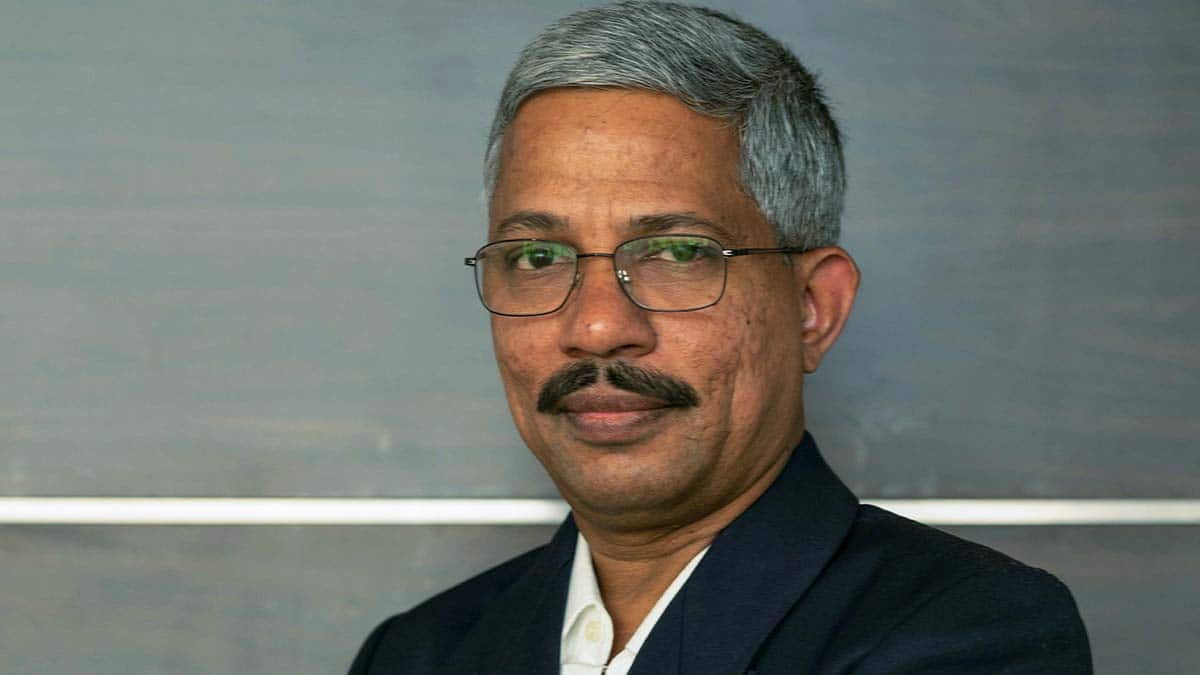
Management education must now venture into emerging areas like agriculture and agri-tech, especially in the context of climate change and sustainability, believes professor Ajit Parulekar, director of the Goa Institute of Management. In a conversation with Careers360, he also spoke of how proficiency in AI and related technological tools has become a universal expectation from recruiters, GIM’s placements, plans for online management education and more.
GIM Goa admits on the basis of scores on the Common Admission Test. CAT 2025 was held on November 30 and was conducted by Indian Institute of Management (IIM) Kozhikode.
Edited excerpts:
In the three decades of existence as a management institute, how do you view the growth of the institute?
Over the past three decades, the institute’s journey has been one of consistent and robust growth. It is an evolution that has been grounded in academic rigour, innovation, and purpose. In recent years, this momentum has accelerated significantly. The institute today stands on the strength of its 93 full-time faculty members who form a formidable pool of intellectual capital, producing a remarkable number of research publications in top-tier journals (109 ABDC A* & A papers have been published in the past 5 years) and attracting over Rs 7 crore in sponsored research funding from leading organisations such as World Health Organization (WHO), Erasmus+, Harvard Chan School of Public Health, German Institute of Development and Sustainability (IDOS), etc.
Equally significant has been the institute’s pioneering spirit in management education, evident in its early introduction of cutting-edge programmes such as PGDM in Health Care Management and PGDM in Big Data Analytics – both among the first of their kind in the country. These initiatives have positioned the institute at the forefront of contemporary management education, blending industry relevance with academic excellence.
The result of this sustained effort is reflected not merely in numbers, but in the human impact. Our distinguished alumni community now includes over 77 CXOs who exemplify the institute’s ethos of responsible and transformative leadership.
How has management education evolved over the years?
Management education has evolved substantially through technology multidisciplinarity, blending management theory with AI, data science, artificial intelligence, blockchain,digital business and 3D computing. This convergence has redefined the skill sets expected of future leaders, making agility and adaptability essential as technical expertise and skills quickly become obsolete.
In parallel, core human skills such as critical thinking, people skills, empathy, and ethical judgment have gained renewed significance.
Furthermore, the topography of management education itself has shifted. While applications to MBA programmes in developed economies have witnessed a slowdown, there has been a significant upsurge across Asia, with India leading in growth and innovation. This reflects not only the region’s expanding economic influence but also its ability to reimagine management education through inclusivity, technological integration, and global relevance.
Also read ‘IIM Calcutta’s new programmes to include 40% AI-based content’: Director
As a head of the institute, which are the untouched areas you think, management education needs to expand?
Management education must now venture into emerging areas like agriculture and agri-tech, especially in the context of climate change and sustainability. These sectors offer vast opportunities for innovation and inclusive growth. By integrating them into management curricula, institutes can equip leaders to address global challenges of food security, resource efficiency, and environmental resilience.
Has AI impacted placement offers to students of the institute?
Yes, undoubtedly. AI has begun reshaping placement trends across sectors, though its full impact and extent are still unfolding. Many recruiters are currently adopting a ‘wait and watch’ approach, assessing how AI-driven transformations will redefine roles and skill requirements. What is clear, however, is that proficiency in AI and related technological tools has become a universal expectation. Employers are increasingly seeking to recruit candidates who can leverage data, automation, and digital intelligence to enhance decision-making and innovation. Thus, making AI literacy a crucial differentiator for management graduates today.
Also read ‘IIM Ahmedabad aims to extend full or partial freeships to 40% of students’: Director
How have the GIM placements been this year? Which programme received the highest placement?
The placement season has commenced on a positive note, though it is still in its early stages. The PGDM, BDA and HCM programmes have already secured higher offers than in the previous year, reflecting strong industry confidence and the growing relevance of these specialisations. Pre-placement offers (PPOs) have also shown an encouraging uptick, indicating strong employer satisfaction with internship performance.
While the technology sector continues to experience a relative slowdown in hiring, other sectors (such as consulting, BFSI, and healthcare) are performing reasonably well. We look forward to a balanced and optimistic placement year.
With the advent of artificial intelligence, how is an institute like yours standing out?
With the advent of AI, the institute possesses a distinct competitive advantage owing to its early and strategic investments in the field. Having launched the Big Data Analytics (BDA) programme in 2018, the institute had already cultivated deep in-house expertise in data-driven decision-making well before AI became mainstream. As analytics naturally evolved towards artificial intelligence and machine learning, this foundation has positioned the institute at the forefront of this transformation.
Our faculty capability, robust infrastructure, and strong industry reputation, recognition and connect has enabled us to seamlessly integrate AI into both teaching and research. The institute’s established reputation for academic excellence and industry relevance further amplifies this advantage.
How well has NEP been implemented by the institute? Are there any teething problems?
The institute has implemented the ABC (Academic Bank of Credits) and has added multidisciplinarity in the four PGDM programmes through the introduction of global electives that are available to students.
Also read IIFT Plans: Dubai campus as ‘international platform’, AI in MBA courses, improving placements
In terms of internationalisation, where does GIM stand?
In alignment with the NEP’s emphasis on internationalisation, GIM has made significant strides in expanding its global footprint. The Global Immersion Program has grown substantially, now encompassing partnerships with eight international institutes (in the UK, France, the USA, Greece, Poland, Thailand and Morocco) and offering a total capacity of 160 students, a four-fold increase from 40 participants last year.
This expansion not only broadens students’ exposure to diverse academic and cultural contexts but also strengthens GIM’s position as a globally connected management institute.
The institute has also been running courses in hybrid mode. How has been the response?
The response has been very positive. Originally transitioned to an online format in 2022, the programme has since evolved into a hybrid model, predominantly online, yet anchored by intensive on-campus immersion modules in each of the two years.
As a result, the programme has witnessed a seven-fold increase in enrolments, expanding from a Goa-centric initiative to a national programme with international participants. The carefully curated learning experience and sustained focus on quality have earned the programme notable recognition, including a QS ranking 2025 of Top 7 Executive MBA programmes in India and the 30th rank in Asia Pacific region.
In the QS World Online MBA Rankings 2026, it has secured the No. 1 position globally in the ‘Class Experience’ indicator.
Also read ‘MDI Gurgaon’s AICTE recognition is freedom with responsibility’: Dean on Category 1 autonomy
GIM has launched a national project to improve adult vaccination. Is this part of the consultancy wing of the institute?
The Health Policy and Systems Research for the Uptake of Adult Vaccination in India initiative, led by professors Ajay Vamadevan and Praveen Pradeep, with support from WHO, is a two-year national project aimed at strengthening evidence and policy for adult immunization in India. This project will examine existing policies, barriers, and strategic opportunities for improving vaccine uptake among adults – particularly those with chronic conditions and healthcare workers, who constitute clinical risk groups at high risk of complications from vaccine-preventable diseases such as influenza, pneumococcal pneumonia, typhoid, herpes zoster, and Hepatitis B, among others.
In addition to the national-level analysis, the project focuses on four priority states – Goa, Kerala, Delhi, and Punjab – which have a high burden of chronic diseases.
Does the institute have plans for further expansion in terms of opening new centres or infrastructure development?
Yes, the institute continues to pursue a forward-looking expansion strategy aligned with its vision for growth and innovation. It has recently completed the construction of a new office block, enhancing administrative efficiency and campus functionality. In addition, work is underway on a state-of-the-art online education facility within the new academic block currently being developed.
This upcoming centre will strengthen the institute’s digital and hybrid learning capabilities, enabling it to cater to a wider learner base while maintaining the same standards of academic excellence and immersive learning that define its on-campus programmes.
 Add as a preferred source on google
Follow us for the latest education news on colleges and universities, admission, courses, exams, research, education policies, study abroad and more..
To get in touch, write to us at news@careers360.com.
Next Story
]CAT 2025: Four IIMs exit Common Admission Process to join JAP 2026, leave MBA aspirants confused
Newer IIMs such as IIM Raipur, Kashipur, Ranchi, and Tiruchirappalli experimenting with common, ‘single-window’ admission counselling, IIM Udaipur goes solo. Students wish all 21 would come together.
Shradha ChettriLatest Education News
]Related News
]Engineering College Dandiya event turns fatal; 3 arrested in Hyderabad
IIT Delhi opens applications online executive programme in managerial decision making, analytics
JNUSU ends 17-day hunger strike after admin agrees to withdraw FIRs, revoke rustication of students


