
Uniform exam pattern, DigiLocker applications and grievance cell among MPSC reforms
Vaishnavi Shukla | September 29, 2026 | 04:09 PM IST | 4 mins read
MPSC's seven-member exam reform committee will examine long-term changes, meant to hold for at least five years, covering question types, applications through DigiLocker, and clear norms for normalisation of marks
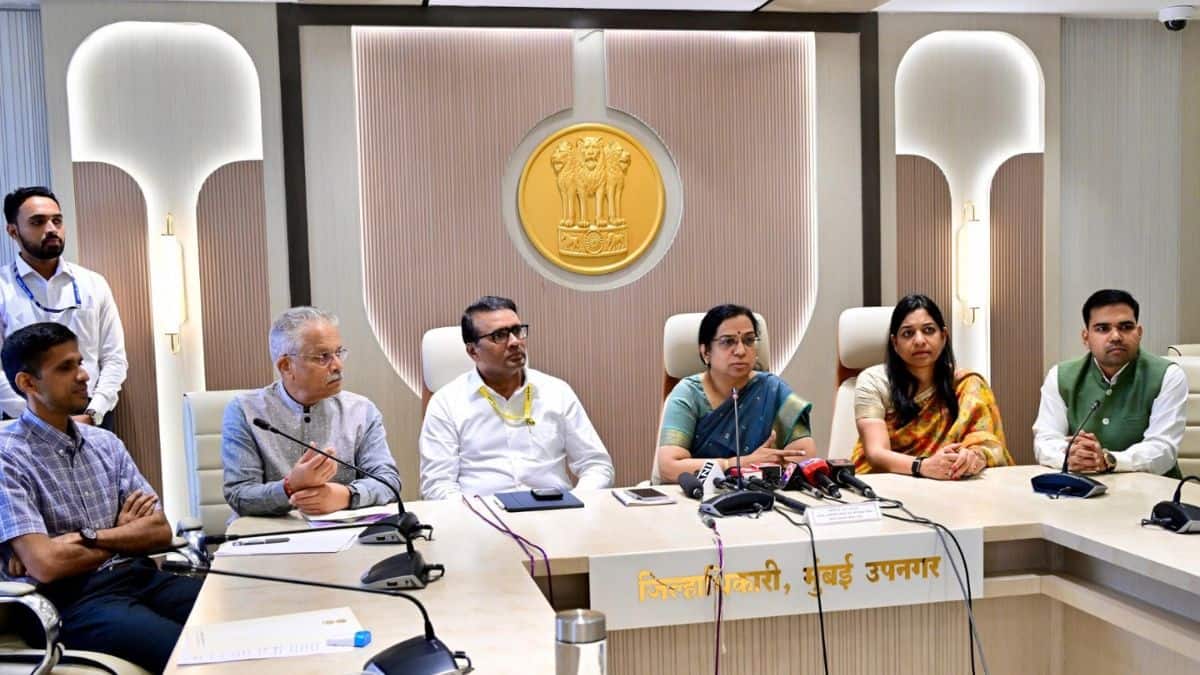
At a press conference today, V Radha, the additional chief secretary (personnel) of the Maharashtra Public Service Commission's (MPSC) exam reform committee, suggested several changes to the state's recruitment examinations. MPSC committee chairperson said that the commission is open to suggestions and is willing to meet subject experts to hear their recommendations on exam reforms.
Around 700 students attended the first consultative meeting, and it lasted for around nine hours. The committee chairperson said that they listened to the views of 1,700 students in total for reforms in MPSC.
Earlier, the panel said that it received more than 30,000 emails, with suggestions from students and experts for reforms in MPSC, such as maintaining transparency in checking papers and a fixed calendar of exams and results.
MPSC Reforms
MPSC's exam reform committee chairperson suggested that the process for MPSC exams should be the same for at least 5 years, revisions in the types of questions asked in examinations, and transparency in the result assessment process to avoid discrepancies.
In another suggestion received by the panel members, the question papers should be of the highest quality and factual basis.
“Answers should be well researched, shouldn't have to be changed continuously, qualitative selection of questions and answers. This is the thing that came across Maharashtra,” the MPSC panel said.
However, the chairperson pointed out that the government should send requisitions on time so that it's easier for the commission to finalise the MPSC exam calendar without delays.
Fixed timelines for exams
For instance, Union Public Service Commission (UPSC) prelims are always in May; Maharashtra should also have a similar consistency. There should be fixed dates for exams, results, and appointments.
Significantly, the MPSC panel highlighted that the candidates offered in-depth suggestions related to specific exams about agriculture and animal husbandry, etc., including department-related suggestions.
‘We will do an overall study, including processes across the country and even globe, but will also do department-specific analysis. It will be a solution based study; we want to go to the root cause of the problem,” an MPSC member added.
Another MPSC member highlighted that many candidates qualify for multiple posts, and there's a provision for opting out. But since many candidates are busy with exam preparation, they can't opt out. There should be a standard operating procedure (SOP) for opting out.
Uniformity across recruitment exams
Another point raised by a committee member, Virendra Singh, the secretary of the Maharashtra IT department, was that the exam process for the board should remain the same to maintain uniformity. The Maharashtra government has 3,800+ cadres, excluding district administrations and urban local bodies. If there are multiple posts related to the same course across the departments, the question ratio, etc in the exam should be the same.
The third committee member, retired IAS officer and former member of UPSC, Ajit Bhonsle, said that while the task force is looking into it, the state government has seized of these issues for a while; however, the personnel department has done a very detailed study.
“The task force's interaction with students has reinforced those findings and has opened new dimensions. The reforms shouldn't be disruptive to somebody else, so the effect it causes on students and others should be carefully handled,” Bhonsle said.
Moreover, there’s a difference of opinion on whether the paper pattern should be descriptive or objective among students and experts. The committee will assess the pros and cons of the paper pattern and take decisions accordingly.
MPSC’s common grievance redressal system
The fourth member of the committee, IIT Bombay faculty Shyamprasad Karagadde, suggested that there should be a communication channel from MPSC for dissemination of information and a proper grievance redressal system for the stage of examination, evaluation, and results.
In this system, candidates should have access to send requests and get a time-bound reply.
Has the committee received any opinions on digitisation?
MPSC exam reform committee chairperson Radha said that there are many aspects to digitise, starting from the application process. It will become easy to have a one-time application system for multiple exams, which has already been implemented by UPSC.
The application forms can also be linked to DigiLocker. Also, another reason for delays in appointments is the document verification process, which can be reduced with DigiLocker.
“We want to go a step further. If someone registers for an exam in Maharashtra, they would also be appearing for national exams such as those for railways. We will try to work with the Government of India to enable it,” committee chairperson Radha added.
The secretary of the Maharashtra IT department, Virendra Singh, said that they are trying to liaise with GOI agencies as well to have a complete platform so that the candidates can have one-time registration at the state level and use it for national exams.
MPSC committee has been formed to look into age-related criteria for candidates to expand uniformity, the type of questions asked in the exam, grievance redressal mechanisms, normalisation method, measures to avoid paper leaks, and other exam systems relevant to other departments, and to strengthen the exam conducting process by the commission.
 Add as a preferred source on google
Follow us for the latest education news on colleges and universities, admission, courses, exams, research, education policies, study abroad and more..
To get in touch, write to us at news@careers360.com.
Next Story
]Latest Education News
]Related News
]JEE Main 2027 Registration Date LIVE: January session application form soon; city slip, admit card, exam dates
Odisha NEET UG Counselling 2026: 152 MBBS, BDS seats allotted in stray vacancy round


