
Mumbai University plans 12 skill institutes, 516 open electives, new cluster model under NEP
Ruchika Kumari | August 17, 2026 | 03:51 PM IST | 6 mins read
From IKS and community engagement to ABC and industry-linked learning, MU outlines its NEP initiatives and challenges since 2023.
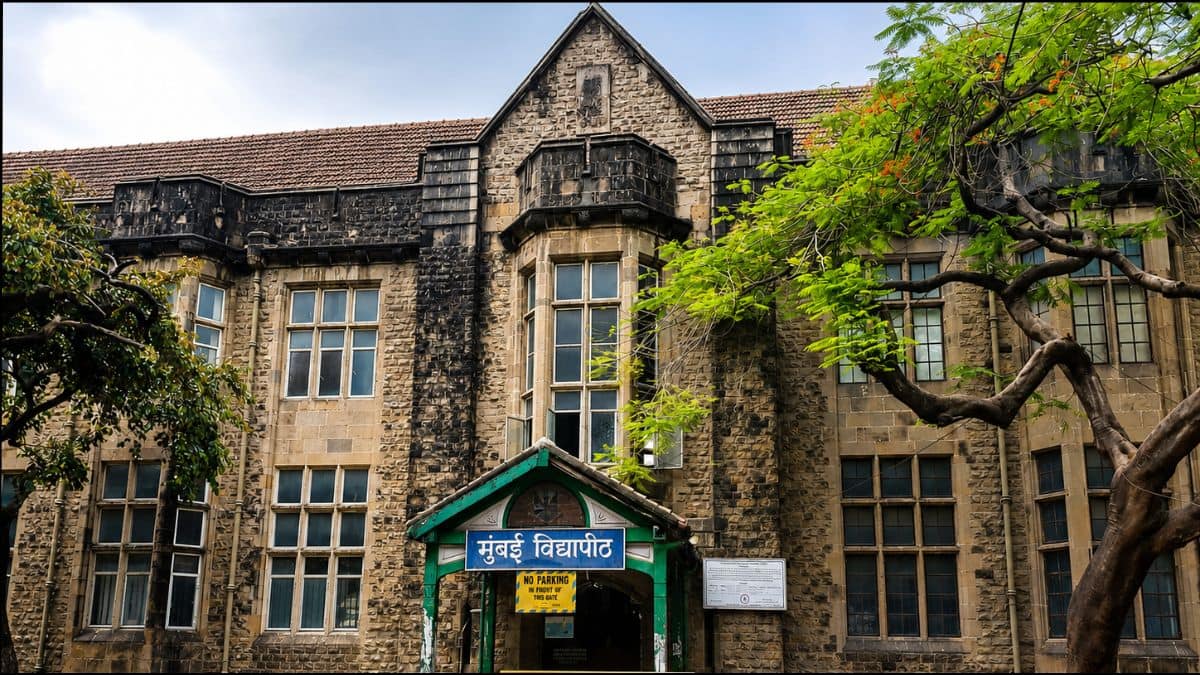
The University of Mumbai has outlined a series of initiatives undertaken as part of its implementation of NEP 2020, including four-year honours and honours with research programmes, multidisciplinary minors, open electives, Indian knowledge systems (IKS), community engagement programmes and a new cluster-based approach for academic collaboration.
According to the university’s presentation, 50 university departments are offering four-year honours programmes and 49 are offering four-year honours with research. Among autonomous colleges, 58 are offering four-year honours programmes and 33 are offering honours with research. Some engineering colleges have also opted for minor programmes.
The university began implementing national education policy (NEP) in 2023 and is now planning an external review of its progress through the national institute of educational planning and administration (NIEPA).
In a press conference conducted earlier today, the Vice-Chancellor Ravindra Kulkarni said the university was still at an early stage of NEP implementation, with several initiatives being introduced for the first time. “We have tried our level best, but there could be some shortcomings,” he said. The Boards of Deans are visiting colleges to collect information for the proposed review. Kulkarni also said the university and its autonomous colleges have a strong record of creating academic bank of credits (ABC) and DigiLocker accounts.
Cluster model, joint-degrees and internships
Mumbai University’s cluster model, initially developed around examinations, has expanded to support NEP implementation and broader academic collaboration. Pro-Vice-Chancellor Ajay Bhamare said the clusters are based on academic disciplines as well as geographical proximity, with the university using both top-down and bottom-up approaches. Colleges within clusters are being encouraged to share faculty, infrastructure and other resources.
The university is also exploring dual or joint degrees, revenue-sharing models and research clusters. One research cluster involves six colleges working on defence-related subjects. The university is now moving towards impact assessment with NIEPA, which will work with it for two months and assess selected institutes.
Kulkarni also identified internships as a major task under NEP implementation. The university has defined on-the-job training guidelines and wants to conduct district-wise faculty training.
The university also highlighted examples where students received stipends of up to Rs 15,000, while its Finance Department engaged and paid interns. In the History Department, some students pursued a Diploma in Museology and Art Conservation and later joined as interns or lecturers at CSMVS, while five pre-OJT students were selected as full-time curators. Three OJT students from the 2024-25 batch who completed internships at CSMVS after their M.A. later secured full-time employment at the Maritime History Society of the Western Naval Command.
12 skill institutes planned across Konkan
One of the major proposals outlined by Mumbai University is the establishment of 12 Skill Institutes across the Konkan region from 2027-28 academic year. The plan, which has recently been approved by the University of Mumbai Senate, has been sent to the state government for approval. If approved, the institutes will meet students’ aspirational skill requirements while integrating traditional degree programmes with industry-relevant skills.
The proposed institutes will offer specialised combinations across the region. These include B.Com Finance and FinTech in Mumbai, B.Sc IT and Cybersecurity in Thane, B.A. Journalism and Digital Media in Navi Mumbai and B.Sc Environmental Science and Green Tech in Palghar. Other proposed areas include agriculture and AgriTech, marine biology and coastal management, mechanical engineering and renewable energy, tourism and hospitality, biotechnology and health tech, logistics and e-commerce, mathematics and data science, and sociology and social entrepreneurship.
The university said the proposed institutes will go beyond conventional skill areas such as computer science, accounting and finance. The plan is to incorporate courses developed by sector skill councils and bridge the separation between theoretical education and skills.
Also read Across universities, 4th year of NEP’s FYUP more about confusion than research or practical training
516 open electives, new models for courses
Mumbai University has adopted three models for NEP programmes- single major, major with minor and a multiple-option choice model. Under these, students can pursue one main subject, two subjects or three subjects, represented as M1, M1 and M2, and M1, M2 and M3 respectively.
The university has also encouraged Boards of Studies to hold sectoral meetings and share their open electives. There is currently a basket of 516 open electives, which will be updated. Kulkarni said these courses require a different pedagogy because students opting for them may not have any prior background in the subject. The university is also considering language options for foreign students, such as Arabic for students from the UAE.
However, colleges remain cautious about offering a large number of open electives because of uncertainty over workload. The university expects flexibility to increase gradually. It cited examples of teachers moving beyond traditional disciplinary boundaries, including an arts teacher teaching science students. Humanities teachers, who may have smaller classes, have also benefited from opportunities to teach larger groups and interact with students from other disciplines.
Kulkarni said the university is also encouraging Boards of Studies to move beyond their earlier practice of working in isolation. Language departments, for instance, are now expected to work on ability enhancement courses in addition to their regular programmes.
IKS, ABC and community engagement
Mumbai University has expanded its Indian Knowledge Systems initiatives by preparing programmes in English and Marathi and developing content in 12 languages. It has also prepared 12 IKS books, with financial support from different organisations for translation, including The Mysore Association of Mumbai for the Kannada IKS book. The university said subject-specific IKS will not be restricted to ancient knowledge and will also cover periods such as the 1930s, described as the “golden era of science” associated with C V Raman.
As a case study of ABC adoption, the university recorded 1,925 registrations in 2024-25 and 2,400 in 2025-26. Total credit data uploaded increased from 6,935 to 7,415 during the same period. Kulkarni described the exercise as a “first experiment” and said the university would like to compare its performance with other universities to identify areas where it may be lacking.
Also read QS Best Student Cities 2027: Delhi named world's most affordable student city; Mumbai tops India
Community engagement initiatives
The university also presented community engagement initiatives as part of its NEP implementation. At VPM’s K.G. Joshi College of Arts and N.G. Bedekar College of Commerce in Thane, a programme on balancing screen time involved 522 students and more than 8,000 community beneficiaries, with students conducting a large-scale survey and awareness activities around excessive screen time, privacy and online safety.
Another programme, “Age with Dignity”, involved 127 students, 79 senior citizen beneficiaries, two NGOs and nine activities aimed at reducing loneliness and social isolation and promoting intergenerational engagement.
Shri Pancham Khemraj Mahavidyalaya in Sawantwadi adopted 13 villages in the Konkan region for initiatives ranging from apiculture, aquarium and beekeeping to vermicomposting, biogas, solar energy, banking and Modi Lipi.
The university said its distance learning centres have faced NEP-related teething problems, while the availability of online programmes has contributed to declining enrolment. The Centre for Distance and Online Education will need to adapt to changing online learning trends and could offer secondary courses to students enrolled in regular programmes.
The university’s presentation also acknowledged constraints, including limited non-teaching staff, which means it has to rely on lead colleges within clusters for support. On the establishment or affiliation of newer traditional and law colleges under Mumbai University by the state government, the university said it is the government’s right to do so and that it has limited scope to intervene.
 Add as a preferred source on google
Follow us for the latest education news on colleges and universities, admission, courses, exams, research, education policies, study abroad and more..
To get in touch, write to us at news@careers360.com.
Next Story
]Locked Toilets to Teacher Shortage: CJP’s school audit campaign reveals chronic neglect of govt schools
According to CJP’s Ashutosh Ranka, ‘between 1,200 and 1,500’ volunteers conducted school inspections across the country starting August 15. They uncovered severe infrastructure and manpower gaps the communities want fixed
K. Nitika ShivaniLatest Education News
]Related News
]CAT 2026: IIMs witness surge in female, experienced candidates for PGP in management admission
DU Panel says St Stephen’s College ‘violated’ faculty recruitment norms, flags shortlisting irregularities
JNU Strike: JNUSU hits back at VC's remarks over hunger strike, alleges denial of medical care


