
Locked Toilets to Teacher Shortage: CJP’s school audit campaign reveals chronic neglect of govt schools
K. Nitika Shivani | August 17, 2026 | 01:25 PM IST | 5 mins read
According to CJP’s Ashutosh Ranka, 1,200-1,500 volunteers conducted school audits. They uncovered severe infrastructure and manpower gaps the communities want fixed
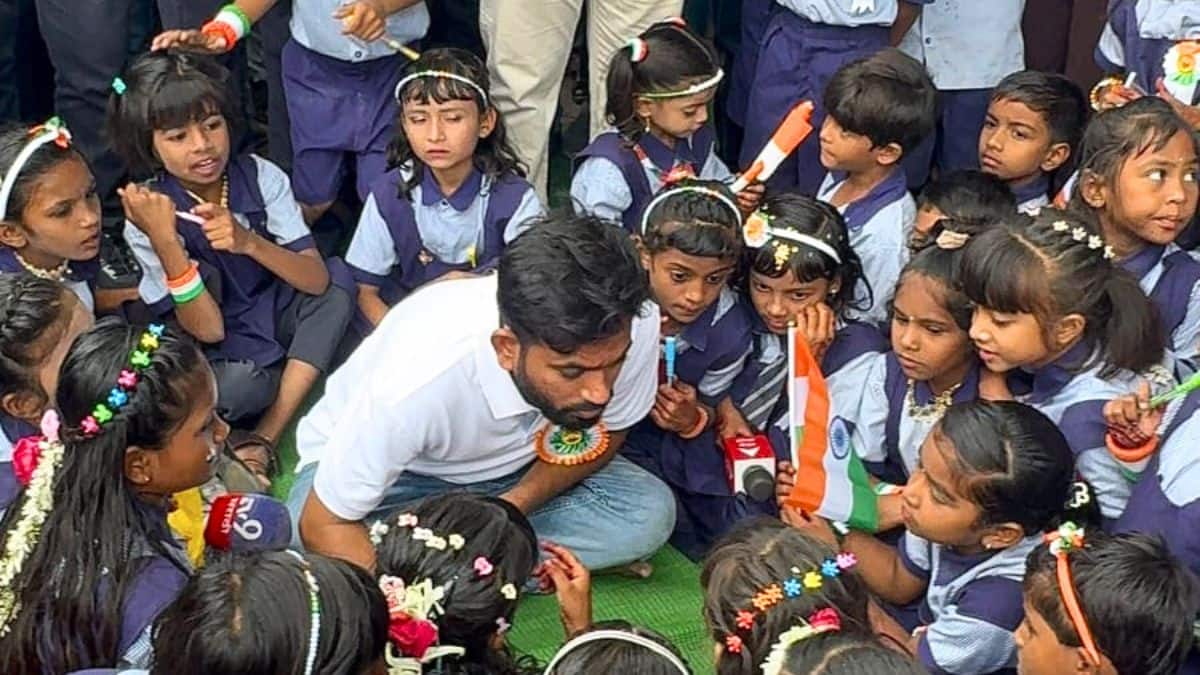
From unsafe drinking water and locked toilets to collapsing roofs and classrooms without fans, a citizen-led campaign launched by the Cockroach Janta Party (CJP) on Independence Day has begun documenting infrastructure gaps in government schools across several states.
The “School Thik Karo” campaign asks citizens to independently audit government schools, photograph and record deficiencies and submit their findings to local authorities. CJP says it will amplify the reports through its social media platforms and use them to push for greater accountability.
The campaign was launched from Santuk Pimpari village in Maharashtra’s Hingoli district, the native village of CJP founder Abhijeet Dipke, on August 15.
“Naya Parliament ban gaya. Naya PM Office ban gaya. Gaon ka school waise ka waisa hai,” CJP said in a post announcing the campaign.
Also read Centre sat on a fifth of Samagra Shiksha funds every year; PM SHRI dues at 49% in 2025-26: Govt data
“80 years of Independence, and a child is still asking for drinking water and a functional toilet. This Independence Day, we stop waiting. We audit it ourselves,” the organisation said.
How ‘School Thik Karo’ works
Under the campaign, citizen volunteers are asked to download a checklist from CJP’s website and physically visit a government school to document its condition.
The checklist asks participants to examine facilities including electricity, drinking water, functional toilets and mid-day meal operations. Volunteers are also encouraged to document other infrastructure and safety concerns they encounter.
After completing an audit, participants are asked to share their findings with the school headmaster, village sarpanch and block development officer before tagging CJP on its social media platforms.
The organisation has positioned the campaign as a grassroots accountability exercise, with citizens themselves documenting conditions rather than waiting for official inspections.
“Be the journalist your village never had. Audit your own school,” CJP said in one of its campaign posts.
Also read India loses 17,141 govt schools in 5 years, over 8,000 in 2025-26: Education ministry data
The campaign also saw participation from people travelling to their hometowns to inspect schools they had studied in. In one post, CJP highlighted a young volunteer who travelled from Delhi to Siwan, Bihar, by train to audit his former school.
“Delhi to Siwan. One train ticket. One school,” the organisation said, describing the volunteer as someone who had decided that his former school “deserved a witness.”
CJP co-convener Ashutosh Ranka told Careers360 that between 1,200 and 1,500 volunteers had come forward during the initial phase of the campaign.
Also read India saw 93,000 schools shut down over last 10 years; MP, UP lead closures, govt tells Lok Sabha
Maharashtra to Assam: Schools sans toilets, benches, teachers
CJP has published citizen-submitted audits from multiple states, with the reports pointing to a range of infrastructure and safety concerns.
At a government school in Santuk Pimpari, Maharashtra, children told Dipke what they wanted to see fixed. The issues highlighted included a lack of benches, no drinking water, unclean toilets, a non-functioning computer and a teacher shortage. CJP said he Dipke appealed to the village sarpanch to improve the condition of the school.
In Maharashtra’s Chhatrapati Sambhajinagar, a municipal primary school was reported to have cracked urinals, open drainage and toilets choked with garbage. Mukesh Khillare, a volunteer, had visited it as part of the campaign.
In Uttar Pradesh’s Siddharthnagar district, an audit at a primary school in Masina Khas documented a classroom whose roof had caved in. Volunteer inspector Mukesh said the toilet had no door or water supply and that there was a strong stench around the school premises.
In Meerut, Uttar Pradesh, two young volunteers, Ayaan and his friend, audited a local government school. According to CJP, the audit found unsafe drinking water, filthy toilets and a backyard where snakes and mosquitoes were reportedly present.
In Pakur district of Jharkhand, a volunteer named Takbir shared videos of his government school, with CJP saying parts of the school building appeared to be at risk of collapse. The organisation said one of the videos had crossed 1.7 million views but alleged that authorities had not yet acted.
Another report from Jharkhand came from Bano block, where CJP said children were studying under tarpaulin as rainwater entered through a damaged classroom ceiling. According to the organisation, villagers had put up the tarpaulin to allow classes to continue despite the damaged roof.
In Dima Hasao district of Assam, a volunteer named Daniel audited a government school and reported that toilets had no water supply, classrooms had no fans and there was no kitchen for preparing mid-day meals. He also appealed to the government to improve transportation facilities so that more students and teachers could attend the school.
The campaign also highlighted a government primary school in Morena, Madhya Pradesh, where a toilet was reportedly locked. According to CJP, volunteer Hariom found the toilet shut and said it had not been opened since the building was constructed. The report also cited the absence of drinking water and a waterlogged playground.
CJP claimed that some girls at the school had dropped out because of the lack of access to a functioning toilet.
However, the efforts have not gone without blowback. In Rajasthan, official notices told schools to block access. In West Bengal, the attempt at an audit led to the murder of a volunteer’s father and his own hospitalisation.
CJP on verification process
The crowdsourced nature of the campaign raises questions about how CJP verifies self-reported audits, particularly when photographs and videos are submitted remotely.
Asked about the verification process and the matrix used by the organisation to assess the authenticity of the reports, Ranka said visual evidence submitted by volunteers was the campaign’s primary source of information.
Also read From Taboo to Textbook: Why India took two decades to say ‘Yes’ to sex education in school
“We have all the visuals coming on our Instagram, there is no better way to judge the authenticity of the audit than these videos that are coming out,” Ranka said.
He said volunteers were also submitting completed audit templates along with videos through CJP’s Instagram handles and WhatsApp channels.
“Some of these forms, because not a lot of people can really actually access the internet the way we can in urban areas, so we are really, really heavily relying on the Instagram content, like people sending those videos and people filling out the templates with videos to our Instagram handles and WhatsApp channels. That’s our primary source of information,” Ranka said.
 Add as a preferred source on google
Follow us for the latest education news on colleges and universities, admission, courses, exams, research, education policies, study abroad and more..
To get in touch, write to us at news@careers360.com.
Next Story
]Latest Education News
]Related News
]AP Inter Time Table 2027 LIVE: BIEAP 1st, 2nd year schedule soon at bie.ap.gov.in; marking scheme, rules
CBSE Date Sheet 2027 LIVE: Class 10th, 12th board exam date soon on cbse.gov.in; sample papers, grading system
Board Exam Timetable 2027 LIVE: UP, TN 10th, 12th exam dates out; BIEAP, CBSE, Maharashtra exam schedule


