
Across universities, 4th year of NEP’s FYUP more about confusion than research or practical training
Azib Ahmed | June 15, 2026 | 01:18 PM IST | 10 mins read
Assam, Patna University, BBAU Lucknow, Visva Bharati to have first 4th-year batches of FYUP in 2026. Half-baked policies, resource shortages undermine NEP reform
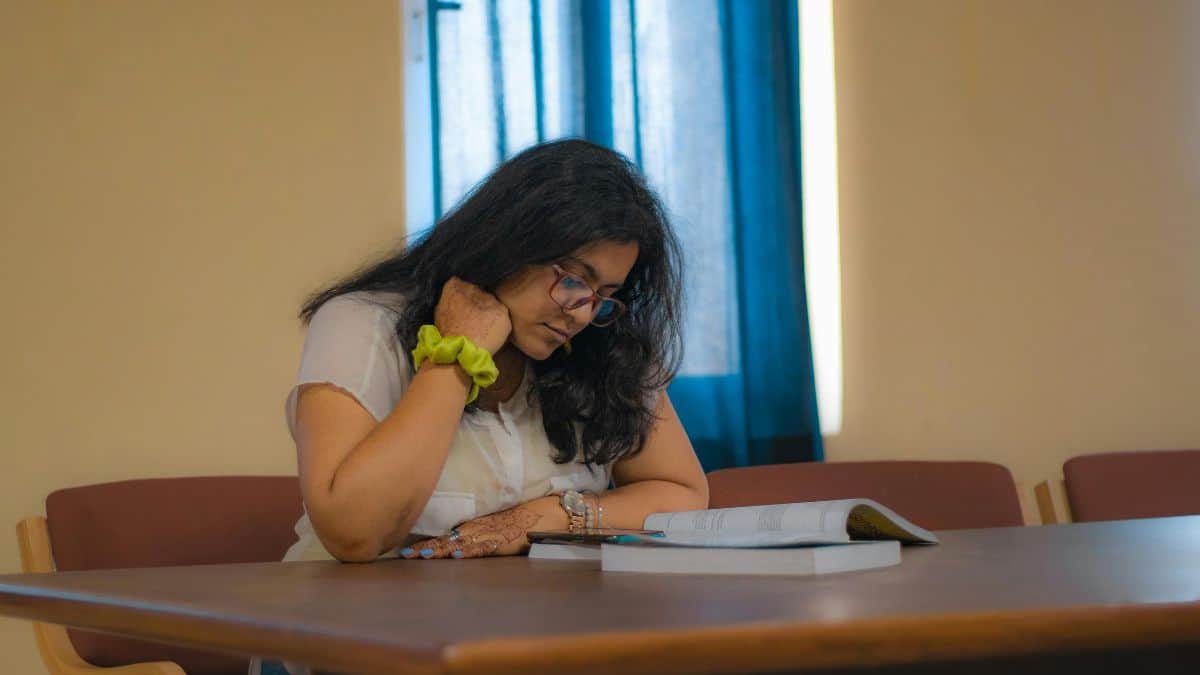
Four-Year Undergraduate Programme: “Students are constantly asking us about the benefits of the fourth year and what opportunities it will offer, but we cannot give them clear answers until the university issues detailed guidelines,” said Partha Sarathi Das, principal of Nabinchandra College, Badarpur, affiliated with Assam University.
The uncertainty described by Das is playing out across universities as students prepare to enter the fourth year of the Four-Year Undergraduate Programme (FYUP), recommended by the National Education Policy (NEP 2020) and mandated by the top higher education regulator, University Grants Commission (UGC), in December 2022 .
Delhi University (DU) and Dr B R Ambedkar University Delhi were among the first institutions to implement FYUP, adopting in the 2022-23 academic session, making their students the first batch to complete the fourth year. Several other universities introduced the programme in 2023-24, and their first fourth-year cohorts are expected to begin classes in the 2026-27 academic session.
Also read IITs will test new JEE Advanced format on first-year BTech students this year: IIT Kanpur director
National Education Policy 2020: FYUP reforms
The FYUP adds a fourth year to the traditional BA, BCom and BSc degree courses with the aim of encouraging undergraduate research, project work and practical training. But it also comes with other reforms.
The programme also introduced multiple entry and exit options. Students can leave after one year with a certificate; with a diploma after two; a bachelor’s degree after three; or continue into a fourth year to earn an honours degree or an honours degree with research. The fourth year is also expected to provide a pathway to a one-year master's programme. On paper, students who leave with a lower qualification, can return to complete their degrees.
Conversations with students and college administrators from universities across Bihar, Assam, Maharashtra, Uttar Pradesh and West Bengal revealed different levels of preparedness. While students in some institutions are planning to continue into the fourth year, others remain hesitant because of a lack of clarity about how the programme will be implemented.
Also read How Samarth portal glitches plague admissions, exams, payments across universities
Careers360 had reported how Delhi University’s shoddy implementation and on-the-fly policy-making had turned FYUP a ‘bitter experience’ for many students who opted for it. At North Eastern Hill University (NEHU), teachers had anticipated the problems FYUP would precipitate and had revolted.
Patna University: Many opt for 4-year BA, BCom, BSc
At Patna University, student interest appears relatively high despite limited clarity. Adarsh Gupta, a third-year geography student at Patna College, said most students in his class are expected to continue into the fourth year.
“Nearly 90 per cent of the students in my class of around 70, are planning to continue into the fourth year. However, many still do not have a clear understanding of what the additional year will mean for their studies or future careers. Most are opting for it because they believe it could offer better academic opportunities or because they want to keep their options open,” Gupta said.
Students have been told that the fourth year could create a pathway towards research and allow eligible students to pursue a one-year master's programme before moving into doctoral studies. However, Gupta said many details are still unclear and still more are yet to come from Patna University.
Also read IISER Pune plans BS-MS student exchange with other IISERs, more courses for professionals: Director
“We have not yet received detailed information about the curriculum, the research work, internships or the examination pattern for the seventh and eighth semesters. Since our batch will be the first to enter the fourth year, students are waiting to see how it is implemented,” he said.
Assam University: No FYUP guidelines
The situation is markedly different at Assam University's affiliated colleges, where both students and administrators say the lack of guidelines has become a major concern.
A third-year BSc Chemistry student at Nabinchandra College, Badarpur, in Assam's Cachar district, said very few students from his class plan to continue into the fourth year.
“Out of 20 students in our class, only two or three are considering the fourth year. Most want to pursue a postgraduate degree, and many feel that studying at another university would be a better option,” said the student who requested anonymity.
The student said the low interest stems from uncertainty about how the programme will work. “Since we are the first batch, nobody really knows how the fourth year will function in practice. Many students do not want to take that risk when there is still so much ambiguity,” said the student.
The student also expressed concerns about the research component of the fourth year, saying many undergraduate colleges may not be adequately equipped to support it. “Our college does not have a chemistry research centre, and there are no supervisors to guide research projects. It is therefore unclear how the research work required in the fourth year will be carried out,” the student said.
Principal Partha Sarathi Das acknowledged many of those concerns, saying colleges are still awaiting greater clarity from the university. “Only the syllabus has been shared in many cases. A syllabus alone is not enough without detailed regulations. We still need clarity on who will be eligible for honours, who can pursue honours with research and how the programme will ultimately be implemented,” he said.
According to Das, nearly 100 colleges affiliated with Assam University are waiting for the same clarity. “Students are not opposed to the fourth year. They just want to know what opportunities it will offer and how the university plans to implement it,” he said.
BBAU Lucknow: Uncertainty affects decisions
At Babasaheb Bhimrao Ambedkar University Lucknow uncertainty has also affected students' decisions.
Chandan Kumar, a third-year zoology student, said only four or five students from his class of around 47 are seriously opting for the fourth year at BBAU LKO. “Many students are preparing for government jobs or planning to pursue an MSc at another university, as most of us have appeared for CUET PG 2026. If I get admission elsewhere, I will leave. If not, I may continue into the fourth year,” he said.
While students are aware of some of the benefits associated with FYUP, including a Honours with Research degrees and the possibility of a one-year master's programme, Kumar said there has been little detailed guidance from BBAU Lucknow.
“There was no dedicated workshop or orientation programme explaining the syllabus, research requirements or future opportunities. Students were simply told that those who wanted to continue could do so, while others could exit after the third year,” he said.
Visva Bharati: Frameworks in places; resources aren’t
At the centrally-run Visva Bharati University in Shantiniketan, West Bengal, students reported significantly greater awareness of the fourth-year structure and many plan to opt for it although concerns remain about implementation.
An English student who plans to continue into the fourth year said almost her entire class intends to stay. “For many of us, the main attraction is that we will receive an honours degree and have the option to pursue a one-year master's programme afterwards. But we still do not know exactly how the research process will work or what will be expected from students,” she said.
She added that adapting to the new education policy has not always been easy. “As the first batch under NEP, we often feel like we are figuring things out as we go. The major-minor system was also new for us, and it took time to understand how it worked. Even now, there is some confusion about course requirements and examination patterns,” she said.
Also read Student Suicides: NTF interim report flags impact of NEET, JEE-type exams on mental health
Economics student Nichita said student interest in the fourth year is high, but many questions remain unanswered. “Out of around 27 students in my class, about 23 to 25 are expected to continue into the fourth year. However, we are still learning about various requirements, including credits, internships and dissertations. There is still a lot we are trying to understand about how the programme will work,” she said.
Visva Bharati made an effort to let students know the score early. “The university shared the entire syllabus and course structure at the beginning of the programme itself. Every student is assigned a faculty mentor who helps with academic decisions and future plans,” said Sibasish Neogi, a third-year Comparative Studies of Religion. Students of Neogi’s department understand the distinction between the ‘Honours’ and ‘Honours with Research’ options and have already begun discussing dissertation topics with faculty members.
But even where frameworks are in place, the resources needed to actually implement them may not be. Neogi’s own experience reflects both the opportunities and constraints of the research component.
He initially proposed a dissertation on the contribution of the Jain community to sustainable development, using Mumbai as a case study. However, the proposal was not approved because it required fieldwork and there was no faculty member available with the relevant expertise to supervise it.
He said faculty members advised students to choose research topics that could realistically be completed within the limited time available for the fourth year.
Neogi is now considering a study of the 2012 Pakistani comedy-drama Quddusi Sahab Ki Bewah, examining representations of gender and religion and exploring ideas of the “ideal” Muslim woman through the series. “Our teachers have repeatedly told us that this is not a PhD-level project. Students have only a limited period to prepare proposals, conduct research and complete dissertations. Practicality is very important while choosing a topic,” he said.
Although the fourth year is being promoted as a research opportunity, Neogi noted that not every student will qualify for the Honours with Research option, which requires a minimum 7.5 CGPA. Even for those who qualify, conducting fieldwork-based research can be difficult within the available time. As a result, many students are encouraged to choose topics that can be studied through texts such as books, films, television programmes and other media.
FYUP UG courses and research exposure
University administrators argue that research exposure is the intent of the fourth year.
Syed Azharuddin, senior professor in the Department of Commerce at Dr Babasaheb Ambedkar Marathwada University (BAMU), said the additional year is meant to familiarise students with research methodology, fieldwork and analytical skills. “The dissertation is not expected to be equivalent to a PhD thesis. A student can conduct focused research on a local issue, industry or community. The objective is to introduce students to research methodology and analytical thinking at an early stage,” he said.
However, he acknowledged that implementation depends on the institution.
“A college may be able to offer the fourth year only in subjects where it has postgraduate programmes, qualified faculty and approved research centres. The challenge is not policy but institutional capacity,” he said. According to him, most students in affiliated colleges are likely to continue with the traditional route. “Maximum students will prefer the three-year degree followed by a two-year post graduation.”
Syed believes eligibility depends on research infrastructure. “Only subjects with research centres will be eligible for the four-year honours programme,” he said.
In many cases, he noted, this will limit access to the fourth year across disciplines. “If a college has a research centre only in political science or economics, then students in subjects like Urdu or English may not be able to pursue the fourth-year honours in those subjects,” he said.
He added that students will complete structured projects throughout the semesters, including fieldwork, vocational training and a final dissertation. “Students can work on local issues such as agriculture, industry or local markets. The aim is to develop practical research skills,” he said.
According to him, faculty members have already undergone training for the new system. “Teachers have received NEP training. This has been a continuous process since the implementation of NEP 2020,” he said.
He also stressed that the success of FYUP will depend on institutional readiness as well as a shift in teaching and learning practices. “Cognitive readiness is very important. Teachers must be prepared to guide students beyond classroom teaching, and students must also become more proactive in their learning,” he said.
 Add as a preferred source on google
Follow us for the latest education news on colleges and universities, admission, courses, exams, research, education policies, study abroad and more..
To get in touch, write to us at news@careers360.com.
Next Story
]Latest Education News
]Related News
]Delhi CM inspects Mukherjee Nagar, promises PG policy and free library spaces for students
Odisha: Voting for students' union elections begins amid tight security
Lucknow University becomes first state university to offer DigiLocker ID cards to 21,268 students


