
NITs plan multiple-entry, exit in BTech across institutes, research parks with ADB loan, PhD reform
Sheena Sachdeva | January 27, 2026 | 10:20 AM IST | 5 mins read
Proposed policy will let students exit one NIT, enter another; NIT Karnataka Surathkal, NIT Trichy, NIT Calicut, NIT Rourkela picked for research parks
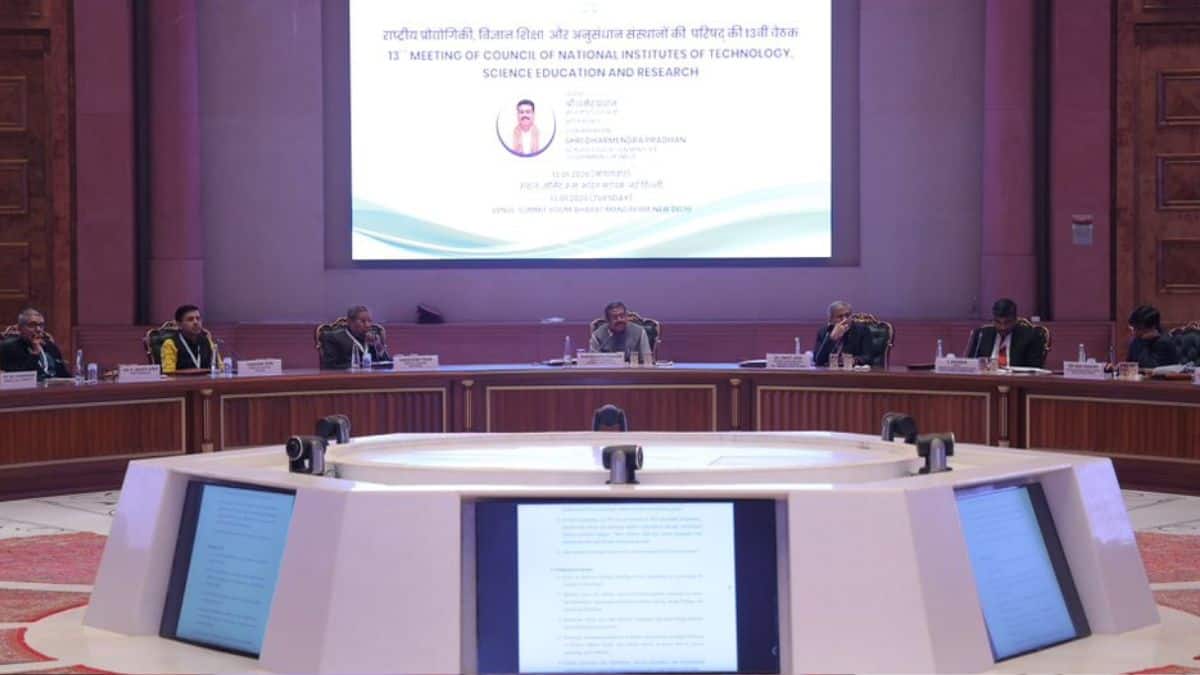
The National Institutes of Technology (NIT) propose a multiple-entry and exit policy that will allow students from one NIT to join another. This was discussed at the NIT council meeting held in January, along with a plan to set up research parks with an Asian Development Bank loan and internal funds, say sources. Major reforms in PhD courses were also on the agenda.
Live Updates: JEE Mains 2026 Live
“Many NITs have exit and entry formats but exit from one NIT and entry into another NIT is not implemented yet. However, the ministry of education wants us to implement this,” said another source aware of the discussions. “But there are certain issues and we have to resolve them.” Indian Institutes of Technology (IIT) also discussed a "flexible-credit-sharing framework” with IITs and other NITs during their own IIT council meeting.
Admission to the NITs is via the Joint Entrance Examination (JEE Main), conducted twice a year by the National Testing Agency. The first session of JEE Main 2026 is currently being held.
The 13th NIT council meeting was held on January 13, 2026 – the first meeting since 2019. Like in the case of the IITs, the NIT Council is chaired by the education ministry, now Dharmendra Pradhan. The IIT Council has also discussed inter-IIT exchanges for 5% of BTech students.
NIT research parks with ADB loan
Among other things discussed at the NIT council meeting was the establishment of research parks at top NITs.
“NIT Karnataka Surathkal, Trichy, Calicut, Rourkela and a few other proposals on research parks have been selected by the ministry of education out of around 17 NITs applications,” said another member who attended the meeting, but did not want to be named. “There is word that NITK will set-up the first research park.”
However, the research parks will be financed through a loan from the Asian Development Bank (ADB) and by the NITs themselves in a 50-50 split.
“It is a new process unlike earlier where an institute presents its proposal at MoE and gets the money. This time Asian Development Bank will first review the institute’s infrastructure rigorously including environment on campus, gender parity, safety and many others,” said a source.
On approval, ADB will give some money to the government as a “soft loan” which will be further transferred as a 50% grant and the remaining 50% the institutes have to raise themselves, stated a member who attended the meeting.
Also read ‘Need a non-IIT, non-metro model of public technical institute’: NIT Surathkal director
NIT BTech syllabus, curriculum reform
The NITs also discussed a curriculum revamp that would bring the NIT BTech course more in line with best practices abroad. “While most NITs have very high credit counts, ranging from 160- 190, American universities have around 120 credits. This shows the institutes are teaching too much theory and less practical which creates a load on the students,” stated a NIT director, who attended the meeting but did not want to be named.
A NIT director presented a “common grading credit framework” for all NITs. “While NITs have their own academic autonomy, a NIT director suggested a common grading credit framework for undergraduate engineering programmes,” said a source.
Drawing from international evaluation practices, a director of an institute suggested a “balanced assessment structure”. “Suggestion of a balanced assessment structure that includes mid-semester exams, class tests, assignments, and end-semester evaluations was proposed during the council meeting,” another participant said. The director flagged concerns on the declining seriousness of paper-setting, where repeated patterns in question papers allow students to pass without deeper learning. To address this, he recommended moving towards “case-study-based, application-oriented, and interactive assessments”, alongside traditional examinations.
It was also suggested curating courses around current priorities of India. “A presentation was made during the meeting emphasising on preparing engineering students with entrepreneurship skills, industry exposure, and product-centric thinking to support job creation and innovation at NITs,” stated a member.
Value-added courses as credits – such as co-curricular activities and community work – were proposed as a way to ensure student well-being. “This will allow students greater choice in selecting courses aligned with their interests and long-term growth,” said a member.
NIT Council: PhD reforms, start-up grant
The council discussed and emphasised introducing a PhD course with three years of ministry-funded stipend along with two years of “start-up grants”, he added. This was proposed as a way to speed up research as PhD timelines often extend beyond five years in the NIT system.
“It was highlighted that with structured processes and clear milestones, a PhD can be completed within three to four years without compromising academic rigour,” said a NIT director. He stated that one of the key issues identified was the absence of career opportunities for PhDs upon completion which adds to the delay in timely completion of PhDs.
“Scholars extend their PhD duration for financial security rather than academic necessity. Such delays have multiple negative consequences, including reduced PhD output nationally and uncertainty for scholars,” he added.
To address this, a proposal was placed before the council which received a positive response. It was suggested to create a pathway for PhDs that if a scholar completes the PhD earlier than the allotted five-year fellowship period, the remaining fellowship amount would be repurposed as a “start-up grant”. “This support could be used to pursue entrepreneurial ventures, postdoctoral work, or other career pathways, thereby incentivising timely completion and enabling smoother transitions beyond the PhD,” said a source.
The IITs, too, are discussing major reforms to their postgraduate and research programme, including the possibility of introducing dual-track MTech programmes and 'product PhDs'.
 Add as a preferred source on google
Follow us for the latest education news on colleges and universities, admission, courses, exams, research, education policies, study abroad and more..
To get in touch, write to us at news@careers360.com.
Next Story
]IIT Kanpur Suicide: PhD scholar’s death due to lack of accountability, ‘capable’ counsellors, allege students
IIT Kanpur students accuse counsellor of turning away PhD scholar just hours before death; demand institute’s accountability, appointment of mental health experts, better infrastructure
Sheena SachdevaLatest Education News
]Related News
]IIT Kanpur launches biggest fundraising campaign, announces new entrepreneurship school, military drone hub
Centre approves medical colleges in Maharashtra and Goa with 50 MBBS seats
Hindu College staff body alleges financial, admission irregularities; demands DU intervention


