
The KGBV Plight: How underpaid teachers, slashed budgets, and empty seats are plaguing govt’s flagship scheme
Shradha Chettri | March 3, 2026 | 01:46 PM IST | 6 mins read
Deep cracks in Samagra Shiksha Abhiyan’s Kasturba schools with zero permanent teachers, meagre staff salaries, student drop-out rates, and starving budget allocations
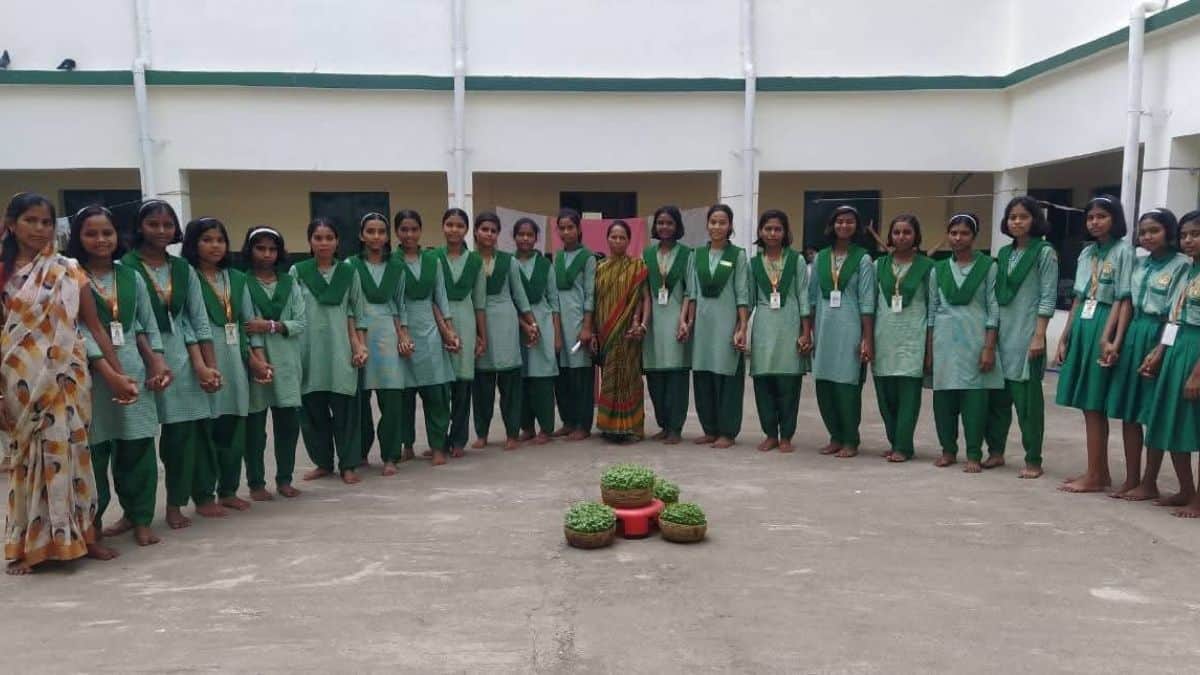
Suchitra Sharma* started teaching at a Kasturba Gandhi Balika Vidyalaya (KGBV) at Dhubri district in Assam in 2011. She started with a salary of Rs 9,000 per month. It took more than a decade for her salary to reach Rs 22,000, the amount she is earning now. Sharma’s work needs her to be on job 24x7 as she is a superintendent and warden at this residential school, which was started to educate girls from disadvantaged groups, minorities and those below poverty line.
In KGBVs across the country, teachers working with meagre salaries and mostly contractual, large numbers of them part-time, whose salary is even lower is a concern. Both teaching and the non-teaching staff have been demanding for a regularisation and increase in salary for a long time now.
It is not just the teachers, the scheme's budget allocation per student is even worrying.
The scheme allocates Rs 60 per student for a day for fooding and lodging. Fooding includes breakfast, lunch, tea-time snacks and dinner. This small allocation means a compromise in the quality of facilities being provided to the students. Reports of children falling ill due to contaminated food occur quite frequently. Data from different states hence point to seats across KGBV remaining vacant.
KGBV was launched in 2004 under the Sarva Shiksha Abhiyan (SSA). In 2018-19, the KGBV component of SSA and the Girls’ Hostel component of Rashtriya Madhyamik Shiksha Abhiyan (RMSA) were merged under Samagra Shiksha as KGBVs, bringing all hostels under a single framework.
At present out of the 5,639 sanctioned, 5,316 are functional, with a total enrollment of 7,58,288 girls.
Kasturba schools and their functioning
As it is under the Samagra Shiksha Abhiyan, KGBVs have both central and state shares in ratios of 60:40, 90:10 or 100%, depending on their location.
It is of four types, depending on the classes and hostels.
- Type 1: Classes VI to VIII (School+Hostel/ Only Hostel)
- Type II: Classes VI to X (School + Hostel or Only Hostel)
- Type III: Classes VI to XII (School + Hostel or Only Hostel)
- Type IV: Classes IX to XII (Only Hostel, usually attached to existing school)
Samagra Shiksha envisaged upgrading all KGBVs up to Class XII. Most states have mixed types of schools. Himachal Pradesh, West Bengal, Kerala, Uttarakhand, Madhya Pradesh, Mizoram, Odisha and Punjab only have hostels.
KGBV: Contractualisation, teacher salaries
These schools have no concept of hiring permanent teachers. They are either termed full-time or part-time.
“Teachers who are part of KGBVs have qualifications the same as others, but we work more than them. Yet our salary is very low. It is now that I get Rs 22,000. The Assam government gives Rs 2,000 extra to those who have cleared Teachers Eligibility Test (TET). This has been our demand for a long time, yet the government turns deaf ears,” Sharma said.
Different states have different ranges of salary. For instance, the head teacher in Uttar Pradesh draws Rs 33,000 per month. In Maharashtra there is no concept of head teacher, the warden is the overall in-charge. In Maharashtra the warden draws Rs.28,875 per month.
Shyam Krishna Dwivedi, president of KGBV teaching and non-teaching staff association, said, “A large number of employees are part-timers. They do not even receive minimum wages. The part-time staff salaries vary from Rs 8,000 to Rs 11,000 a month. How can one sustain with this meagre amount?” Dwivedi is an accounts head at a KGBV in UP.
Also readEkalavya Model Residential Schools: 229 sanctioned EMRS yet to open, budget slashed by up to 60%
Manipur is the only state which has made their staff permanent. “It is the state government who took this initiative,” he added.
As per a report in The New Indian Express in 2025, the Andhra Pradesh High Court had directed the central government to frame rules and take a policy decision on appointing permanent teaching staff at KGBVs.
Kasturba Gandhi Balika Vidyalaya: Teacher shortage
Less salaries mean poor retention, resulting in vacancies and shortages of teachers.
In Andhra Pradesh, there were 277 teaching and 1,095 non-teaching posts vacant across 587 KGBVs, the union government told parliament during the recent budget session.
In 2025, students of a KGBV in Arunachal Pradesh had marched late at night to the district education office to protest against the vacant subject teachers posts.
It is not just low salaries, teachers lack basic facilities.
One head of the school in Ghaziabad, UP, said, “We have to share the space with students in the dormitory. There is no concept of privacy for us.”
Allocation for KGBV students
Shrikant Nadge, Accountant, at KGBV Vikramgad,district-Palghar in Maharashtra, said the allocation for their students is even lower than the state government-run Ashram Schools.
“Forget about comparing the per student allocation with Jawahar Navodaya Vidyalayas (JNVs). We have been continuously raising this issue with the government but no one bothers,” he said.
For JNVs, the government spends Rs 1,56,000 per child for nine months of functioning. For Eklavya Model Residential Schools (EMRS), it is Rs 1,47,062 per annum.
According to a teacher, the break-up of allocation for students is:
Fooding and lodging – Rs 66 per day
Medical – Rs 100 per month
Teaching Learning Material – Rs 120 per month
Stipend- Rs 100 per month (transferred to students’ bank accounts)
Life skills (Vocational) - Rs 10,000 per annum
Self Defence – Rs 100 per month
“When the allocation is so small and there are a lot of listed facilities, how can quality be maintained?” questioned Dwivedi.
Students’ bedding is also supposed to be changed every three years. However, teachers say it doesn’t always happen on time.
For KGBVs without attached schools, students travel up to 3km daily. “For this the government provides Rs 400 per month, which is again not enough. The staff make provisions to ensure the children reach schools,” said Dwivedi.
Kasturba Schools: Seats vacant
Dropout rates have improved but remain troubling. In 2024-25, middle school (Classes 6-8) saw 2.9% dropouts; secondary (Classes 9 to 12) saw 6.6%.
But there’s a bigger problem – vacant seats.
Minutes of the Project Approval Board meeting to consider the Annual Work Plan & Budget (AWP&B) 2025-26 of Samagra Shiksha for different states point to this trend.
In Uttar Pradesh 783 functional KGBVs have a total capacity of 1,31,25, but the total enrollment there is 85,861 – a vacancy rate of 34.58%.
Dwivedi explains, “The problem in these areas is that people still follow the old traditions and want to get their daughters married when they are 14-15 years old. We have filed almost 10 FIRs to stop child marriage. Sometimes, the groom's parents come to see the girls in the school. They say they are relatives. Once we got to know about a student's marriage when she came with a wedding invitation card. We stopped that marriage.”
Most vacancies occur after the vacations when girls do not return to school.
In Madhya Pradesh, 417 KGBVs have a total intake of 58,200 students, but there is a vacancy of 654 students. In Andhra Pradesh, in the 499 functional KGBVs, there is a 8.4% vacancy rate against the total 587 seats approved. In Telangana there was no problem of seats going vacant.
In Rajasthan, all 316 KGBVs are functional with a total intake capacity of 43,150 students, but 755 seats are vacant.
Similarly, in Assam of the total 17,245 capacity in 151 KGBVs, 1,262 seats are vacant, and in Chattishgarh there is a 4.9% vacancy.
“During the admission time, the seats get filled. But later the girls leave and there are various reasons for it,” Sharma said.
KGBVs: Category of students enrolled | |
|---|---|
Categories | Student Enrolled |
SC | 2,06,297 |
ST | 1,77,009 |
OBC | 2,64,175 |
Others | 1,10,807 |
Source: Parliament responses
Kasturba Gandhi Balika Vidyalaya: Fund allocation
Over the years the budget allocation to KGBVs have fluctuated. Recently, in a reply to a question in the Lok Sabha, union education minister Dharmendra Pradhan shared the data.
Year-wise allocation to states (in lakhs) | |
|---|---|
Academic Year | Budget allocation |
2018-19 | 3,01,937.02 |
2019-20 | 4,08,519.92 |
2020-21 | 3,04,704.31 |
2021-22 | 2,43,375.5 |
2022-23 | 3,83,475.78 |
2023-24 | 5,48,205.62 |
2024-25 | 4,55,138.02 |
2025-26 | 4,49,815.75 |
Since 2024-25 the allocation for these schools have been further decreasing.
 Add as a preferred source on google
Follow us for the latest education news on colleges and universities, admission, courses, exams, research, education policies, study abroad and more..
To get in touch, write to us at news@careers360.com.
Next Story
]TSBIE-BSET merger, B.Ed minimum for teaching; filling faculty posts: Telangana Education Commission blueprint
TEC also proposes midday meals till Class 12; English medium for nursery to PG; 50% pass percentage in BA, BSc, BCom; coaching regulation; and separate education standards body
K. Nitika ShivaniLatest Education News
]Related News
]CBSE Board Exam Dates 2027 LIVE: Class 10, 12 subject-wise timetable at cbse.gov.in soon; passing marks
Board Exam Time Table 2027: AP Inter, TN 10th, 12th date sheets out; CBSE, RBSE, JKBOSE, TS schedule soon
HC upholds Delhi govt's policy on cash to EWS students for private school uniform


