
From carpentry labs to language classes, NEP promises big but are Indian schools ready to deliver?
Team Careers360 | March 3, 2026 | 05:26 PM IST | 5 mins read
Despite NEP reforms, infrastructure gaps, over-formalised learning and CBSE, ICSE, IB bias threaten its vision, writes Anjuman-I-Islam’s Allana English High School principal
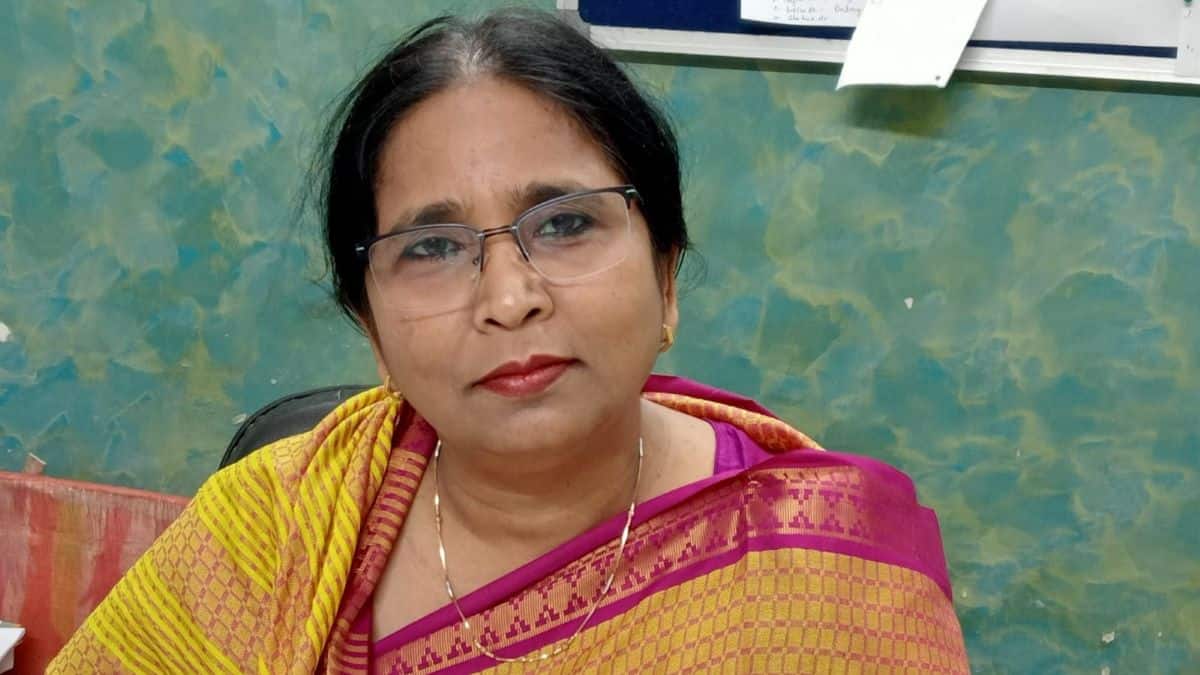
Rizwana Satare
Education in India is undergoing a significant transition. Over the last four or five years, particularly in the wake of the COVID-19 pandemic and the introduction of the National Education Policy (NEP) 2020, we have seen a tectonic shift in how we perceive the classroom. As a principal, who has spent 25 years in this field, I see both the brilliant promise of these reforms and the daunting challenges of bringing them to life on the ground.
When the NEP policy booklet arrived, I felt a genuine sense of optimism about certain pillars. One of the most refreshing ideas is the celebration of "no bag days" and the introduction of technical education from the sixth standard.
Not every child is destined for academic excellence in the traditional sense, but many possess a special affinity for skill development. By introducing courses like carpentry, pottery, or other vocational programmes early on, we open doors for students who might otherwise feel left behind by a purely bookish curriculum. Similarly, the push for multilingualism – introducing international languages – is a visionary move. It doesn't just enrich the mind; it opens global doors for job opportunities.
However, as a practitioner, I must ask: Are we ready? NEP 2020 talks about carpentry labs and skill centers, but does every school have the framework? Do we have the labs, the specialised teachers, or even nearby partner schools to facilitate this?
Furthermore, the policy allows a science student to take music or an arts student to take mathematics. While some institutes with the means allow this, the vast majority of our schools are not yet equipped with the staff or the scheduling flexibility to make these "interdisciplinary" dreams a reality. We need to think deeply about how these ideas will move from paper to practice.
NEP 2020: Making the informal formal
One of my deepest concerns involves our youngest learners. I have spent time researching the education system in Finland – a global leader that consistently tops the (Programme for International Student Assessment) PISA tests. In Finland, a child doesn't start formal schooling until age seven. Until then, they are with their parents, focusing on habit formation and psychomotor skills in a loving, informal environment.
In contrast, the NEP is making the informal formal. By bringing nursery and kindergarten into the formal fold, we are sending three-year-olds into a structured system. As a mother and an educator, it pains me to see a child cry for the first six months of school because they simply aren't ready to leave the nest.
The policy claims that early-year education will be play-way and holistic, but the reality is different. We are caught in a rat race. Parents are handed four-page syllabi for pre-primary kids and they become hyper-anxious, comparing their child’s progress with others. We are turning childhood into a competitive sport, and the gap between what is written in the policy and what is happening in the classroom is widening.
School Education: Multiple languages
At Anjuman-i-Islam, I have made it a mantra that we must love and respect all languages. I often reference the Hadith (saying of the Prophet Muhammad), which encourages learning multiple languages to spread knowledge and connect with the world.
The more languages a child hears, the more they are exposed to rich literatures, whether it is the soul-stirring poetry of Urdu, the greatness of Marathi writers, or the global reach of English. I even introduced German at my school, recognising that Germany offers free higher education for engineers. However, catering to a heterogeneous crowd – where some are first-generation learners and others are offspring of highly-qualified parents – is difficult.
I am now working to introduce international languages like German, French, Spanish, and Arabic to help students tap into opportunities across the globe.
State vs national vs international boards
One of the key opportunities before us lies in strengthening and reshaping the perception of the state board in comparison to national and international boards. While there is a growing trend of parents exploring options such as ICSE, CBSE, or IB, even when state board schools demonstrate strong performance, this moment allows us to highlight the quality, consistency, and contextual relevance that state board institutions offer. By showcasing excellence and innovation within the state board system, we can reinforce confidence and celebrate it as an equally robust and credible choice for learners.
At Anjuman-i-Islam, excellence is not an aspiration, it is a lived reality. From winning the prestigious Harris Shield and nurturing cricketers like Abhigyan Kundu, who represents the India Under-19 team to earning accolades in drama and a children’s newspaper initiative that fosters reading and critical thinking, our students consistently demonstrate talent and discipline across arenas. Yet, despite these achievements, reshaping the perception that a state board education is “less aspirational” remains a significant challenge, one that calls for greater recognition of the holistic excellence our institution embodies.
Our co-curricular initiatives often do not receive the same recognition as purely academic pursuits. However, we are committed to redefining that narrative, demonstrating that true education lies in nurturing potential in all its forms, whether on the cricket field, on the stage, or in the laboratory.
‘Explosion of screen time’
Finally, we cannot ignore the learning loss from the pandemic. The biggest casualty wasn't just the academics; it was the loss of discipline and the explosion of screen time.
Parents often come to me now, distraught, saying, "Our child does not listen to us”. The children have become so screen-friendly – lost in Instagram and Snapchat – that they have lost the habit of writing and reading. Their psychomotor skills have suffered, and their handwriting has, in many cases, turned horrible.
To counter this, we have mandated reading periods and activities where students must summarise newspaper articles and create their own questions. We are using drama and literature festivals to pull them away from the digital world and back into the physical world of expression and art.
The road ahead is undoubtedly demanding. While periods of transition can feel overwhelming, the well-being of our children remains at the heart of every decision we make. If we can effectively bridge the gap between policy and practice and build parents’ trust in a truly holistic educational ecosystem, we can create spaces where intellect and empathy work in synergy. In doing so, we nurture not just high achievers but thoughtful individuals who generate value and contribute meaningfully to a better world.
Rizwana Satare has 25 years of experience as a primary and secondary teacher. She has taught at various schools in Mumbai before becoming the principal at Anjuman-I-Islam’s Allana English High School, Mumbai.
(As told to Musab Qazi)
 Add as a preferred source on google
Follow us for the latest education news on colleges and universities, admission, courses, exams, research, education policies, study abroad and more..
To get in touch, write to us at news@careers360.com.
Next Story
]Latest Education News
]Related News
]Board Exam Time Table 2027: TN 10th, 12th, AP Inter date sheets out; TS, CBSE, RBSE, JKBOSE schedule soon
CBSE Board Exam Dates 2027 LIVE: Class 10th, 12th subject-wise timetable soon at cbse.gov.in, LOC submission
Andaman schools shut on October 27; Odisha districts on October 28, 29 amid ‘Cyclone Arnab’


