
‘Teaching through logins’: School teachers waste time on ‘data-entry’ as apps become integral to monitoring
K. Nitika Shivani | December 4, 2025 | 09:59 AM IST | 8 mins read
School attendance, mid-day meals, training, infra are tracked digitally. Data entry on apps and portals – UDISE Plus, DIKSHA, MDM, SATS – eats into teaching time
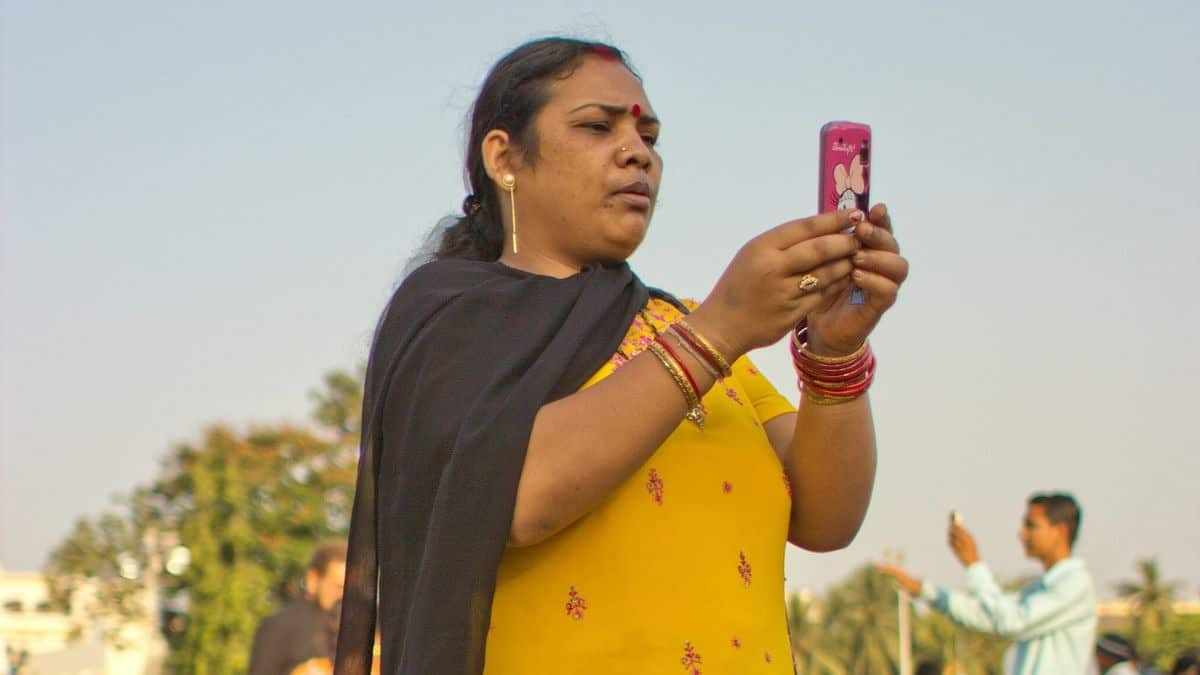
When the final bell rings at 4 pm, Chaitanya Suresh N doesn’t pack up to leave. The government school teacher from Anantapur, Andhra Pradesh, sits with his phone propped on a pile of notebooks, toggling between apps like Unified District Information System for Education (UDISE Plus), Student Attendance Tracking System (SATS), and mid-day meal monitoring portals.
“Some days I stay back for an hour just to update everything,” he said. “The entries are due the same day, and if anything’s missing, we get messages from the department. I wish there was one single app that could handle all kinds of data — attendance, enrolment, performance — instead of switching between five different ones.”
Also read NIOS: Learning alone, lax monitoring – why most students fail open school exams
Across India’s government schools, teaching is slowly giving way to tapping and ticking say teachers — not on blackboards, but on smartphone screens and papers that are later to be converted into digital dots. Teachers say their time is increasingly consumed by logging data into multiple government apps and portals — from attendance and mid-day meal records to infrastructure surveys and learning outcome dashboards.
What was meant to streamline education governance through digital tools has, many say, become an unending cycle of daily uploads, eating into classroom hours and leaving them exhausted. Experts call for a better approach to the messy handling of data.
New school routine: ‘Teaching between reports’
For teachers in government schools across states, academic responsibilities now extend to data entry.
“In one day, we update attendance on SATS, check circulars on the state portal, upload lesson completion data on Diksha, and sometimes file infrastructure reports,” said Shwetha Raj, an English teacher from Mandya, Karnataka. “By the time it’s all done, the first period has already begun. If the server hangs, we end up repeating the same entries.”
In Tamil Nadu’s Villupuram district, science teacher Meenakshi Tarun Raj said that while digital systems have improved monitoring, they’ve made classroom life more mechanical.
“There’s always a new app or update. The intent is good — to ensure accountability — but the process eats into preparation time. Teachers now multitask as clerks, data entry operators, and subject experts all at once.”
“For many teachers, the day now begins not with morning assembly but with login screens,” said Prachi Akash*, a government school teacher from Maharashtra. “Teaching between reports cannot become the new routine — it takes away all our time,” she said. “Some students need extra help after school hours, but I can’t give them that when I’m sitting and double-checking these entries ten thousand times. For some teachers, it’s easier because they’re used to smartphones, but that doesn’t mean this workload makes sense.”
Akash added that she has worked in other districts and has seen the same pattern everywhere. “The time we spend on this data work isn’t really helping anyone. Government officials could easily do a weekly audit visit instead of making teachers file every detail daily. I’ve also noticed that some surveys, including caste-based data collection, are done under the name of routine school reporting — the system allows that, but it still doesn’t justify the daily pressure we face.”
Also read India has 1.44 lakh teachers in over 65,000 government schools with less than 10 students
Unfamiliar tech, errors cause anxiety
Given that many teachers are new to smartphones and apps, errors lead to additional stress and work.
‘I’m scared of making a mistake,’ Sandhya A from Bhopal admitted. “I don’t know much about technology but I make myself learn because if I enter something wrong, it might affect student data or school reports. Once I uploaded attendance under the wrong date and had to explain myself for a week. It’s stressful.”
However, not all teachers see the data work as entirely negative. Riya Singh*, a government high school teacher from Chandigarh, said the system can function well if it’s approached with planning and patience. “It was confusing in the beginning — too many apps, too many passwords — but once we got used to the routine, it started feeling manageable,” she said. “There are clear rules on what needs to be updated daily or weekly. If we set a timeline and stick to it, the workload doesn’t pile up. Yes, it’s extra work, but it also helps us keep better track of everything.”
She added that some of her colleagues have developed small habits to make it easier. “I finish my data uploads before lunch break every day. It takes 20–25 minutes, and then I can focus fully on teaching. Initially it felt like a burden, but now I see it as part of the system — it brings accountability. Problems arise only when everything is expected immediately or when internet connectivity fails,” she said.
Impact on students
While teachers struggle to meet digital reporting demands, students say it is quietly changing their school days too. In many classrooms, lessons pause for long stretches as teachers update attendance or upload reports.
“In those gaps, we usually talk, do homework we missed, or just sit quietly,” said Rekha Kumari, a Class 9 student from Patna, Bihar. “Sometimes it’s nice because we get time to finish things we didn’t do the previous day. But when it happens too often, it feels like school is just waiting time.”
Faizan, a Class 10 student from Pune said he doesn’t mind short breaks but feels teaching hours are shrinking. “We know teachers are not free by choice — they’re doing some government app work. Still, it gets boring after a while when classes stop for half an hour.”
Others see it as a chance to help. Deepthi M, a Class 8 student from Kozhikode, Kerala, said she and her friends often assist their teachers in entering data. “We type names or check spellings when madam is uploading reports,” she said. “We like helping, but it also shows how much extra work they have to do.”
Similarly, Ajit D Jogi, a Class 10 student from Chhattisgarh, often helps teachers upload data. “Our teacher had fractured her hand for a while, so the head girl and I took turns updating reports. It took hours, and one time I made a mistake and got scolded badly. Even though I was helping, it felt awful.”
When technology outpaces capacity
“Digital tools were meant to bring transparency, and they have certainly improved data tracking and reduced absenteeism. But in Bihar’s government schools, the growing number of apps like Shiksha Saathi, e-Kalyan, Aadhaar-enabled attendance, and mid-day meal monitoring systems are becoming more of a burden than support,” said Ravikaran Singh, research scholar in political science with an interest in education at Mahatma Gandhi Central University, Motihari, Bihar. “Teachers spend a large part of their day uploading photos, fixing glitches, and updating multiple portals. Without proper training, better connectivity, and fewer redundant apps, these tools risk taking away the essence of classroom teaching even as they promise accountability.”
“We didn’t sign up to be data clerks,” said Anita Deshpande, a guest lecturer at a government primary school in Uttar Pradesh. “Every day begins with checking which app has a new update — one for mid-day meals, another for enrolment, one more for attendance, and sometimes separate forms for infrastructure. Between classes, I’m asked to upload photos, update counts, or verify something in real time. I’ve had to stop lessons midway just to submit a report because officials wanted it done immediately. Sometimes I even use my own mobile data because the school Wi-Fi doesn’t work. By the time all this is done, I barely have energy left to plan the next class. We understand accountability, but teaching can’t happen through logins.”
A design problem
Rakhi Kaur, an educationist and former teacher currently in Goa, said the intent behind the growing use of education apps was to create consistency and quality across India’s schools, not to overburden teachers. “The ministry of education uses this suite of digital tools to ensure standardized, high-quality resources and training,” she said. “The cornerstone is DIKSHA, designed as a ‘One Nation, One Digital Platform’ that provides QR code-linked e-textbooks, interactive content, and professional training modules like NISHTHA. Then there’s The TeacherApp, which focuses on upskilling and collaboration, and ULLAS, which draws teachers into adult literacy work and community outreach.”
However, Kaur acknowledged that the system is not easy for everyone to catch up with. “Digital education sounds seamless on paper, but the ground reality is uneven,” she said. “Teachers come from diverse technological backgrounds — some adapt quickly, while others struggle even to log in. What was meant to simplify often feels like an extra layer of pressure. The idea itself is progressive, but it has to move at the pace of teachers, not at the speed of policy deadlines.”
An educational policy expert and guest lecturer at a Chennai college said the solution lies in smarter system design, not less technology. “We need an automated data pipeline that draws from school-level entries without duplication,” he said. “Right now, each app — whether for UDISEPlus, the mid-day meal scheme, or attendance — functions in isolation. The same figures are entered multiple times in different formats. Technology should assist, not overwhelm. If we expect teachers to spend hours uploading data, the classroom loses its focus.”
Bengaluru-based analyst Poonam Bisht who has worked on education technology evaluation agreed.
“Every reform adds another metric to monitor — from Foundational Literacy and Numeracy (FLN) indicators to learning outcome dashboards,” she said. “Instead of simplifying, we’ve layered complexity. But the intent — data-driven planning — is good. The issue is execution without empathy.”
She added that technology has helped bring transparency to schemes such as mid-day meals and infrastructure audits, and can flag absenteeism or missing resources faster than paper systems ever did. “But when apps become the focus rather than the outcome, it erodes motivation. Teachers begin to see themselves as data operators rather than educators.”
*Names changed on request. They are all government school teachers who fear punitive action for speaking out against education department policies.
 Add as a preferred source on google
Follow us for the latest education news on colleges and universities, admission, courses, exams, research, education policies, study abroad and more..
To get in touch, write to us at news@careers360.com.
Next Story
]Latest Education News
]Related News
]CBSE Board Exam Dates 2027 LIVE: Class 10, 12 subject-wise timetable at cbse.gov.in soon; passing marks
Board Exam Time Table 2027: AP Inter, TN 10th, 12th date sheets out; CBSE, RBSE, JKBOSE, TS schedule soon
HC upholds Delhi govt's policy on cash to EWS students for private school uniform


