
NIOS: Learning alone, lax monitoring – why most students fail open school exams
K. Nitika Shivani | November 14, 2025 | 10:56 AM IST | 9 mins read
National Institute of Open Schooling leaves many gaps in learning that students fill on their own, with help from the web. The result: some of the country’s worst pass rates
50+ Entrance Exams after 12th
Download this ebook to explore 50+ entrance exams after Class 12 for admission into top undergraduate colleges across engineering, management, law & more.
Download Now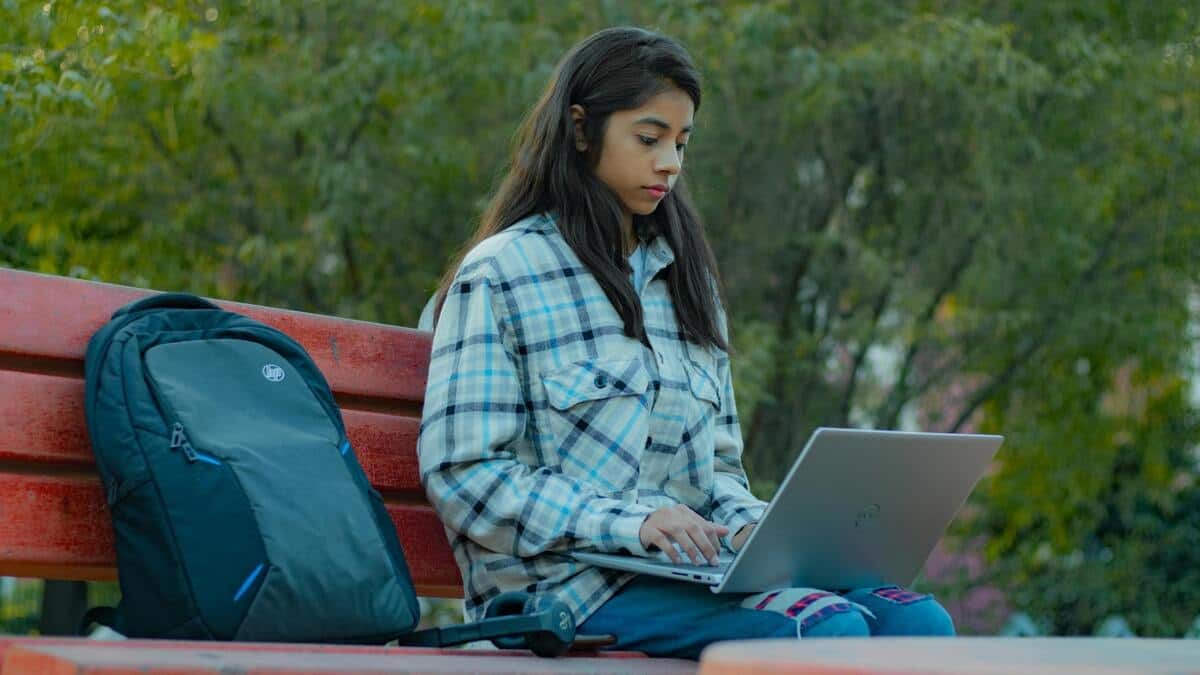
“No full-time teachers, no labs, and no fixed schedule,” said Meena Gunasekar*, describing “many centres” of the National Institute of Open Schooling (NIOS). A study centre coordinator for the NIOS in Indore, Madhya Pradesh, she added, “practical subjects like science or fine arts become difficult to teach, and students end up learning alone”.
Also See: NIOS Class 12th Syllabus | PYQ's
Free Study Material for Class 12th: Boards & JEE | Boards & NEET
That absence of rigour shows in the results. An education ministry analysis of last year’s board exam results shows that at just 33.3%, the NIOS had one of the worst pass-rates of all school examination boards in the country, including state-run open schools. More recently, the Press Trust of India reported that nearly 70% of Delhi’s NIOS Class 10 students had failed. Of all open schools operating in the country, NIOS has the most students.
The authors of the National Education Policy (NEP) 2020 advocate for ‘alternative’ forms of schooling such as the one NIOS offers. It also recommends A, B and C-level programmes to match with Classes 3, 5 and 8. Currently, NIOS offers only Classes 10 and 12.
Also read CISCE ISC Class 12th board date sheet 2026 out; exams from February 12
However, the NIOS track record has been patchy. Apart from low pass percentages, higher educational institutions have hesitated to admit graduates. This has prompted the All India Council for Technical Education (AICTE) to direct them to treat them on par with students from mainstream schools and boards.
While policy experts call for stricter academic monitoring, teachers and students remain divided — some viewing NIOS as a vital alternative for differently-abled and working learners, others warning of gaps that leave students unprepared for higher education or employment.
The NIOS chairman neither responded to requests for interviews nor answered questions sent on WhatsApp, as instructed by his PA. If and when he does respond, this story will be updated to include his comments.
NIOS Exams: Few pass, wide variations
The NIOS was born out of a project at the Central Board of Secondary Education (CBSE), initiated in 1979. A decade later, it became an independent board, authorised to register, hold exams for and certify students. It uses the textbooks designed by the National Council of Educational Research and Training (NCERT) - the country’s top advisory body on curriculum – but actual classroom transactions are replaced by printed or downloadable lecture notes students access at home.
The NIOS operates through a network of accredited institutions (AIs), which function as study centres. These centres conduct personal contact programmes (PCPs) — in-person sessions held on weekends or scheduled weekdays — for clearing doubts and academic guidance. The frequency and format are decided by the study centre, based on local needs and learner convenience. In cities like Bengaluru, some private schools have integrated NIOS into their offerings, allowing students to pursue the open school curriculum within a school environment.
NIOS has its AIs, usually existing secondary or senior secondary schools, colleges, or NGOs, meaning that most teachers at these centres are regular educators who also teach NIOS subjects, particularly in core areas such as language, mathematics, and social science. However, this also means that for many, the NIOS students are not a priority.
“NIOS gives the same NCERT-based curriculum, but what students actually receive is far from uniform,” said Gunasekar “Most of them depend on printed booklets or online PDFs, but not everyone has internet access or even proper guidance….Practical subjects like science or fine arts become difficult to teach, and students end up learning alone.”
While NIOS provides tutor-marked assignments and online resources, the follow-up is weak. “The feedback comes late, if at all,” she said. “There’s no library, no peer group, no classroom rhythm — it’s completely self-driven. For a few disciplined students, that works. But for many, it becomes overwhelming.”
That’s evident from the result statistics. At the secondary level (Class 10), NIOS recorded a pass percentage of 32.32% in 2024. Among the historically-marginalised Scheduled Castes, the pass rate was a mere 20.13%; among Scheduled Tribes, a significantly-better 55.72%.
Last year, India’s open schooling system dealt with about 7 lakh students registered for the secondary level and 9 lakh for the higher secondary level, bringing the total to roughly 16 lakh students. NIOS had the highest enrolment among open boards, with 1,90,996 students appearing for the secondary examination and 3,02,561 for the higher secondary examination.
NIOS a ‘lifeline’
For thousands, the NIOS system is an essential safety net. A parent from Chhattisgarh, whose child has ADHD, said open schooling helped his son find balance. “My son’s anxiety worsened in regular school,” he said. “Through NIOS, he could study at his own pace, focus on music, and still earn a certificate. It made him confident again.”
When Rinzing. L’s parents died, she found herself the sole earner and carer for her younger brother. Being able to complete her Class 12 through NIOS allows her to balance survival and education.
“I work for a living — not because I can’t handle mainstream school but because my parents died and I have been taking care of my brother,” she said. “I chose NIOS to have more free time and obviously to take care of him. I self-study as resources are scarce, but I enjoy that I have the space to learn and make mistakes and correct them.”
Also read Rajasthan board exams twice a year from next academic session: RBSE
NIOS Students: ‘We teach ourselves’
However, for learning, Rinzing is almost entirely on her own, having opted for the weekend classes. To clear doubts, she relies on the internet. “Platforms like YouTube, Instagram, ChatGPT and so many more help me clear doubts. I rely on my own ability and have taken subjects that truly interest me,” she said.
This is true of many students. Many like Rinzing have little more than the textbooks and materials the open school dispatches.
Shreyasini Raja, an NIOS graduate now working in the corporate sector, described her experience as both freeing and inconsistent. “We often taught ourselves. Students became tutors for their own groups while teachers looked over us,” she said. “But some teachers were very involved and helpful whenever we had doubts.”
Her batch, she recalled, faced long idle hours. “There was a lot of free time, which sometimes led to fights and distractions. With fewer teachers, we were left on our own quite often.”
Despite the loose structure, she credits the system for helping students who needed a non-traditional path. “For many of us, it was the only way to finish school. It gave us another chance,” she added.
Likitha. K, another NIOS graduate from Bengaluru, also struggled to balance the independence that NIOS offered with the loneliness it brought. “You have the freedom to study at your own pace, but sometimes that freedom feels like isolation,” she said. “There were days I missed the sense of belonging a regular school gives, but I learned to be responsible for my own learning.”
Kiran and Lohit Sharma, brothers from Delhi who happened to shift to Chennai, shared a similar view. “We had weekend classes, but most of it was self-study,” Kiran said. “Teachers were present only in the beginning, maybe to mark attendance.”
Lohit Sharma noted that the curriculum was nearly identical to the state-board content. “Subjects like psychology and English had the same textbooks in Classes 11 and 12. But NIOS had a more lenient evaluation, which helped many,” he said. “My friend was specially-abled and truly benefited from this setup. That’s what it was meant for.”
At the same time, Lohit acknowledged a social stigma around the board. “When people ask why NIOS, it’s hard to explain personal or family issues. Even during university admissions, we’re questioned. It’s like we have to prove ourselves twice,” he said.
Also read Gujarat Class 10, 12 board 2026 timetable out; exams begin February 26
‘NIOS needs to evolve’
The transition from school to higher education is difficult.
Sakshi Jaiswal* a former teacher who has worked in Punjab, said many NIOS learners lack the preparation needed for competitive higher education. “Even motivated students struggle because they aren’t trained for exam rigour,” she said. “One of my students failed despite the low pass percentage [or passing threshold] and later gave up on academics altogether.”
“NIOS needs to evolve from being just an exam board to a learning ecosystem,” said Rafiq Ahmed, who teaches economics to NIOS learners in Hyderabad. “The curriculum is strong, but there’s no mechanism to track whether students actually understand it. Regular online check-ins or hybrid classes could make a huge difference.”
He further explained, “Classes often run on weekends or when rooms are free in government schools. Students come from different age groups and learning levels, so one-size-fits-all teaching doesn’t work. Without proper training for open-school teaching, it’s like running a classroom without a map.”
Teachers are often stretched thin. “Many of us handled both regular and open board duties. The system needs dedicated faculty and better resource allocation,” said Jaiswal
“It is a concern that the pass percentage has remained stagnant or declined despite increased enrolment,” said Shalini Sami*, a Tamil Nadu-based teacher who mentors NIOS learners. “The resources to teach them are often limited to NCERT books and self-learning modules. Comprehension is a major challenge for many students who don’t have classroom guidance.”
Shalini also added that while NIOS serves an important purpose for those with personal, health, or financial barriers, the system lacks the structure needed to build confidence for university or technical education. “Students may pass, but are they ready for what comes after — college, jobs, or competitive exams? That’s the real test,” she said.
Weak standards, uneven oversight
Policy analyst Srivendra. G, who explored NIOS centres in Sikkim and Himachal Pradesh for his own daughter, said the reality on the ground often differs from the board’s flexible learning ideals. “Students tend to become at ease,” he said. “Many view NIOS as an easy pass — it works for those who are academically capable but choose it out of convenience or personal circumstances.”
He added that while NIOS offers accessibility, the lack of monitoring weakens its impact. “There are no stricter guidelines to ensure seriousness. Teachers often come from mainstream schools, handling two or more NIOS classes in their free time. Some aren’t trained in open-school pedagogy,” he said.
However, education analyst Dr. Ananya. T said the purpose of NIOS cannot be judged only by its pass rates. “It was created to serve learners who fall outside the conventional system — students with health issues, financial pressures, or different learning needs,” she said. “That flexibility is its biggest strength. But in reality, it has also led to uneven academic support.”
She added that the challenge lies in bridging the gap between accessibility and academic depth. “Open schooling must not mean open-ended responsibility,” she said. “Students need structured guidance, regular assessments, and exposure to co-curricular activities. Otherwise, the very freedom that defines NIOS can isolate learners instead of empowering them.”
She also pointed out that schools integrating NIOS within their regular systems, such as in Bengaluru and parts of Andhra Pradesh, show more promising outcomes. “Where NIOS students share resources, teachers, and peer spaces with mainstream learners, their performance and confidence improve noticeably,” she said. “It proves that the issue isn’t the curriculum — it’s the absence of consistent academic engagement.”
*Names changed to protect identity
 Add as a preferred source on google
Follow us for the latest education news on colleges and universities, admission, courses, exams, research, education policies, study abroad and more..
To get in touch, write to us at news@careers360.com.
Next Story
]India Skills Report 2026: CS, IT engineers most employable; women beat men for first time in 5 years
Computer Science and IT engineers maintain 80% employability while MBA graduates’ prospects decline to 72.76%; AI, ML engineers record 600% growth in job postings; vocational education struggles
Shradha ChettriLatest Education News
]Related News
]AP Inter Time Table 2027 LIVE: BIEAP 1st, 2nd year schedule soon at bie.ap.gov.in; marking scheme, rules
Board Exam Timetable 2027 LIVE: UP, TN 10th, 12th exam dates out; BIEAP, CBSE, Maharashtra exam schedule
CBSE Date Sheet 2027 LIVE: Class 10th, 12th board exam date soon on cbse.gov.in; sample papers, grading system


