
What is the Rohith Act? Provisions, origin, politics of a draft law to combat caste discrimination on campus
Azib Ahmed | March 16, 2026 | 02:47 PM IST | 10 mins read
Dalit scholar Rohith Vemula’s suicide at UoH triggered a major campaign for a law against ‘direct, indirect and institutional’ caste discrimination in universities. In a decade, only Karnataka’s close to having one
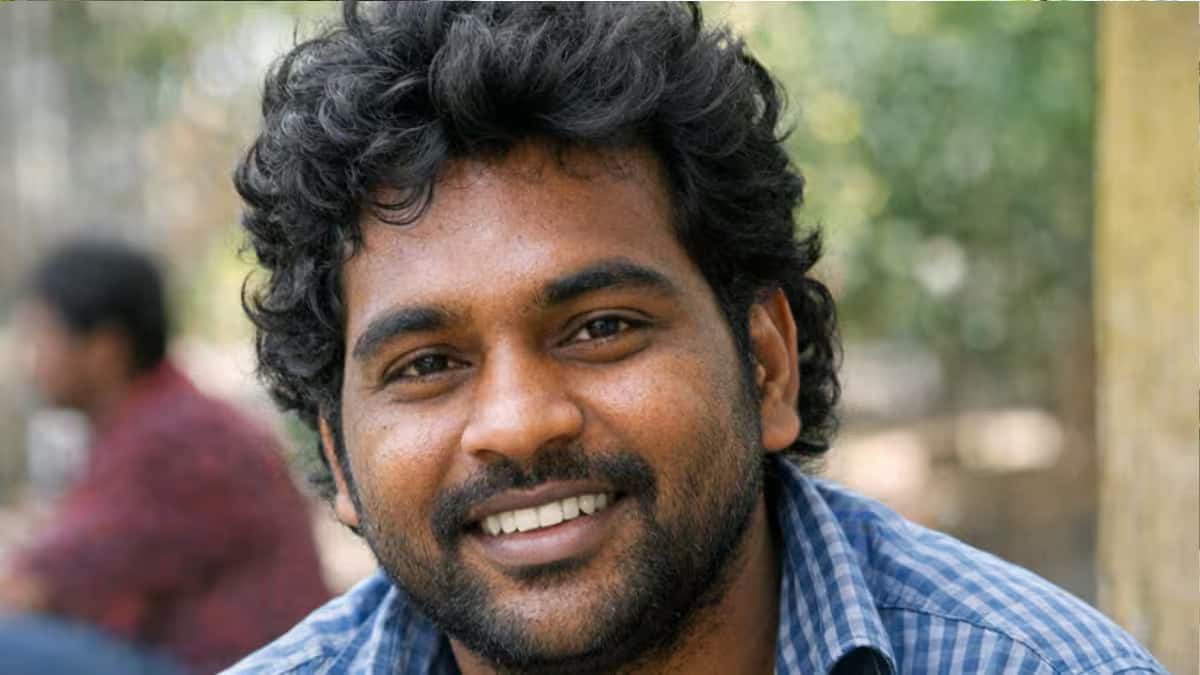
A decade ago, Dalit PhD scholar Rohith Vemula’s death at the University of Hyderabad triggered nationwide protests over caste discrimination in universities. Activists and civil society groups demanded a new law – a ‘Rohith Act’ – to prevent such discrimination. Ten years later, Karnataka is the only state to even come close to having one.
There have been several iterations of a draft Rohith Act over the years. All propose legal frameworks to address caste-based discrimination against students and staff from historically-marginalised communities within universities.
The latest are the ones from Karnataka. The Karnataka Rohith Vemula (Prevention of Exclusion and Injustice in Higher Educational Institutions) Bill, 2025, was proposed by the civil-society coalition, Campaign for Rohith Act.
The state government drafted the shorter Karnataka Rohith Vemula (Prevention of Discrimination, Exclusion or Injustice) (Right to Education and Dignity) Bill, in 2025. This draft provides for fines up to Rs 1 lakh and even three years’ imprisonment for proven discrimination. A Rohith Act, reported similar to the Campaign draft was discussed at a state cabinet meeting in late February, 2026; it was decided that with inputs from the home department, it would be placed before the next cabinet meeting for finalisation.
The Karnataka government draft from last year also extends protection to Other Backward Classes (OBCs) and religious minorities, apart from Scheduled Castes (SC) and Scheduled Tribes (ST).
While presenting the Karnataka Budget for 2026–27 last week, the chief minister, Siddaramaiah announced that the state would enact the Rohith Vemula Act across all government, private and deemed universities.
In parallel, there’s a campaign for a central law. Even today, March 13, 2026, several student organisations in Delhi Among central leadership, interest in enacting such a law is negligible. The higher education regulator, University Grants Commission, notified the UGC Equity Regulations 2026 in January. While not the Rohith Act, it sought to address discrimination on campuses. However, it was widely opposed, mainly by forward-caste and rightwing groups. The Supreme Court has stayed its implementation.
While supporting the UGC Equity Regulations, left-leaning student organisations, such as the All India Students’ Association and Students’ Federation of India, continue to demand a Rohith Act.
Here’s a quick explainer on how the draft bills came to be and what they contain.
What the Rohith Act proposes
The civil society, or Campaign for Rohith Act, draft proposes that the law apply to both public and private higher educational institutions.
It defines discrimination broadly, including direct, indirect and institutional discrimination against SC/ST students, faculty and staff. The UGC (Promotion of Equity in Higher Education Institutions) Regulations, 2026 also define discrimination as “explicit or implicit”. This was a major reason for the opposition to the UGC regulations with their detractors seeing this definition as “vague”.
It also lists several practices that may amount to discrimination. These include arbitrarily withholding or delaying scholarships for SC/ST students, excluding them from institutional decision-making bodies, forcing them to participate in religious or cultural activities against their beliefs, or steering them toward particular academic disciplines based on caste stereotypes.
The proposed law also recognises caste-based harassment, including derogatory remarks, hostile academic environments, interference with academic participation, or retaliation against individuals who file complaints.
The government draft from last year does not define discrimination, just mentions that there should be none.
Rohith Act: Complaints, inquiry in Campaign draft
A key provision of the Campaign draft is the creation of an equity committee in every higher education institution.
The equity committee would have powers similar to those of a civil court for the purpose of investigating complaints. These powers include summoning witnesses, examining evidence and calling for documents.
Complaints would generally need to be filed within three months of the incident, although the committee would have the authority to extend the timeline. If the complainant agrees, the equity committee would have the authority to attempt conciliation; if that fails, there will be a full inquiry.
If harassment is established, the committee would recommend appropriate action. If the incident constitutes a criminal offence under existing laws — such as the SC/ST (Prevention of Atrocities) Act—the institution would be required to assist the complainant in filing a police complaint within seven days.
Rohith Act Draft: Remedies and penalties
The Campaign’s draft allows the equity committee to recommend a range of remedies for victims of discrimination.
Compensation would be determined based on factors such as mental trauma, loss of opportunities, medical expenses and the financial capacity of the respondent.
The draft law also proposes disciplinary action against individuals found guilty of discrimination. Penalties may include warnings, written apologies, community service and mandatory caste-sensitisation workshops. Students may face suspension, withholding of results or expulsion.
For faculty and staff, action may include adverse remarks in performance records, denial of promotion, demotion, suspension, dismissal and deduction of salary as compensation for the victim.
Institutions that fail to comply with the provisions of the Act could face penalties from the state government. These may include fines of up to Rs 10 lakh or withdrawal of government financial support.
What government’s draft Rohith Vemula Act proposes
While the civil society draft focuses on action within universities, the government version emphasises criminal penalties.
The bill proposes criminal penalties for caste discrimination in universities. Anyone found guilty of discriminating against students belonging to SC, ST, OBC or religious minority communities may face imprisonment of up to one year and a fine of Rs 10,000. The court may also order the accused to pay compensation of up to Rs 1 lakh to the victim. Repeat offenders could face a minimum imprisonment of three years along with a fine of up to Rs 1 lakh.
The bill also states that offences under the law would be cognizable and non-bailable. Institutions that violate provisions of the law may have their funds or grants cut or withdrawn.
The bill also states that every person who aids or abets another in committing the offence will be treated as having taken part in offence. The bill also allows complaints to be filed not only by the victim but also by parents, siblings, relatives or colleagues associated with the student.
Rohith Vemula Act: What institutions must do
The Campaign’s draft places specific responsibilities on universities and colleges to ensure inclusive campus environments.
Institutions would be required to adopt anti-discrimination policies and review their administrative and academic structures to ensure they do not perpetuate caste-based disadvantages.
The draft also encourages admission processes that mask caste identity where possible in order to reduce bias during evaluation.
Universities would also need to conduct sensitisation programmes and diversity workshops to address caste prejudice among students, faculty and staff. They would be required to ensure timely scholarships and provide academic and counselling support to students.
The draft further emphasises the right of SC/ST students and staff to organise collectively, participate in discussions on caste discrimination and file complaints without fear of retaliation.
In cases where an SC/ST student dies by suicide within a higher educational institution, as Vemula did, the draft law proposes compensation to the legal heirs of the deceased. It also proposes district-level oversight to monitor implementation of the law.
The government bill from last year didn’t have these provisions.
What happened to Rohith Vemula
A central law named after Rohith Vemula was always unlikely.
Vemula was a member of Ambedkar Students’ Association and at the root of the disciplinary proceedings ending in his death was a clash with the Akhil Bharatiya Vidyarthi Parishad (ABVP), the Rashtriya Swayamsevak Sangh’s student wing and an affiliate of the then – as now – ruling party, the Bharatiya Janata Party (BJP). Apart from students, Bandaru Dattatreya, then BJP MP from Secunderabad, was also implicated – he had forwarded an ABVP complaint to Smriti Irani, then minister for human resource development.
Prodded by ABVP and ministers, the University of Hyderabad (UoH or HCU) suspended Vemula, stopped his fellowship and evicted him from his hostel. On January 17, 2016, he took his own life.
The death triggered protests across universities in India and drew national attention to caste discrimination within higher education institutions. Students, activists and civil society organisations began demanding a law specifically aimed at addressing this.
Early drafts of a potential “Rohith Act” were prepared in Telangana. However, these efforts did not translate into law due to limited political momentum and public engagement.
In Karnataka, the demand resurfaced in 2024, when civil society groups, academics and student organisations revived the issue through a coordinated campaign. Public demonstrations, policy discussions and advocacy efforts eventually led the Karnataka government to consider introducing a Rohith Act in the state assembly.
Why a new caste discrimination law is needed
According to the Campaign for Rohith Act, existing legal frameworks do not adequately address discrimination within universities.
While laws such as the Scheduled Castes and Scheduled Tribes (Prevention of Atrocities) Act, 1989 exist, these are primarily designed “to deal with overt violence or criminal offences rather than the complex and often subtle forms of caste discrimination that occur in academic institutions”, they say.
According to the civil society draft, discrimination in universities frequently takes indirect or institutional forms. These may include unfair academic evaluation, exclusion from research opportunities, delayed scholarships, denial of accommodation, or hostile campus environments that marginalise students from reserved categories.
The Campaign’s note points out that between 2014 and 2021, more than half the student suicides in premier institutions, such as the Indian Institutes of Technology (IIT), Indian Institutes of Management (IIM) and National Institutes of Technology (NIT), have been by students from reserved categories.
They also argue that universities often fail to recognise the specific challenges faced by SC-ST students, first-generation learners in particular. They cite the suicide of Darshan Solanki, a Dalit student at IIT Bombay, whose family alleged he faced caste discrimination on campus.
The draft cites experiences such as food segregation in hostels, derogatory remarks by faculty, lack of representation in student bodies, questioning students’ merit because of reservation, asking for surnames before forming social associations, and discouraging students from pursuing certain academic disciplines.
“Such experiences may not always fall within the scope of criminal law but still create hostile academic environments that marginalise SC and ST students,” says the campaign’s explanatory note.
They also argue that existing mechanisms such as equal opportunity cells under the UGC’s 2012 equity regulations remain poorly-implemented and lack accountability. A National Task Force on suicides set up by the Supreme Court found much the same situation – many of the bodies are on paper only.
“The consequences for violating these regulations are vague and there is little accountability,” the campaigners argue in their statement. A stronger legal framework is necessary to ensure institutional accountability and to create safer campuses for marginalised communities.
Political responses to demand for Rohith Act
The demand for Rohith Act is central to the politics of many student groups, of course, but it has come up repeatedly in national politics as well.
The Indian National Congress had promised in its manifesto for the 2024 Lok Sabha elections that it would enact a Rohith Vemula Act if voted to power. The manifesto said the law would address discrimination faced by students belonging to “backward and oppressed communities” in educational institutions.
Congress leader Rahul Gandhi has repeatedly called for the introduction of a nationwide Rohith Vemula Act. In April 2025, he wrote to the chief ministers of Congress-ruled states – including Telangana, Himachal Pradesh and Karnataka – urging them to implement such legislation.
In Telangana, political leaders have expressed support for the idea but have not yet introduced a bill in the state legislature. At an event on February 23, Telangana deputy chief minister Bhatti Vikramarka said the state government was working on legislation named after Vemula to address caste discrimination in educational institutions.
If Karnataka enacts the bill – introduced by the social welfare department – discussed by the cabinet in February, it could become one of the first states in India to introduce a specific law aimed at addressing caste discrimination in higher educational institutions.
If you know someone – friend or family member – at risk of suicide, please reach out to them. Those in distress or having suicidal thoughts or tendencies could seek help and counselling by calling 9820466726 or visiting AASRA’s official website or can call iCALL on 9152987821. Here are some more helpline numbers of suicide prevention organisations that can offer emotional support to individuals and families.
 Add as a preferred source on google
Follow us for the latest education news on colleges and universities, admission, courses, exams, research, education policies, study abroad and more..
To get in touch, write to us at news@careers360.com.
Next Story
]Minority Scholarships: Rs 3,400 crore unspent, panel says revive scheme in states ‘with no irregularities’
Minority scholarship approvals stalled for 5 years, while disbursals halted for 4 years; UP, Rajasthan, Madhya Pradesh with highest number of fake institutes, reveals parliamentary panel report
Sheena SachdevaLatest Education News
]Related News
]NEET PG Counselling 2026 LIVE: MCC round 1 seat allotment results out; MD, MS cutoffs, reporting begins soon
Jamia Protest: HLC appeals to students to end agitation, cooperate with JMISU drafting committee
ISRO communication and media scholar India’s sole representative from field in world top 2% scientists list


